Promoting tradition as well as beans, Ethiopian coffee shops find fans far from home
Advertisement
Read this article for free:
or
Already have an account? Log in here »
To continue reading, please subscribe:

Digital Subscription
One year of digital access for only $205*
- Enjoy unlimited reading on winnipegfreepress.com
- Read the E-Edition, our digital replica newspaper
- Access News Break, our award-winning app
- Play interactive puzzles
*First annual payment billed as $205.00 + GST for one year. This annual subscription will automatically renew at $233.00 + GST every 52 weeks (10% off the regular annual price of $259.35). Offer available to new and qualified returning subscribers only. Cancel any time.
To continue reading, please subscribe:
Add Free Press access to your Brandon Sun subscription for only an additional
$1 for the first 4 weeks*
- Enjoy unlimited reading on winnipegfreepress.com
- Read the E-Edition, our digital replica newspaper
- Access News Break, our award-winning app
- Play interactive puzzles
*Your next Brandon Sun subscription payment will increase by $1.00 and you will be charged $17.95 plus GST for four weeks. After four weeks, your payment will increase to $24.95 plus GST every four weeks.
Read unlimited articles for free today:
or
Already have an account? Log in here »
Hey there, time traveller!
This article was published 30/09/2023 (1100 days ago), so information in it may no longer be current.
LONDON (AP) — Growing up in Ethiopia, Yared Markos would often start his days the same way: with coffee. Family members, neighbors and passersby would be drawn in by the strong aroma of fresh beans roasting in a pot, often made by his mother or another family member.
Regardless of who they were, all were welcome.
And this tradition wasn’t limited to the morning. Coffee, or buna in Amharic, is typically drunk at the end of each meal. Drinking coffee was a communal experience for Markos, so when he first immigrated to London from Ethiopia 23 years ago, the culture shock hit hard.
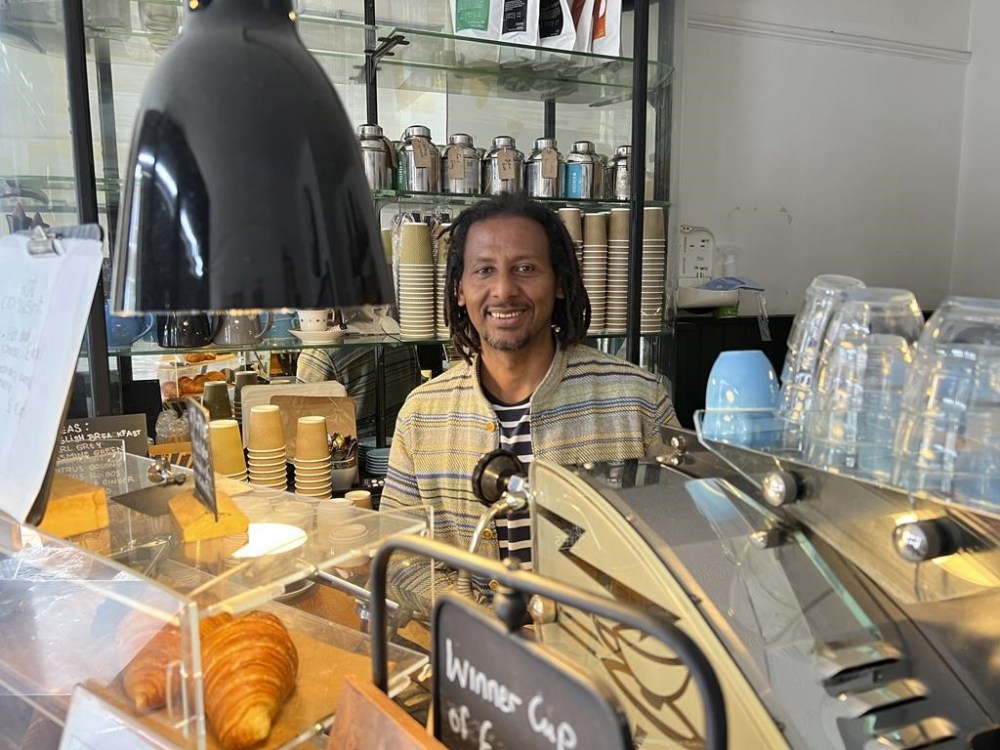
“They sell our coffee in Starbucks and other places but they don’t follow our traditions,” said Markos, who has owned Kaffa Coffee since 2004. The shop, now in the East London neighborhood of Dalton, hosts coffee ceremonies every weekend in the summer, as well as during cultural events year round, and special orders.
“Tourists will walk by and smell the coffee and come in asking questions,” Markos said. “It makes people want to learn more about the culture.”
Markos said that when he moved to London, in 2000, he didn’t see any Ethiopian coffee shops; now, there are more than a dozen all over a city where tea, its counterpart, has been a staple for centuries. Ethiopian coffee has made similar inroads in cities around the world.
Among some of the most popular Ethiopian-origin coffee types are the floral Yirgacheffe, fruity Limu and nutty Kochere.
AN ANCIEN
T TRADITION
Markos named Kaffa after the southwestern region in Ethiopia where coffee beans are believed to have been discovered around AD 800. Traditional accounts say an Ethiopian goat herder named Kaldi noticed his goats acting strangely one day after eating berries from a tree. He tried them himself, and felt energized and alert. Kaldi took the berries to a monk, who threw them in a fire, calling them the work of the devil.
A strong aroma was released, and the monks saved the remnants of the burnt beans, putting them in a jug with hot water. When they drank the concoction, they realized it helped them stay awake during nightly devotions and prayers.
Over the years, coffee-making in Ethiopia has evolved into full-on ceremonies led by the women in a household.
“The social value of the coffee ceremony is one of our biggest traditions,” Markos said.
HOW THE COFFEE GETS MADE
Fresh beans are roasted in a pot for a few minutes before being passed around, so everyone can inhale the flavorful fumes. They are then ground down to a powder and placed inside a jebena, or Ethiopian coffee pot, traditionally made of clay, on top of a stove.
While the coffee is being made, itan, or frankincense, is burned to enhance the already aromatic process. Once the kettle comes to a boil several times, the coffee is served in a small cup called a sini.
INTERNATIONAL COFFEE DAY
Almost a decade ago, the International Coffee Organization, which has 77 member countries and is headquartered in London, officially marked Oct. 1 as International Coffee Day. This year, the theme is the promotion of a safe and healthy working environment in the coffee supply chain.
The London Coffee Festival, started in 2011, also provides an occasion for coffee lovers to come together. Anteneh Mulu, co-owner of The Ethiopian Coffee Company shop in central London, credits the festival with helping to promote Ethiopian coffee to a new community.
Mulu, 46, and his business partner Polly Hamilton, 79, opened their shop in 2013. Like Kaffa Coffee, they import directly from Ethiopia, where beans are often named after the region they were grown in — paying homage to the motherland in name and practice.
As Ethiopia’s traditions spread outside the country, both Markos and Mulu hope more people will be encouraged to prioritize community over caffeine while drinking coffee.