New hardiness zone map will help US gardeners keep pace with climate change

Advertisement

Advertise with us

WASHINGTON (AP) — Southern staples like magnolia trees and camellias may now be able to grow without frost damage in once-frigid Boston.

Read this article for free:


By clicking the button above, an account will be created and you will begin to receive some of our recommended newsletters. You may opt out of any newsletter by visiting your Email and Communication Preferences page or by clicking "unsubscribe" at the bottom of any email.

or

Already have an account? Log in here »

To continue reading, please subscribe:

Digital Subscription

One year of digital access for only $1.44 a week*

  • Enjoy unlimited reading on winnipegfreepress.com
  • Read the E-Edition, our digital replica newspaper
  • Access News Break, our award-winning app
  • Play interactive puzzles

*Billed as $5.77 plus GST every four weeks. After 52 weeks, price increases to the regular rate of $19.95 plus GST every four weeks. Offer available to new and qualified returning subscribers only. Cancel any time.

To continue reading, please subscribe:

Add Free Press access to your Brandon Sun subscription for only an additional

$1 for the first 4 weeks*

  • Enjoy unlimited reading on winnipegfreepress.com
  • Read the E-Edition, our digital replica newspaper
  • Access News Break, our award-winning app
  • Play interactive puzzles
Start now

*Your next Brandon Sun subscription payment will increase by $1.00 and you will be charged $17.95 plus GST for four weeks. After four weeks, your payment will increase to $24.95 plus GST every four weeks.

Hey there, time traveller!
This article was published 18/11/2023 (1066 days ago), so information in it may no longer be current.

WASHINGTON (AP) — Southern staples like magnolia trees and camellias may now be able to grow without frost damage in once-frigid Boston.

The U.S. Department of Agriculture’s ” plant hardiness zone map ” was updated Wednesday for the first time in a decade, and it shows the impact that climate change will have on gardens and yards across the country.

Climate shifts aren’t even — the Midwest warmed more than the Southeast, for example. But the map will give new guidance to growers about which flowers, vegetables and shrubs are most likely to thrive in a particular region.
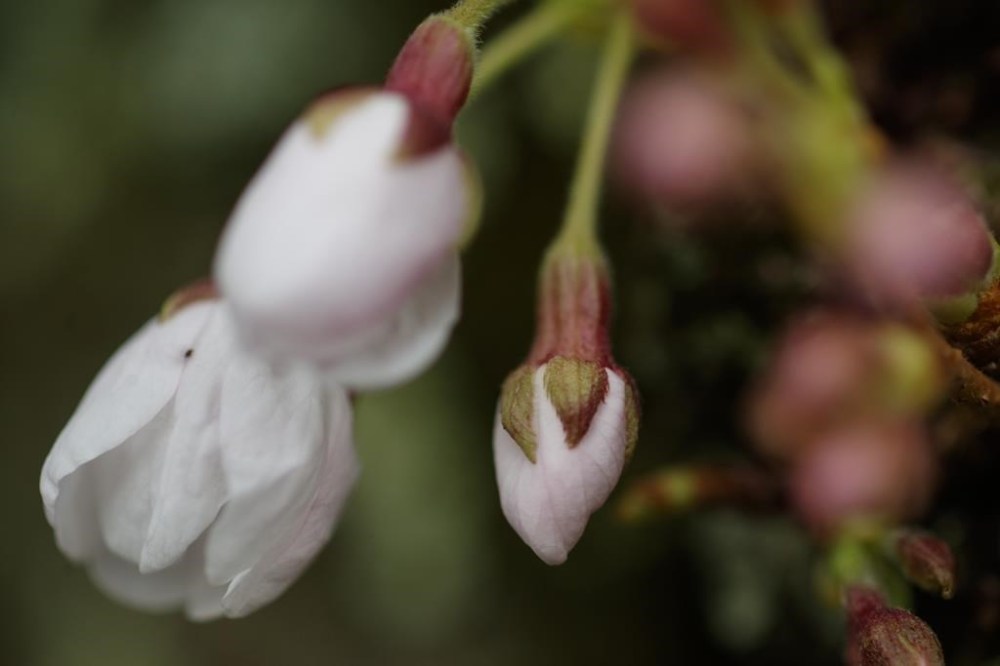
FILE - Cherry blossoms and buds cover the trees in the Kenwood neighborhood of Bethesda, Md., Tuesday, March 24, 2020. The U.S. Department of Agriculture’s “plant hardiness zone map” — a reference guide for growers selecting appropriate seeds — was updated on Wednesday, Nov. 15, 2023, for the first time in a decade. (AP Photo/Carolyn Kaster, File)

One key figure on the map is the lowest likely winter temperature in a given region, which is important for determining which plants may survive the season. It’s calculated by averaging the lowest winter temperatures of the past 30 years.

Across the lower 48 states, the lowest likely winter temperature overall is 2.5 degrees (1.4 degrees Celsius) warmer than when the last map was published in 2012, according to Chris Daly, a researcher at Oregon State University’s PRISM Climate Group, which collaborates with the USDA’s Agricultural Research Service to produce the map.

Boston University plant ecologist Richard Primack, who was not involved in the map project, said: “Half the U.S. has shifted to a slightly warmer climatic zone than it was 10 years ago.” He called that “a very striking finding.”

Primack said he has noticed changes in his own garden: The fig trees are now surviving without extensive steps to protect them from winter cold. He has also spotted camellias in a Boston botanical garden and southern magnolia trees surviving the past few winters without frost damage. These species are all generally associated with warmer, more southern climates.

Winter temperatures and nighttime temperatures are rising faster than daytime and summer temperatures, Primack said, which is why the lowest winter temperature is changing faster than the U.S. temperature overall.

As the climate shifts, it can be tricky for plants — and growers — to keep up.

“There are a lot of downsides to the warmer winter temperatures, too,” said Theresa Crimmins, who studies climate change and growing seasons at the University of Arizona and was not involved in creating the map. “When we don’t have as cold winter temperatures, we don’t have as severe die-backs of insects that carry diseases, like ticks and mosquitoes.”

She added that hotter, drier summers in some regions may kill plants that once thrived there.

“You wouldn’t want to plant plants that aren’t adapted right now for where you’re living,” she said.

___

The Associated Press Health and Science Department receives support from the Howard Hughes Medical Institute’s Science and Educational Media Group. The AP is solely responsible for all content.

Report Error Submit a Tip

More Stories

Team president locked out, day after speaking out on arena’s closure

Morgan Modjeski 5 minute read Preview

Team president locked out, day after speaking out on arena’s closure

Morgan Modjeski 5 minute read Friday, Oct. 16, 2026

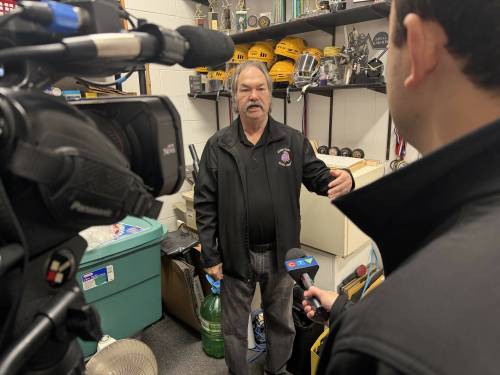
A longtime team official in Manitoba’s hockey community says he’s being punished by the City of Winnipeg for speaking out about the poor condition of one of its rinks.

Barry Bonni, president of the River East Royal Knights, has occupied an office at Terry Sawchuk Memorial Arena for more than four decades.

On Friday, he was locked out.

“They’re on the war path,” Bonni said.

Read
Friday, Oct. 16, 2026

Cool runnings

Free Press photojournalist John Woods 1 minute read Preview

Cool runnings

Free Press photojournalist John Woods 1 minute read Yesterday at 7:39 PM CDT

Sunday marked the 14th year of the annual WFPS Run in support of the Heart & Stroke Foundation in Winnipeg.

Organizers estimate more than 6,200 runners would be lining up bright and early at the Canadian Mennonite University campus to compete in one of the 5 km, 10 km or half marathon events.

Read
Yesterday at 7:39 PM CDT

Missing the days of yore in Alberta

By Melissa Martin 8 minute read Preview

Missing the days of yore in Alberta

By Melissa Martin 8 minute read Yesterday at 11:30 PM CDT

EDMONTON — Outside the Alberta legislature, a sea of deep blue flags snaps in the stiff October wind, held aloft by a crowd of about 1,100 people that has gathered for one last hype-up hurrah together before Monday’s referendum. Most of the flags bear the province’s crest; many are emblazoned with a variety of slogans, all of them defiant.

“Send A Message to Ottawa.” “Live Free or Die.” “We’re Done — Alberta First.”

On the steps of the grand Beaux-Arts building, which looks not unlike Manitoba’s, separatist influencer Adam Derges, host of a podcast called The Army of Great Men, is giving a speech. Some people talk a lot about the costs of separation, he says, but not enough about the rewards. Or: the values of the people gathered here are not in line with rest of Canada.

“I don’t know about you, but I miss the good ol’ days,” he declares.

Read
Yesterday at 11:30 PM CDT

Four charged in St. James fight

2 minute read Yesterday at 4:03 PM CDT

Four people are facing charges after an assault at a St. James apartment building.

A man was struck in the face with a pistol when he answered the door at his apartment suite in the 2200 block of Portage Avenue at about 2:15 a.m. Oct. 18, and a physical fight broke out in the hallway. Bear spray was used during the fight, the Winnipeg Police Service stated in a news release Sunday.

Police learned one of the men involved in the fight had been armed at a nearby restaurant, in the 2100 block of Portage Avenue, where he was refused service. Restaurant staff called police after seeing what appeared to be a gun in the man's hand as he was leaving.

A group of men then went to the apartment building and knocked on a suite door, police said, adding the men involved knew each other. The man who was armed at the restaurant was involved in the altercation, police stated, but no specific details about his role were released.

New twist in Hellebuyck saga, suspension ends Friday

Ken Wiebe 7 minute read Preview

New twist in Hellebuyck saga, suspension ends Friday

Ken Wiebe 7 minute read Saturday, Oct. 17, 2026

Connor Hellebuyck has played the reverse Uno card.

What we don’t know is if he has any intention of coming back to friendly Manitoba or if this is simply the latest attempt to put the Winnipeg Jets feet to the flames in an effort to move him to an American market.

Prior to puck drop on Saturday afternoon, when the Jets were getting set to host the Carolina Hurricanes, Elliotte Friedman of Sportsnet reported that the three-time Vezina Trophy winner and one-time Hart Trophy winner informed the organization he wanted to return on Oct. 2 and that his holdout has now shifted to a team-imposed suspension that can officially come to an end Friday.

The Jets were able to extend his suspension (for failing to report to training camp) because of a clause in the collective bargaining agreement, Article 15.13, subsection (c)(v), which reads: “If a player who has not received permission to be absent from training camp returns to the club, he shall be subject to a disciplinary suspension of reasonable length.”

Read
Saturday, Oct. 17, 2026

Consumer apprehension grows as US retailers adopt AI-assisted pricing tools

Dee-ann Durbin And Anne D'innocenzio, The Associated Press 7 minute read Preview

Consumer apprehension grows as US retailers adopt AI-assisted pricing tools

Dee-ann Durbin And Anne D'innocenzio, The Associated Press 7 minute read Yesterday at 2:10 AM CDT

U.S. consumers aren't just frustrated with high prices. They're angry and confused about the increasingly high-tech ways that restaurant chains and major retailers are setting those prices.

Digital price tags are rapidly replacing paper ones in grocery aisles. Artificial intelligence tools help businesses decide what to charge by predicting how customers might respond. Terms like “dynamic pricing” and “surveillance pricing” are stirring anxiety on social media, where users wonder if different people are getting different prices for the same product.

Americans have grown accustomed to changing prices when booking flights, hotel rooms and rides, but the prospect of everyday spending shaped by algorithms they don’t understand and personal data they may not realize they’re sharing has touched a nerve.

“There are major tensions happening right now between who’s really going to have the power with some of these algorithms and usage of bots and AI: the companies or the shopper,” said Katie Thomas, who leads an internal consumer behavior think tank at the management consulting firm Kearney.

Read
Yesterday at 2:10 AM CDT