Plant-based meat industry still poised for growth despite recent setbacks: experts
Advertisement
Read this article for free:
or
Already have an account? Log in here »
To continue reading, please subscribe:

Digital Subscription
One year of digital access for only $205*
- Enjoy unlimited reading on winnipegfreepress.com
- Read the E-Edition, our digital replica newspaper
- Access News Break, our award-winning app
- Play interactive puzzles
*First annual payment billed as $205.00 + GST for one year. This annual subscription will automatically renew at $233.00 + GST every 52 weeks (10% off the regular annual price of $259.35). Offer available to new and qualified returning subscribers only. Cancel any time.
To continue reading, please subscribe:
Add Free Press access to your Brandon Sun subscription for only an additional
$1 for the first 4 weeks*
- Enjoy unlimited reading on winnipegfreepress.com
- Read the E-Edition, our digital replica newspaper
- Access News Break, our award-winning app
- Play interactive puzzles
*Your next Brandon Sun subscription payment will increase by $1.00 and you will be charged $17.95 plus GST for four weeks. After four weeks, your payment will increase to $24.95 plus GST every four weeks.
Read unlimited articles for free today:
or
Already have an account? Log in here »
Hey there, time traveller!
This article was published 03/12/2023 (1017 days ago), so information in it may no longer be current.
It’s been more than five years since A&W first started selling Beyond Meat burgers to customers eager to see whether the patties could compete with their beloved beef.
The burger chain sold out of the patties when they first launched, having underestimated how many people would want to try them. The day Beyond Meat went public on the Nasdaq in 2019, its share price rose 163 per cent.
These days, however, shares in Beyond Meat are trading at a fraction of their 2019 high.
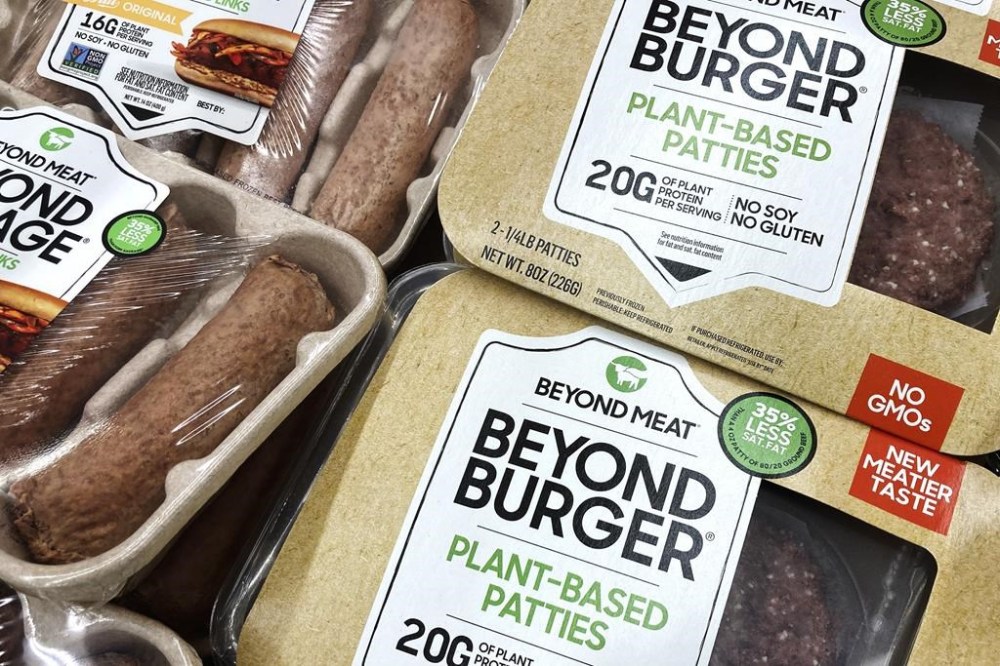
Since the flurry of excitement over A&W’s beef-free burger and the company behind it, the nascent plant-based meat industry has had to swallow a bitter pill: the exponential growth anticipated by many has notpanned out.
Yet industry experts say there’s still plenty of growth in the future for plant-based meat products — and several areas where the sector still needs investment.
The plant-based meat sector was starting to ramp up not long before A&W made a splash by adding the Beyond Meat burger to its menu, said Robert Carter, managing partner at The StratonHunter Group, precipitated by game-changing technology and an increased focus on health and the environment among consumers.
“There was so much hype in the beginning, and everyone was so excited,” said Carter.
U.S. sales of plant-based meat products rose by 42 per cent between March 2016 and March 2019, according to Nielsen. It wasn’t just an American phenomenon: in Canada, sales of plant-based protein products rose seven per cent in the 2016-17 year, according to a 2019 report from National Research Council Canada.
In the second quarter of 2020, Canadian company Maple Leaf Foods reported higher revenue, led by a 41 per cent gain from its plant protein business. The firm bought Lightlife Foods and Field Roast Grain Meat Co. in 2017, and in 2018 launched subsidiary GreenLeaf Foods with the two brands in its portfolio. It has announced investments into processing facilities for its plant-based products.
The high expectations for consumer interest in plant-based meat were especially evident when traditional protein companies like Maple Leaf started getting involved, Carter said: “I would say they were hedging their bets.”
There was also a spikein saleswhen COVID-19 hit, said Bill Greuel, CEO of Protein Industries Canada, a not-for-profit that receives funding from Innovation, Science and Economic Development Canada to invest in plant-based food and ingredient manufacturing.
“I think a lot of consumers were shifting from eating out at restaurants to having to cook at home, and they were looking for new products and new experiences,” he said.
But the pandemic-relatedlift may have obscured reality, Greuel said: the plant-based meat industry was growing at an unsustainable pace. Sales started to take a turn and some of the companies at the heart of the industry have had to re-evaluate the scale of their investments.
According to market research firm Circana, U.S. retail sales of fresh meat alternatives, like sausages and burgers, were down 21.5 per cent in 2023 through Oct. 8, while sales of frozen products were down six per cent.
Last month, Beyond Meat announced it was cutting 19 per cent of its non-production workforce. The company also said it was considering exiting some product lines and changing pricing and manufacturing processes.
In 2021, Maple Leaf Foods announced it was re-evaluating its plant protein business.
“We are seeing a marked slowdown in the plant-based protein category performance which may suggest systemic change in the extremely high growth rates expected by the industry,” said then-president and CEO Michael McCain in a press release.
Experts say the plant-based meat industry still has much to improve upon.
Ellen Goddard, an agricultural economist and professor at the University of Alberta, thinks many of the products aren’t quite on the mark with taste and texture — or price, which has become top of mind for more consumers over the past couple of years.
“Unfortunately, they hit a very high inflationary period when the industry was taking off,” she said.
Whether companies are pouring money into new facilities, or raw materials have to leave Canada to be turned into food products, the processing step makes plant-based meat more expensive for consumers than many traditional meat products, said Greuel.
Canada is the world’s largest exporter of pulses like lentils and chickpeas, according to Pulse Canada. Despite the advantage of producing some of the key ingredients in plant-based meat alternatives, the country’s processing capacity for plant-based food products is struggling to keep up with market growth and demand, said Greuel.
With most of Canada’s production exported for processing, there’s an opportunity for emerging Canadian processors to expand domestic operations, creating other export opportunities and diversifying the Canadian economy, said the National Research Council report.
Health-conscious consumers may have also been caught off guard by concerns about how processed plant-based meat is, and its sodium levels, said Carter,a perception Beyond Meat has said it plans to counter in its advertising.
One of the biggest priorities for Protein Industries Canada right now is to incentivize private-sector investment, said Greuel, which can be a challenge: processing facilities cost several hundred million dollars and represent a risky, longer-term investment.
A Sept. 2023 report by Ernst & Young for Protein Industries Canada offered a positive outlook despite recent challenges. As the global population grows, “plant-based proteins could offer a promising solution for a more sustainable food source,” the report said.
The global market for plant-based meat could reach between US$88.3 billion and US$139.4 billion by 2035, the report said, up from US$16.5 billion in 2021.
The high-profile hits that companies like Beyond Meat and Maple Leaf Foodshave taken may scare investment away at the institutional level, said Carter, but he thinks smaller companies continue to drive innovation and growth. Eventually, overall investment will ramp up again as a steadier growth trajectory for plant-based meat becomes evident, he predicted.
According to the National Research Council report, more than 40 per cent of the population is actively trying to incorporate more plant-based foods into their diets.
People still want to reduce their meat consumption, said Carter, and he thinks as economic conditions improve they will start to show more interest in plant-based meat again.
The interest in plant-based products is being driven by the younger generation, who are more likely to eat them regularly, said Goddard.
“I think the environmental message is a big deal for the younger generation,” said Goddard.
In its earnings reports this year, Maple Leaf said the very high growth rates previously predicted for the plant-based category were unlikely to bear out. However, it projects growth for the category at a “modest, but still attractive” average annual rate of 10 per cent to 15 per cent this decade.
The industry is still growing, just not at the pace many expected, said Carter. Now the sector is in a period of stabilization, he said, with “a lot more runway” to go.
“As the technology and the innovation and the flavour profiles continue to evolve, we’ll see this continue to steal market share from traditional meat.”
— With files from The Associated Press
This report by The Canadian Press was first published Dec. 3, 2023.
Companies in this story: (TSX:MFI)