Clock ticking to close MS’s COVID ‘gap’
Toll of delayed diagnoses and missed treatments could amplify unless action taken

Advertisement
Read this article for free:
or
Already have an account? Log in here »
To continue reading, please subscribe:
Digital Subscription
One year of digital access for only $1.44 a week*
- Enjoy unlimited reading on winnipegfreepress.com
- Read the E-Edition, our digital replica newspaper
- Access News Break, our award-winning app
- Play interactive puzzles
*Billed as $5.77 plus GST every four weeks. After 52 weeks, price increases to the regular rate of $19.95 plus GST every four weeks. Offer available to new and qualified returning subscribers only. Cancel any time.
To continue reading, please subscribe:
Add Free Press access to your Brandon Sun subscription for only an additional
$1 for the first 4 weeks*
- Enjoy unlimited reading on winnipegfreepress.com
- Read the E-Edition, our digital replica newspaper
- Access News Break, our award-winning app
- Play interactive puzzles
*Your next Brandon Sun subscription payment will increase by $1.00 and you will be charged $17.95 plus GST for four weeks. After four weeks, your payment will increase to $24.95 plus GST every four weeks.
Read unlimited articles for free today:
or
Already have an account? Log in here »
Hey there, time traveller!
This article was published 04/12/2023 (1051 days ago), so information in it may no longer be current.
Canada’s health-care systems have adapted and evolved at an unprecedented rate since the start of the COVID-19 pandemic nearly four years ago.
A recent research report from Deloitte Access Economics reveals that COVID, along with measures implemented to control it, has had a significant negative impact on Canada’s multiple sclerosis (MS) community.
MS is a chronic autoimmune disease that affects the central nervous system, impacting more than 90,000 Canadians, with an average of 12 new diagnoses daily. Canada has one of the world’s highest rates of MS; the disease has a disproportionate impact on women, who are diagnosed at a rate three times higher than men.

The study found that the financial impact of changes in treatment and delayed diagnoses for people with MS in Canada owing to the pandemic will likely be in the hundreds of millions of dollars between 2020 and 2024. It also points to additional COVID “gap” costs through higher health-care expenses, lost productivity and a decline in the well-being of patients.
The situation is anticipated to get worse unless measures are taken to address delayed diagnoses and missed treatments.
“(The COVID-19 gap) has led to progression of MS in many Canadians, due to delayed or halted treatments — this will impact these individuals and their families’ quality of life and livelihood,” says Dr. Pamela Valentine, president and CEO of MS Canada.
A reduction in health-care services between 2020 to 2022 was estimated to have decreased spending by nearly $566 million, according to the report. This reduction created a backlog in health services estimated to require $73 million in incremental costs in 2024 alone.
This decrease in spending is likely a reflection of delays in both diagnosis and treatment for patients.
Dr. Kaarina Kowalec, an assistant professor at the University of Manitoba’s Rady Faculty of Health Sciences and a member of the Manitoba MS Research Centre, says fewer people visiting a health clinic will ultimately lead to decreased costs. However, this reduction comes with its own set of consequences.
“You’ll pay for it in the long run because you’re going to have people who are undiagnosed and untreated,” she says. “And that’s going to increase your expenditures later on.”
While existing treatments for MS can be effective in slowing the progression of the disease, they can’t reverse damage once it’s occurred. As a result, people with MS who did not receive sufficient care during the pandemic may experience more pronounced disability and require more intensive care down the road.
Early diagnosis and timely intervention can delay the onset of disability by 10 years and reduce mortality by 30 per cent, according to MS Canada, as well as minimizing the impact on the health-care system.
Before being diagnosed, Barb Van Walleghem had already become involved in the MS community. Six years before her own diagnosis, she took part in the MS Walk to support a friend’s husband.
In the spring of 2011, Van Walleghem experienced severe vertigo and numbness on the left side of her face. She went to Victoria Hospital, fearful she had a brain tumour. Doctors conducted numerous tests that yielded normal results. She was sent home.
“But in the months that followed, the numbness and tingling in my face didn’t go away, and then it spread into my hands and into my arm,” she says. “And I was getting so dizzy it would cause me to vomit.”
Van Walleghem voiced her concerns to her family doctor in September of that year. The doctor sent her for an MRI; within days, her MS diagnosis was confirmed. She was 43 years old.
“I was in absolute shock. That wasn’t an expectation,” she recalls. “At first, it was so frightening because you don’t know where it will lead.”
Fast-forward 13 years and Van Walleghem, an ambassador for MS Canada, has made significant progress in managing her condition. She leads a healthy lifestyle, incorporating proper nutrition, regular exercise and sufficient sleep.
Van Walleghem, who retired in 2020 after a 25-year teaching career, has experienced a shift in her health care owing to pandemic measures. In-person visits with her doctor have been replaced by phone appointments and two of her annual appointments with her neurologist were done over the phone.
“Seeing your neurologist in person involves tests for walking, balance, vision, numbness and tingling — none of which can be conducted over the phone,” she says. “My doctor asked me questions over the phone, and he did his best. But it’s not the same.”
This past August, she had a face-to-face appointment with her neurologist, her first in four years.
When Van Walleghem was initially diagnosed, she had an MRI appointment scheduled within 48 hours. Her most recent MRI required a nine-month wait. And the results weren’t promising.
“I had new lesions in my brain and new disease activity, meaning the particular lesions they were looking at were active,” she says. “It was decided I had to change medications.”
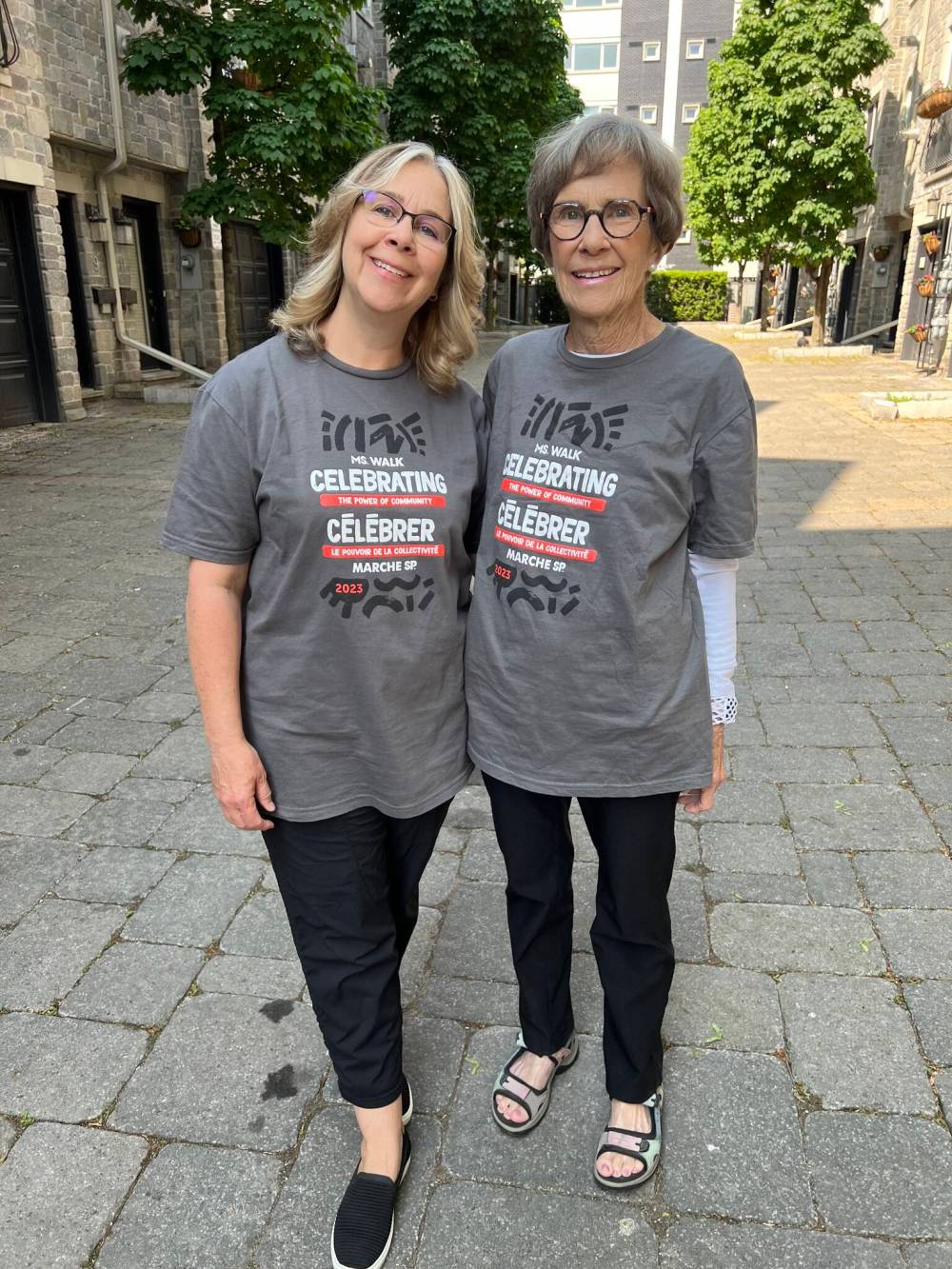
She says had she undergone the MRI sooner, the outcome might have been different.
“Maybe the disease progression wouldn’t have been as great, but I’ll never know the answer to that,” she says. “But my doctor told me my lesions were pretty active. So, if I was a betting person, I’d probably say that the disruption in health care led to more disease progression for me, but there’s no way to measure that.”
Kowalec notes that pandemic-related public-health measures posed challenges for people with chronic illnesses who required regular contact with health-care providers.
“This is what we’re talking about with delayed diagnosis or delayed treatment,” she says. “In MS, a big thing is to treat early. People with MS have this kind of disability where symptoms accumulate over the years. We can’t reverse it, so it’s very important to prevent it from happening in the first place.”
With the new disease activity in her brain, Van Walleghem started a new disease-modifying therapy (DMT), which are treatments designed to alter the progression of MS over time. These treatments could be drugs or therapies involving stem cells.
As health clinics opened up, Van Walleghem says service became a hybrid model and many of her appointments requiring crucial decisions were over the phone with a nurse practitioner.
“If we want to mitigate this impact to the MS community, governments can step up, and ultimately save themselves money, by investing $15 million immediately in prevention and treatment research, and boosting MS specialist care by funding additional MS health-care professionals, from nurses to neurologists.”– Dr. Pamela Valentine, president and CEO of MS Canada
“When I asked the clinic nurses about this, they told me staffing shortages were influencing this hybrid model,” she says. “Over the course of six months, appointments were over the phone. They’d say, ‘Pick this medication, pick that medication,’ and I’d reply, ‘Well, what are the side effects of this DMT? What is this?’ It wasn’t the same as being in person. I felt very disconnected.”
Van Walleghem says these disruptions in health care are severely impacting the MS community.
“Someone newly diagnosed (with MS) waiting for two years to see a neurologist, waiting for an MRI, waiting to get on disease-modifying therapies — if you’re newly diagnosed, you need to get on those DMTs quickly.”
Based on the report’s findings, MS Canada is calling on the Canadian government to invest in MS specialty care and research into ways to prevent or treat the disease, in an attempt to close the pandemic gap.
“If we want to mitigate this impact to the MS community, governments can step up — and ultimately save themselves money — by investing $15 million immediately in prevention and treatment research, and boosting MS specialist care by funding additional MS health-care professionals, from nurses to neurologists,” Valentine says.

Australia recently announced $18 million in research funding to investigate a link between MS and Epstein-Barr virus, which could lead to a preventative vaccine.
“What researchers are finding is that we should have a vaccine for EBV to try to ward off any other illnesses that it might be related to, in addition to MS,” Kowalec says. “It would be great if we could have some sort of vaccination strategy for preventing MS, because that would probably reduce the risk.”
For Van Walleghem, closing the COVID gap also means showing support for the MS community.
“My hope is that people show compassion and kindness to others because one never knows the invisible struggles that someone may be experiencing,” she says. “This is my life and I can’t change it — and I want it to be as good as it can be.”
sabrina.carnevale@gmail.com
Sabrina Carnevale is a freelance writer and communications specialist, and former reporter and broadcaster who is a health enthusiast. She writes a twice-monthly column focusing on wellness and fitness.
Our newsroom depends on a growing audience of readers to power our journalism. If you are not a paid reader, please consider becoming a subscriber.
Our newsroom depends on its audience of readers to power our journalism. Thank you for your support.
Sabrina Carnevale is a freelance writer and communications specialist, and former reporter and broadcaster who is a health enthusiast. She writes a twice-monthly column focusing on wellness and fitness.
Our newsroom depends on a growing audience of readers to power our journalism. If you are not a paid reader, please consider becoming a subscriber.
Our newsroom depends on its audience of readers to power our journalism. Thank you for your support.
Advertisement Advertise With Us
Advertisement Advertise With Us
History
Updated on Monday, December 4, 2023 8:53 AM CST: Corrects reference to Dr. Kaarina Kowalec