As a new generation rises, tension between free speech and inclusivity on college campuses simmers

Advertisement

Advertise with us

WASHINGTON (AP) — Generations of Americans have held firm to a version of free speech that makes room for even the vilest of views. It’s girded by a belief that the good ideas rise above the bad, that no one should be punished for voicing an idea — except in rare cases where the idea could lead directly to illegal action.

Read this article for free:


or

Already have an account? Log in here »

To continue reading, please subscribe:

Subscribe and receive a limited-edition Free Press branded hat or tote.

Digital Subscription

One year of digital access for only $205*

  • Enjoy unlimited reading on winnipegfreepress.com
  • Read the E-Edition, our digital replica newspaper
  • Access News Break, our award-winning app
  • Play interactive puzzles

*First annual payment billed as $205.00 + GST for one year. This annual subscription will automatically renew at $233.00 + GST every 52 weeks (10% off the regular annual price of $259.35). Offer available to new and qualified returning subscribers only. Cancel any time.

To continue reading, please subscribe:

Add Free Press access to your Brandon Sun subscription for only an additional

$1 for the first 4 weeks*

  • Enjoy unlimited reading on winnipegfreepress.com
  • Read the E-Edition, our digital replica newspaper
  • Access News Break, our award-winning app
  • Play interactive puzzles
Start now

*Your next Brandon Sun subscription payment will increase by $1.00 and you will be charged $17.95 plus GST for four weeks. After four weeks, your payment will increase to $24.95 plus GST every four weeks.

Hey there, time traveller!
This article was published 12/01/2024 (992 days ago), so information in it may no longer be current.

WASHINGTON (AP) — Generations of Americans have held firm to a version of free speech that makes room for even the vilest of views. It’s girded by a belief that the good ideas rise above the bad, that no one should be punished for voicing an idea — except in rare cases where the idea could lead directly to illegal action.

Today, that idea faces competition more forceful and vehement than it has seen for a century.

On college campuses, a newer version of free speech is emerging as young generations redraw the line where expression crosses into harm. They draw lines around language that leads to damage, either psychological or physical. Their judgments weigh the Constitution but also incorporate histories of oppression.
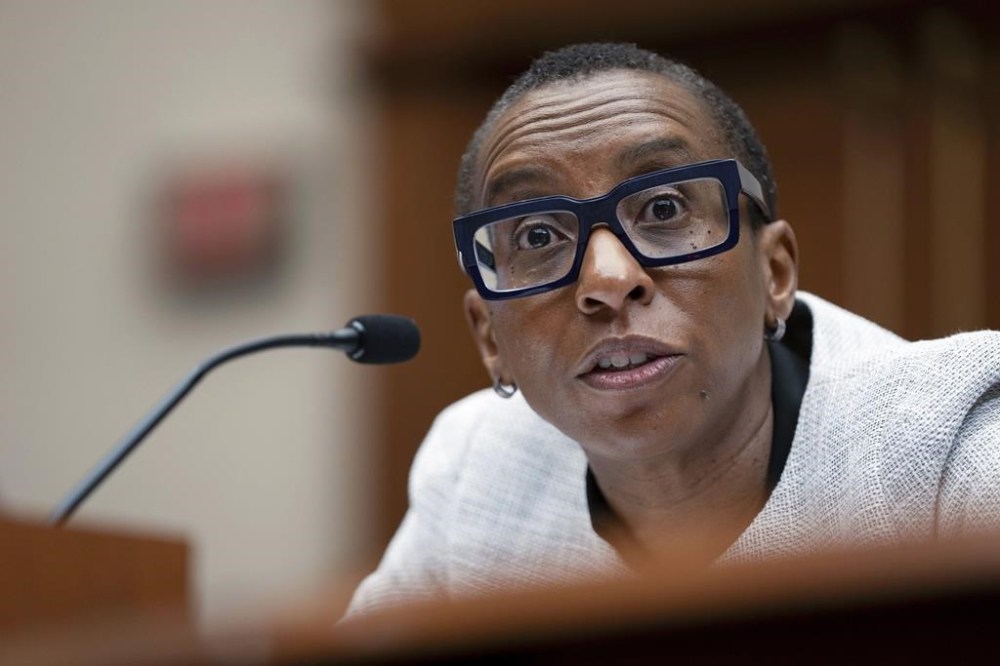
FILE - Harvard University President Claudine Gay speaks during a hearing of the House Committee on Education on Capitol Hill, Dec. 5, 2023, in Washington. Gay resigned Tuesday, Jan. 2, 2024, amid plagiarism accusations and criticism over testimony at a congressional hearing where she was unable to say unequivocally that calls on campus for the genocide of Jews would violate the school’s conduct policy. (AP Photo/Mark Schiefelbein, File)

“We believe in a diverse set of thoughts,” says Kaleb Autman, a Black student at the University of Wisconsin whose group is demanding a zero-tolerance policy on hate speech. “But when your thought is predicated on the subjugation of me or my people, or to a generalized people, then we have problems.”

A new understanding of free speech has been evolving on college campuses for years, but the Israel-Hamas war and its rhetoric appear to be widening the fault lines.

It came to a head in December when leaders of three elite colleges were called to Congress to testify on campus antisemitism. They took a stand for free expression as the Constitution defines it, then faced weeks of backlash as opponents called them soft on antisemitism.

The fallout contributed to the Jan. 2 resignation of Harvard University President Claudine Gay, who faced mounting allegations of plagiarism that surfaced after the hearing. Her resignation followed the December ouster of Liz Magill of the University of Pennsylvania, who rethought her approach to free speech amid the blowback, suggesting that rules rooted in the Constitution aren’t adequate anymore.

Campuses across the nation have confronted rising tensions. Debate has raged over whether to police phrases such as “from the river to the sea” and “intifada” — often used as pro-Palestinian chants but lately also seen by some as calls for the genocide of Jews.

Those types of phrases, however some perceive them, are “clearly constitutionally protected,” says Erwin Chemerinsky, a law scholar and dean of the law school at the University of California, Berkeley. Yet on all sides of the issue, he says, today’s students want to quash speech they don’t like, regardless of its legality.

“What I always hear now is how, when students are upset or offended, they phrase it as, ‘I feel unsafe.’ And I think it’s so important that we separate out the campus’ duty,” he says. “It’s not our role to make them safe from ideas that they don’t want exposed to. But that line, I think, has gotten blurred.”

The shifting lines have become visible as colleges reach diverging conclusions on hate speech. After the congressional hearing, Stanford University and Cornell University declared that calls for genocide would indeed violate their conduct codes. New York Gov. Kathy Hochul told the state’s public universities that such a call should face “swift disciplinary action.”

At the same time, the latest battle has seen a reversal of sorts in the allegiances over free speech.
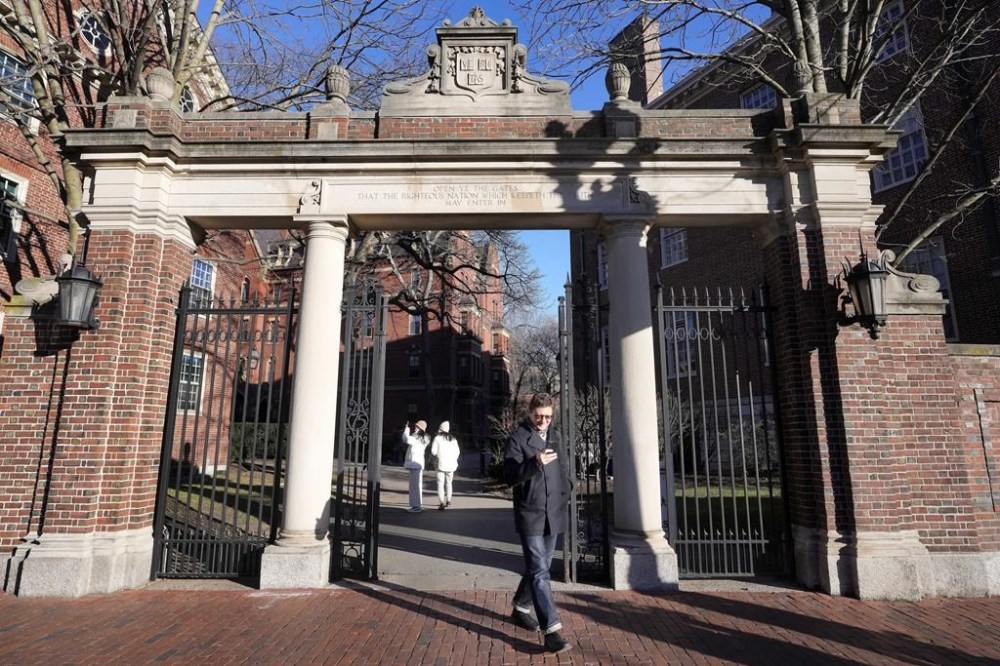
A passer-by walks through a gate to the Harvard University campus, Tuesday, Jan. 2, 2024, in Cambridge, Mass. Harvard University President Claudine Gay resigned Tuesday amid plagiarism accusations and criticism over testimony at a congressional hearing where she was unable to say unequivocally that calls on campus for the genocide of Jews would violate the school's conduct policy. (AP Photo/Steven Senne)

Republicans, who have long characterized colleges as liberal hotbeds that stifle free speech, are now calling on those institutions to curb speech seen as antisemitic. Colleges previously accused of ceding ground on free speech are suddenly its strongest defenders.

“The thing that I don’t know is, does anyone really have a principled position on this? Or is it just about the politics?” says Genevieve Lakier, a First Amendment scholar at the University of Chicago. She fears allegations of antisemitism are being used as a weapon to silence pro-Palestinian speech.

In nearly 20 years as president of Augustana College, Steven Bahls saw the generational change play out. When confronted with speech disputes in the past, he could settle it by applying the Constitution. At some point, emotion came to dominate the debate.

“Students expect the college president to be on their side,” says Bahls, a lawyer by trade. “And you know, you can’t blame them. They’re paying a lot for their education, and to show students that you’re on their side doesn’t mean you have to agree with them politically.”

To students, it’s complex. Max Zimmerman says he is a firm supporter of the First Amendment. But in the aftermath of Oct. 7, he says it’s sometimes scary being a Jewish student at Towson University, near Baltimore. In a campus plaza, a chalkboard meant to encourage civil discourse often displays anti-Israel phrases. Protesters on campus have chanted “from the river to the sea.”

“A phrase that has a hidden phrase, like calling for the mass genocide of the Jews, stuff like that shouldn’t be allowed on college campuses,” he says.

At the University of Wisconsin-Madison, a coalition of Black students demanded a ban on hate speech in 2023 after a white student used racial slurs in a video that spread on social media. The university said it can’t punish constitutionally protected speech.

“How are we supposed to be protected by a document that at one point would have allowed for the enslavement of me as a Black person?” says Autman, a senior. “We should not wait for harm or violence to be inflicted for us to combat it.”
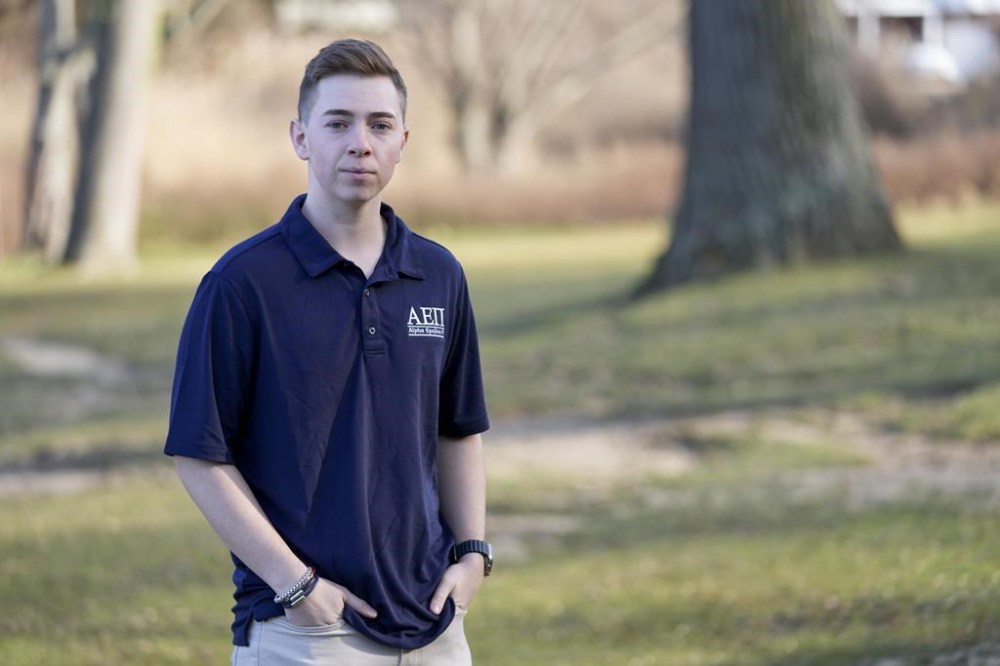
Max Zimmerman poses for a portrait, Friday, Jan. 12, 2024, in Roslyn, N.Y. Zimmerman says he’s a firm supporter of the First Amendment. But in the aftermath of Oct. 7, he says it’s sometimes scary being a Jewish student at Towson University, near Baltimore. (AP Photo/Mary Altaffer)

Colleges are caught in the middle: Standing up for offensive speech could draw accusations of antisemitism, while adding limits to speech could bring its own legal challenges.

William Adams, a former president of Colby College in Maine, says the solution lies somewhere between. The drift away from a classical view on free speech has left even progressive faculty fearful they will be punished for verbal missteps. At the same time, he says, colleges have a duty to meet the changing expectations of an increasingly diverse student body.

“Something has got to really be rearranged in these settings without a return to hard-nosed constitutionalism, because I don’t think that’ll work either,” he says. “We have to get to a place where there isn’t this tension.”

___

The Associated Press’ education coverage receives financial support from multiple private foundations. AP is solely responsible for all content. Find AP’s standards for working with philanthropies, a list of supporters and funded coverage areas at AP.org.

Report Error Submit a Tip

More Stories

Orange Shirt Day project fits students to a tee

Maggie Macintosh 5 minute read Preview

Orange Shirt Day project fits students to a tee

Maggie Macintosh 5 minute read Monday, Sep. 28, 2026

On the eve of Orange Shirt Day, hundreds of black T-shirts will be handed out to teenagers at Elmwood High School — and there wasn’t a mixup in the clothing procurement process.

The student-run business behind the initiative wanted to make a statement about “truth and reconciliation” being a year-round activity, said Daniel Concepcion, a Grade 12 student.

Daniel said given that black is a staple in the wardrobe of teenagers, he hopes these shirts won’t sit on hangers for 364 days of the year.

“Every child matters, every part of the day, every day,” the 17-year-old said.

Read
Monday, Sep. 28, 2026

Retiree sues neighbour over alleged dog attack

Scott Billeck 2 minute read Yesterday at 2:00 AM CDT

A Winnipeg man is suing his neighbour over an alleged dog attack he says occurred while he was helping him with a lawnmower.

Arthur Cabel, a retiree who lives on Selkirk Avenue, is seeking unspecified damages from neighbour Saisamone Saegone, according to a statement of claim filed in the Manitoba Court of King’s Bench last week.

Cabel claims he went to Saegone’s home in the afternoon on Sept. 23, 2024, to help him with his lawnmower.

According to the lawsuit, Saegone’s large dog, initially in a fenced backyard, escaped, approaching Cabel and “mauling, attacking and biting him.”

Obsessed stalker who shot, killed young woman at bus stop in 1993 dies behind bars at age 74

Erik Pindera 3 minute read Preview

Obsessed stalker who shot, killed young woman at bus stop in 1993 dies behind bars at age 74

Erik Pindera 3 minute read Yesterday at 5:53 PM CDT

A Winnipeg man who stalked a woman for several years before shooting her dead in the street in 1993 has died in Stony Mountain prison.

On Monday, 74-year-old Ronald Edd Bell died of apparent natural causes at the federal prison just north of Winnipeg, the Correctional Service of Canada said.

Bell had been in prison since May 30, 1994, when he was given a life sentence with no chance of parole for 18 years for killing Terry-Lyn Babb, 25, on Jan. 21, 1993.

Bell walked up behind an unsuspecting Babb, who was waiting at a bus stop at Sherbrook Street and Wolseley Avenue, and shot her in the head with a pistol in front of horrified witnesses, says the Free Press report of his sentencing hearing.

Read
Yesterday at 5:53 PM CDT

Billions of dollars spent on health, but scattershot financial reporting leaves decision-makers, Manitobans in the dark, auditor general says

Nicole Buffie 3 minute read Preview

Billions of dollars spent on health, but scattershot financial reporting leaves decision-makers, Manitobans in the dark, auditor general says

Nicole Buffie 3 minute read Yesterday at 5:20 PM CDT

Manitoba’s auditor general says significant gaps in health-sector financial reporting make it difficult to understand how billions of dollars in public funds are spent.

Auditor General Tyson Shtykalo is calling for clearer, more transparent reporting in his latest report, titled Observations on Health Sector Financial Reporting and Accountability in Manitoba.

“Manitoba spends nearly $10 billion annually on health care, but current financial reporting does not provide a clear picture of how that money is spent, what services cost, or the financial pressures facing the system,” Shtykalo said in a news release.

While some financial information is available, the reports do not provide a “complete, consistent, or easily understood” picture of how health-care funds are spent, the report said.

Read
Yesterday at 5:20 PM CDT

Jets pick up netminder as relatively new 23-man roster announced

Mike McIntyre 7 minute read Preview

Jets pick up netminder as relatively new 23-man roster announced

Mike McIntyre 7 minute read Monday, Sep. 28, 2026

Let’s get the caveats out of the way: Nothing is set in stone, nor written in permanent ink, and what you see right now could change in the blink of an eye.

With that being said, allow us to introduce you to the 2026-27 Winnipeg Jets — where change is very much in the air.

The 23-man roster submitted to the NHL offices by Monday’s 4 p.m. deadline includes seven players who were not on the team at this time last year. In fact, there could be as many as 10 new faces in the opening-night lineup on Friday against Boston when you factor in three regulars didn’t start the 2025-26 campaign due to injury.

That’s a lot of turnover, which isn’t surprising for a team that finished 26th overall in the standings and was — to most fans and pundits — too old and too slow.

Read
Monday, Sep. 28, 2026

Kinew adds cabinet portfolio to focus on first responders

Carol Sanders and Nicole Buffie 5 minute read Preview

Kinew adds cabinet portfolio to focus on first responders

Carol Sanders and Nicole Buffie 5 minute read Monday, Sep. 28, 2026

Premier Wab Kinew shuffled his cabinet Monday and created a new ministerial position that will oversee first responders in the province.

Kinew appointed David Pankratz, the MLA for Waverley, as minister responsible for first responder initiatives.

Tuxedo MLA Carla Compton was appointed minister responsible for accessibility, taking over the role from Families Minister Nahanni Fontaine.

The new ministers were sworn in at a ceremony at the legislature Monday afternoon.

Read
Monday, Sep. 28, 2026