Higher-dose naloxone spray didn’t save more lives, researchers find
Advertisement
Read this article for free:
or
Already have an account? Log in here »
To continue reading, please subscribe:

Digital Subscription
One year of digital access for only $205*
- Enjoy unlimited reading on winnipegfreepress.com
- Read the E-Edition, our digital replica newspaper
- Access News Break, our award-winning app
- Play interactive puzzles
*First annual payment billed as $205.00 + GST for one year. This annual subscription will automatically renew at $233.00 + GST every 52 weeks (10% off the regular annual price of $259.35). Offer available to new and qualified returning subscribers only. Cancel any time.
To continue reading, please subscribe:
Add Free Press access to your Brandon Sun subscription for only an additional
$1 for the first 4 weeks*
- Enjoy unlimited reading on winnipegfreepress.com
- Read the E-Edition, our digital replica newspaper
- Access News Break, our award-winning app
- Play interactive puzzles
*Your next Brandon Sun subscription payment will increase by $1.00 and you will be charged $17.95 plus GST for four weeks. After four weeks, your payment will increase to $24.95 plus GST every four weeks.
Read unlimited articles for free today:
or
Already have an account? Log in here »
Hey there, time traveller!
This article was published 08/02/2024 (966 days ago), so information in it may no longer be current.
NEW YORK (AP) — A new, higher-dose nasal spray for reversing opioid overdoses did not save more lives than the previous standard dose, but it did cause more vomiting and other side effects, researchers wrote in a study published Thursday.
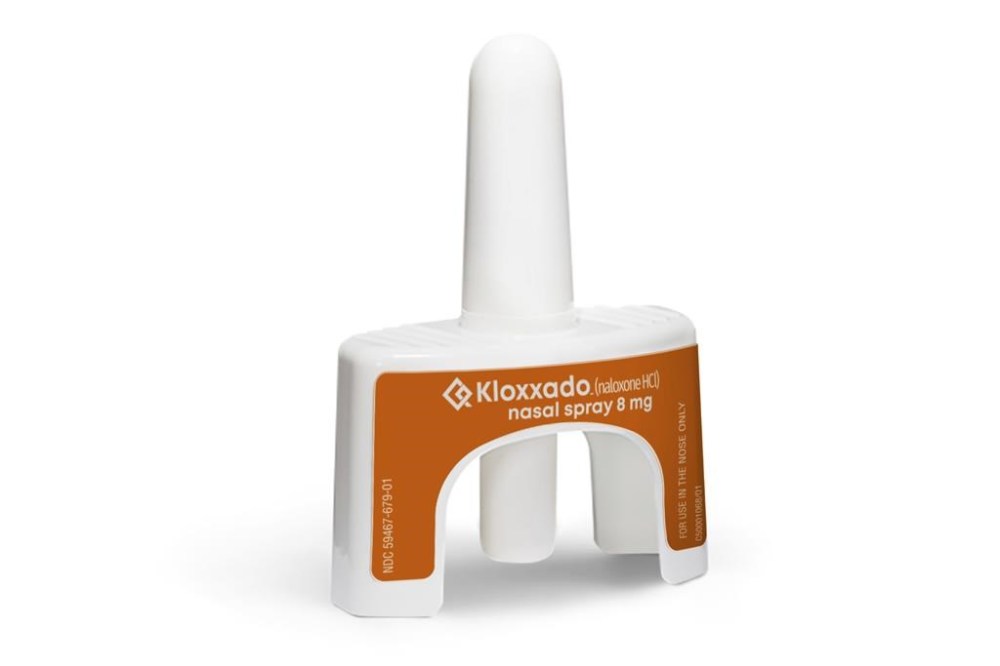
The 8-milligram naloxone spray — twice as potent as the highest dose previously available — was approved two years ago after pressure from experts and patient advocates who noted lower-dose antidotes often were being given multiple times to people suffering overdoses.
The new study, which was limited to more rural parts of New York state, is being called the first to provide real-world data on the differences between the two sprays. The paper was published by the Centers for Disease Control and Prevention, but the federal health agency was not involved in the research.
The higher-dose “did not provide added benefit,” the authors wrote.
“What was really remarkable was the survival was the same, but the amount of withdrawal symptoms was significantly larger in the people that got the 8-milligram dose,” said one of the authors, Dr. Michael Dailey of Albany Medical College.
Dailey said the study did not lead him to endorse one product over another. But, he said, “its important for us to recognize that the potential for increased side effects is real.”
The researchers worked with the New York State Police, who respond to emergencies along highways and in rural areas.
Three troops in eastern New York were given 8-milligram sprays. Eight troops based further away from Albany were stocked with 4-milligram doses. The study results were based on 354 instances in which troopers administered naloxone sprays from late March 2022 to mid-August 2023.
In cases where overdose patients were still alive when troopers arrived, 99% survived after getting naloxone, no matter which dose was given.
People who got 4-milligram sprays usually got more than one dose — 1.67 doses on average, equivalent to 6.7 milligrams. But so too did those treated with the 8-milligram sprays, who got 1.58 doses, or 12.6 milligrams, on average.
In both groups, disorientation and lethargy were common when people came to.
But other problems were significantly more common in the patients who got the higher-dose sprays. About 38% experienced signs and symptoms of withdrawal, including vomiting, abdominal pain, sweating, shaking and diarrhea. Only 19% of those getting the lower dose had those problems, the study found.
That’s a concern because it could actually contribute to future overdose deaths, said Dr. Alexander Walley, a Boston Medical Center addiction specialist who also works with the Massachusetts health department.

If someone has extra withdrawal symptoms when they are rescued from an overdose, they may remember the pain and discomfort of that experience and — experts fear — might actually avoid having someone with naloxone around when they take drugs in the future, Walley said.
The study is limited and imperfect in how it randomized who got which doses, Walley said, but it’s nevertheless “good quality evidence.”
“The solution to a more potent (illicit) drug supply is not necessarily a more potent naloxone,” he said. “It’s having people be witnessed when they use the drugs, and have that witness be someone who can administer naloxone and call for help.”
___
The Associated Press Health and Science Department receives support from the Howard Hughes Medical Institute’s Science and Educational Media Group. The AP is solely responsible for all content.