‘Energy needs’: Study shows polar bears can’t survive on extended land-based diet
Advertisement
Read this article for free:
or
Already have an account? Log in here »
To continue reading, please subscribe:

Digital Subscription
One year of digital access for only $205*
- Enjoy unlimited reading on winnipegfreepress.com
- Read the E-Edition, our digital replica newspaper
- Access News Break, our award-winning app
- Play interactive puzzles
*First annual payment billed as $205.00 + GST for one year. This annual subscription will automatically renew at $233.00 + GST every 52 weeks (10% off the regular annual price of $259.35). Offer available to new and qualified returning subscribers only. Cancel any time.
To continue reading, please subscribe:
Add Free Press access to your Brandon Sun subscription for only an additional
$1 for the first 4 weeks*
- Enjoy unlimited reading on winnipegfreepress.com
- Read the E-Edition, our digital replica newspaper
- Access News Break, our award-winning app
- Play interactive puzzles
*Your next Brandon Sun subscription payment will increase by $1.00 and you will be charged $17.95 plus GST for four weeks. After four weeks, your payment will increase to $24.95 plus GST every four weeks.
Read unlimited articles for free today:
or
Already have an account? Log in here »
Hey there, time traveller!
This article was published 13/02/2024 (947 days ago), so information in it may no longer be current.
Polar bears along Hudson Bay stranded on land by a lengthening summer tried everything to feed themselves, from swimming after seal carcasses to munching on caribou antlers.
But a new research project found nothing worked, a conclusion that may be the last word on whether the bears can find enough food on shore to make up for the ever-declining time they have to hunt from sea ice.
“There really isn’t any terrestrial food that is going to meet their energy needs,” said Anthony Pagano, lead author of a paper published in Nature Communications on the much-studied polar bears of Hudson Bay’s west shore.
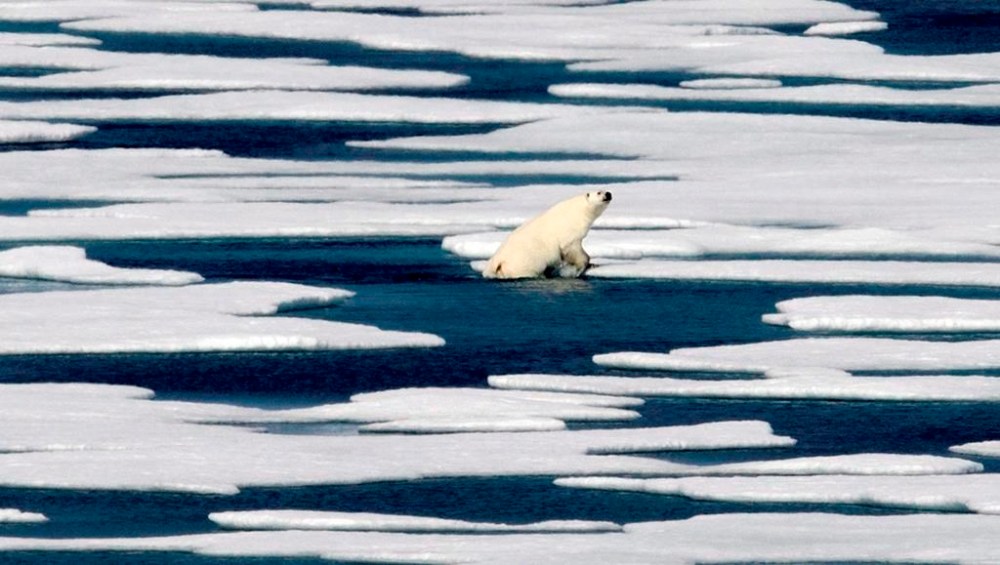
Scientists have long been watching how the West Hudson Bay polar bears, one of the world’s most southerly populations, fare as the climate continues to change.
Because sea ice now melts earlier and forms later, the bears spend about three weeks longer on land than they did in the ’80s, extending the time they’re off the sea ice they use to hunt fat-rich seals, their main prey. That shorebound period is likely to lengthen by up to two weeks per decade.
The question is whether there’s enough food on land to sustain polar bears, the largest and therefore hungriest bears on Earth.
Pagano and his colleagues rigged up 20 bears with small video cameras around their necks, allowing the team to track the hour-by-hour wanderings of 20 individual bears for three weeks.
“We had a bear’s-eye view of their behaviour,” Pagano said. “They will scour the landscape, looking for anything.”
Some bears simply slept, up to 98 per cent of the time.
The rest put the “omni” in “omnivore.” Almost all munched down grasses and kelp. Most ate berries. Many gulped eggs, scavenged bird carcasses and crunched bones — including caribou antlers.
Some swam out into the bay, finding the occasional seal carcass. One swam all night, 50 kilometres offshore, to find a floating dead beluga whale, which the bear mostly used as a resting platform before swimming back.
But none maintained their body weight. All lost about two kilograms a day.
“Regardless of what strategy they were using, they all lost weight at a similar rate,” Pagano said. “They’re not really getting any net benefit beyond compensating for the higher energy demands they were using.”
It’s normal for bears to lose weight during the ice-free period. It’s not normal for them to be losing weight for longer and longer periods of time, forcing them to start the winter weaker.
Pagano said the longer ice-free period is hardest on younger animals.
“They’re smaller, they have higher energy expenditure, they may not be as skilled a hunter, and they aren’t able to accumulate as much body fat,” he said. “They’re going to be the individuals that are at greater risk.”
All bears made it through the study period. One had enough body fat remaining to survive into the following summer.
But two young females in Pagano’s study lost weight at a pace that made it unlikely they’d survive until the ice returned. Another young male seemed doomed until he found a large carcass to scavenge that probably saved his life.
Polar bears aren’t just grizzlies in white suits, Pagano concluded.
“Foods available from shore are pretty low in energetic content. (Polar bears) need a high-energy diet.”
This report by The Canadian Press was first published Feb. 13, 2024