When it’s St. Patrick’s Day in New Orleans, get ready to catch a cabbage
Advertisement
Read this article for free:
or
Already have an account? Log in here »
To continue reading, please subscribe:

Digital Subscription
One year of digital access for only $205*
- Enjoy unlimited reading on winnipegfreepress.com
- Read the E-Edition, our digital replica newspaper
- Access News Break, our award-winning app
- Play interactive puzzles
*First annual payment billed as $205.00 + GST for one year. This annual subscription will automatically renew at $233.00 + GST every 52 weeks (10% off the regular annual price of $259.35). Offer available to new and qualified returning subscribers only. Cancel any time.
To continue reading, please subscribe:
Add Free Press access to your Brandon Sun subscription for only an additional
$1 for the first 4 weeks*
- Enjoy unlimited reading on winnipegfreepress.com
- Read the E-Edition, our digital replica newspaper
- Access News Break, our award-winning app
- Play interactive puzzles
*Your next Brandon Sun subscription payment will increase by $1.00 and you will be charged $17.95 plus GST for four weeks. After four weeks, your payment will increase to $24.95 plus GST every four weeks.
Read unlimited articles for free today:
or
Already have an account? Log in here »
Hey there, time traveller!
This article was published 15/03/2024 (908 days ago), so information in it may no longer be current.
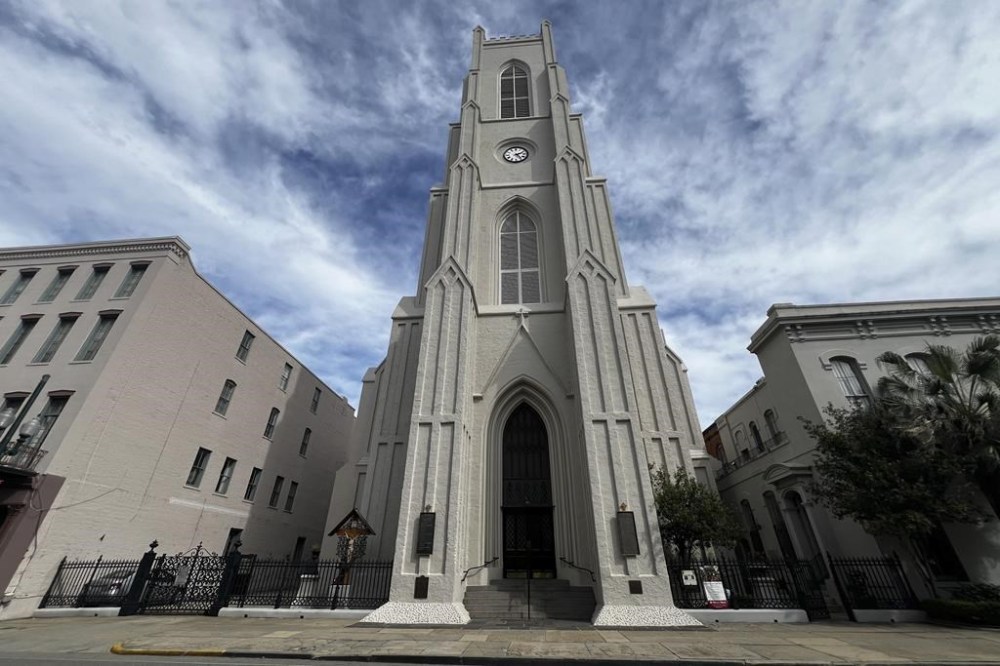
NEW ORLEANS (AP) — The grandly colonnaded old city hall was designed by an Irish architect. A neighborhood near the wharves is still known as the Irish Channel. Landmark towers and spires of Catholic churches built for Irish immigrants dot the skyline.
New Orleans is well known for a culture that evolved from early French and Spanish colonization, Caribbean commerce and the legacies of enslaved Africans. But immigrants from a variety of countries also influenced New Orleans’ art, architecture, food and music. March brings an annual focus on the Irish, with St. Patrick’s Day celebrations that include shamrock-themed block parties and neighborhood parades.
“If you look back on the Irish history in New Orleans or the Irish politics in New Orleans, a lot of our mayors and representatives and council people were from Irish descent,” said Ronnie Burke, the grand marshal of this weekend’s Irish Channel parade.
He grasped a string of rosary beads made of marble from Connemara in Ireland’s County Galway. His family emigrated from there five generations ago to escape the Great Hunger, which set off a wave of Irish migration in the 19th century.
He was among scores of green-clad New Orleans residents gathered at a park near the Mississippi River on Thursday during an Irish-themed block party and fundraiser for St. Michael, a school serving students with learning disabilities. The event also served as something of a reunion for former Irish Channel residents who attended a Catholic school in the area. And it was a prelude to this weekend’s parades in and around New Orleans.
Irish lore abounds in the city, especially this time of year.
A lot of it centers on the work of Irish immigrants in the digging of the New Basin Canal in the early 1800s, part of a national wave of infrastructure improvements that drew Irish immigrant workers. The hardships the New Basin laborers faced — aside from backbreaking work, there was a deadly cholera outbreak — are points of pride among the city’s Irish.
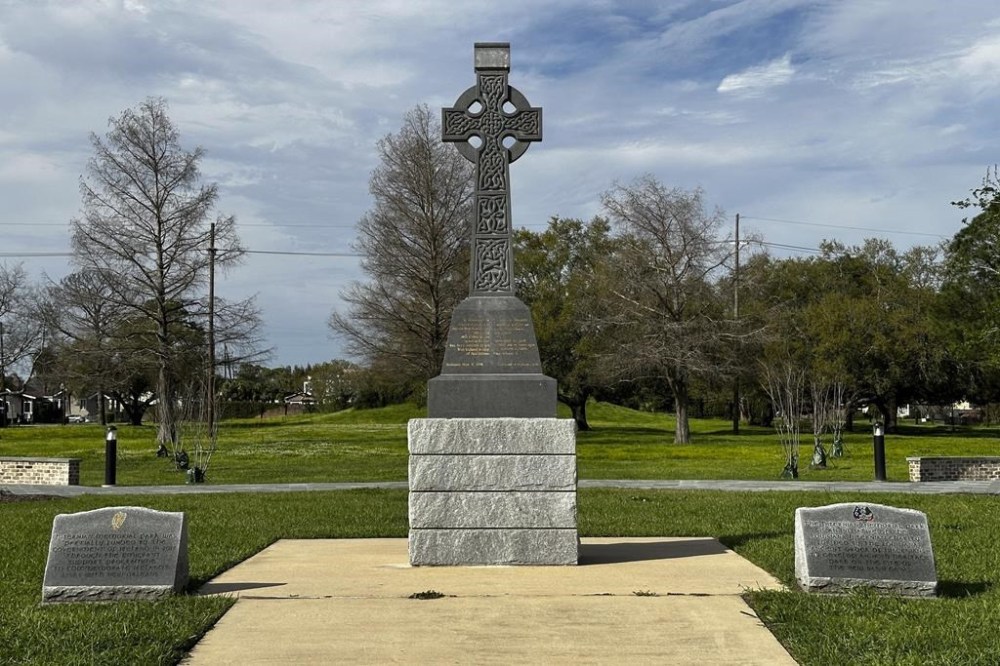
The canal eventually was outmoded and filled in decades ago, but a park on a tract of the reclaimed land, marked by a 7-foot (2.1-meter) marble Celtic cross, honors the memory of the laborers.
The hardscrabble lives of Irish laborers gave rise to a St. Patrick’s Day tradition unique to New Orleans: Float riders in the annual Irish Channel parade toss cabbages and potatoes to the people on the street, an Irish American twist on the Mardi Gras practice of throwing strings of beads and other favors to revelers.
“It’s unique to New Orleans, and it’s unique within New Orleans,” said Laura Kelley, an adjunct professor in Tulane University’s history department and author of the book “The Irish in New Orleans.” The tradition dates to the 1940s, she said.
“The Irish Channel was a real working, working-class neighborhood. And there were tough times — we’re coming out of the Great Depression,” she said. “It’s a way that you can give food to the people in your neighborhood and give it freely and equally and, well, it’s a face-saving measure.”
Irish immigration to New Orleans had been happening since the city’s early days as a French and later a Spanish colony, Kelley said. Infrastructure improvements and the famine brought new waves of immigrants bolstering the Irish presence. By 1850, roughly a quarter of the city’s population was Irish, she said.
“Per capita, the Irish population of New Orleans was higher than Philadelphia, Baltimore, Chicago, Boston,” Kelley said. “It was higher than any other place but New York City.”
Still, even the Irish are sometimes surprised at the strength of Irish American culture in New Orleans. Sean Kennedy, an accountant by trade, arrived from Ireland in 1991. He hadn’t planned to stay but has been in New Orleans ever since. He owns an Irish bar now.
Kelley, who has Irish roots, had no inkling of the city’s Irish heritage when she arrived in the city to work on a doctorate about 30 years ago. She struck up a conversation with a cab driver and, because of his accent, mistook him for a New Yorker, not realizing that the port city’s patois — influenced by Irish, Italian and German immigrants, among others — often sounds more akin to the Northeast than the Old South.
“I was completely confounded because he sounded like he was straight out of New York City,” Kelley said. “And here he’s telling me that he has never left New Orleans. And it was the first time I heard about the Irish Channel.”
But the Irish influence has long been cherished by Bethany Brinkman. At Thursday’s block party for St. Michael, she said her great-grandparents had immigrated to New Orleans from Ireland. And she recalled her grandfather singing Irish lullabies.
“He’d put on an Irish brogue,” she said, “that he kind of adopted from his grandparents.”