Williams-Sonoma must pay almost $3.2 million for violating FTC’s ‘Made in USA’ order

Advertisement

Advertise with us

NEW YORK (AP) — Home products retailer Williams-Sonoma will have to pay almost $3.2 million for violating a Federal Trade Commission “Made in USA” order.

Read this article for free:


or

Already have an account? Log in here »

To continue reading, please subscribe:

Subscribe and receive a limited-edition Free Press branded hat or tote.

Digital Subscription

One year of digital access for only $205*

  • Enjoy unlimited reading on winnipegfreepress.com
  • Read the E-Edition, our digital replica newspaper
  • Access News Break, our award-winning app
  • Play interactive puzzles

*First annual payment billed as $205.00 + GST for one year. This annual subscription will automatically renew at $233.00 + GST every 52 weeks (10% off the regular annual price of $259.35). Offer available to new and qualified returning subscribers only. Cancel any time.

To continue reading, please subscribe:

Add Free Press access to your Brandon Sun subscription for only an additional

$1 for the first 4 weeks*

  • Enjoy unlimited reading on winnipegfreepress.com
  • Read the E-Edition, our digital replica newspaper
  • Access News Break, our award-winning app
  • Play interactive puzzles
Start now

*Your next Brandon Sun subscription payment will increase by $1.00 and you will be charged $17.95 plus GST for four weeks. After four weeks, your payment will increase to $24.95 plus GST every four weeks.

Hey there, time traveller!
This article was published 26/04/2024 (878 days ago), so information in it may no longer be current.

NEW YORK (AP) — Home products retailer Williams-Sonoma will have to pay almost $3.2 million for violating a Federal Trade Commission “Made in USA” order.

Williams-Sonoma was charged with advertising multiple products as being “Made in USA” when they were in fact manufactured in other countries, including China. That violated a 2020 commission order requiring the San Francisco-based company to be truthful about whether its products were in fact made in the U.S.

The FTC said Friday that Williams-Sonoma has agreed to a settlement, which includes a $3.175 million civil penalty. That marks the largest-ever civil penalty seen in a “Made in USA” case, the commission said.
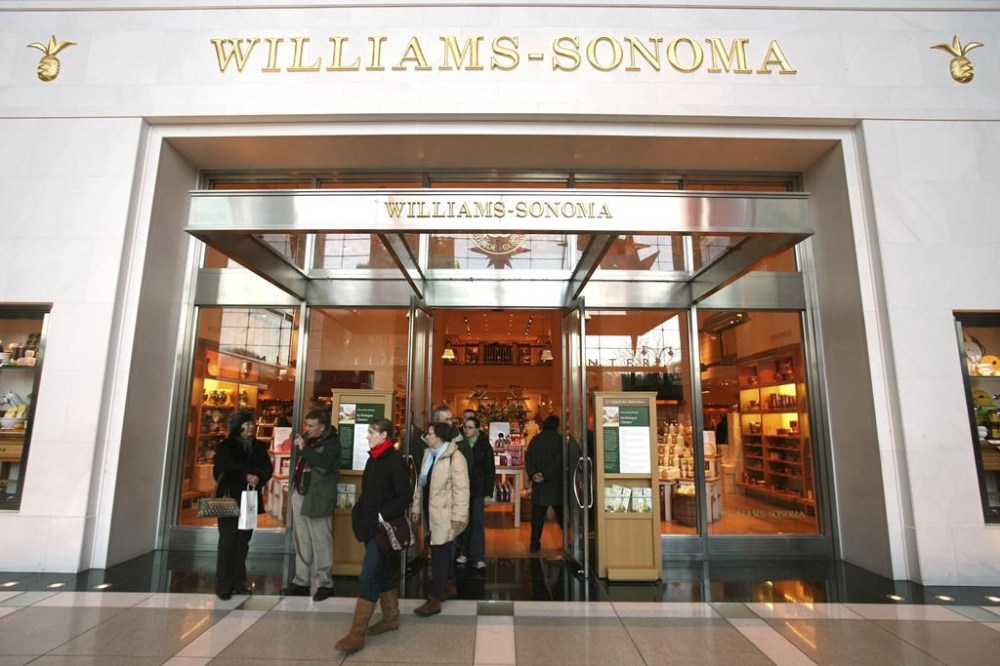
FILE -Shoppers leave a Williams-Sonoma store in New York, Jan. 3, 2008. Home products retailer Williams-Sonoma will have to pay more than $3.17 million penalty for violating a “Made in USA” order from the U.S. Federal Trade Commission. (AP Photo/Mark Lennihan. file)

“Williams-Sonoma’s deception misled consumers and harmed honest American businesses,” FTC Chair Lina M. Khan said. “Today’s record-setting civil penalty makes clear that firms committing Made-in-USA fraud will not get a free pass.”

In addition to paying the penalty, the seller of cookware and home furnishings will be required to submit annual compliance reports, the FTC said. The settlement also imposes and reinforces a number of requirements about manufacturing claims the company can make.

Williams-Sonoma did not immediately respond to a request for comment Friday.

In 2020, the FTC sued Williams-Sonoma on charges that the company falsely advertised several product lines as being all or almost all made in the U.S. under its Goldtouch, Rejuvenation, Pottery Barn Teen and Pottery Barn Kids brands. The company then agreed to an FTC order requiring it to stop such deceptive claims.

The complaint that resulted in this week’s settlement was filed by the Justice Department on referral from the FTC. According to the filing, the FTC found that Williams-Sonoma was advertising its PBTeen-branded mattress pads as “crafted” in the U.S. from domestic and imported materials — when they were made in China.

The FTC said it then investigated six other products that Williams-Sonoma marketed as “Made in USA” and found those claims to also be deceptive, violating the 2020 order.


Report Error Submit a Tip

More Stories

New Jets show promise despite loss to experienced Oilers

Mike McIntyre 8 minute read Preview

New Jets show promise despite loss to experienced Oilers

Mike McIntyre 8 minute read Updated: Yesterday at 9:34 AM CDT

Preseason hockey games are always more about the process than the result, and that’s especially true when the opposing rosters appear to be a major mismatch on paper.

So a 5-2 loss by an inexperienced group of Winnipeg Jets skaters against a star-studded Edmonton Oilers squad on Saturday night in the Alberta capital was neither surprising nor alarming.

There was, however, plenty to like from the visitors’ perspective despite the outcome.

Let’s break it down.

Read
Updated: Yesterday at 9:34 AM CDT

Letters, Sept. 21

6 minute read 2:00 AM CDT

Treat the disease

I understand there are valid concerns regarding specific short term rentals (STR) in Winnipeg. However, the article raised other alarms for me.

Winston Yee, the city’s manager of licensing and bylaw enforcement, stated the purpose of the new requirement (reporting 911 calls for STR) is “so we can become aware of issues.” So he isn’t aware of “the issues” yet? Are there not systems in place to obtain this information? Doesn’t the city know which addresses have high calls for emergency service? I sure hope the city’s systems aren’t so antiquated that it can’t cross-reference emergency calls with the STR registry.

I think the focus needs to be on the behavior, rather than the ownership structure. Part of the proposed solution to “parties, noise, violence, vandalism and other criminal activity” is to require owners of STR to advise the city when an emergency responder attends the property.

Break spell before it hexes your marriage

Maureen Scurfield 4 minute read 2:00 AM CDT

DEAR MISS LONELYHEARTS: I have an itch that needs to be scratched every couple of days. I sneak home with a new young woman from my workplace, who is a witch, and spend an hour or more with her, learning some things my wife doesn’t know anything about. It’s not really sexual with this new person yet, but I’m feeling intrigued by her witchy-ness — and more.

I’m fascinated and want to learn whatever she’s willing to teach me as we go along. This is especially cool now my “magic woman” has told me she’s interested by the darkness in me. Whatever that means. Nobody’s ever noticed that before.

I feel my wife really doesn’t need to know I’m into this stuff. It would only hurt her, and it may lead to nothing. But how do you keep a secret from your partner for any length of time when they know your every mood and can almost smell your secrets?

— Feeling Insecure, West End

Who will vote for trees?

Erna Buffie 5 minute read Preview

Who will vote for trees?

Erna Buffie 5 minute read 2:01 AM CDT

In July 2026, Terrasse-Vaudreuil, a small Quebec town, made international headlines.

And no, it wasn’t the result of murder and mayhem or a catastrophic flood. The headlines were about a remarkable resolution passed by its town council, making Terrasse-Vaudreuil the first city in the world to recognize the rights of trees.

Read
2:01 AM CDT

Williams-Sonoma must pay almost $3.2 million for violating FTC’s ‘Made in USA’ order

The Associated Press 3 minute read Preview

Williams-Sonoma must pay almost $3.2 million for violating FTC’s ‘Made in USA’ order

The Associated Press 3 minute read Friday, Apr. 26, 2024

NEW YORK (AP) — Home products retailer Williams-Sonoma will have to pay almost $3.2 million for violating a Federal Trade Commission “Made in USA” order.

Williams-Sonoma was charged with advertising multiple products as being “Made in USA” when they were in fact manufactured in other countries, including China. That violated a 2020 commission order requiring the San Francisco-based company to be truthful about whether its products were in fact made in the U.S.

The FTC said Friday that Williams-Sonoma has agreed to a settlement, which includes a $3.175 million civil penalty. That marks the largest-ever civil penalty seen in a “Made in USA” case, the commission said.

“Williams-Sonoma’s deception misled consumers and harmed honest American businesses," FTC Chair Lina M. Khan said. "Today’s record-setting civil penalty makes clear that firms committing Made-in-USA fraud will not get a free pass.”

Read
Friday, Apr. 26, 2024

CMU instructor uses camper audio studio to capture stories of human connection in a time of isolation, alienation

Josiah Neufeld 7 minute read Preview

CMU instructor uses camper audio studio to capture stories of human connection in a time of isolation, alienation

Josiah Neufeld 7 minute read 6:00 AM CDT

GRUNTHAL — Last Sunday, David Balzer parked his vintage 1978 Triple E Surfside camper trailer on a church lot in town and, like an itinerant priest with a mobile confessional, prepared to hear people’s stories.

It was a crisp sunny morning. Inside the trailer were a pair of yellow mugs that matched the trailer’s egg yolk trim. On a table were two microphones.

Outside the trailer stood a sandwich board with an invitation: “Step in.”

Balzer doesn’t actually hear confessions, but he does perform what some might consider a priestly duty: helping people share their stories.

Read
6:00 AM CDT