FDA brings lab tests under federal oversight in bid to improve accuracy and safety

Advertisement

Advertise with us

WASHINGTON (AP) — Makers of medical tests that have long escaped government oversight will have about four years to show that their new offerings deliver accurate results, under a government rule vigorously opposed by the testing industry.

Read this article for free:


or

Already have an account? Log in here »

To continue reading, please subscribe:

Subscribe and receive a limited-edition Free Press branded hat or tote.

Digital Subscription

One year of digital access for only $205*

  • Enjoy unlimited reading on winnipegfreepress.com
  • Read the E-Edition, our digital replica newspaper
  • Access News Break, our award-winning app
  • Play interactive puzzles

*First annual payment billed as $205.00 + GST for one year. This annual subscription will automatically renew at $233.00 + GST every 52 weeks (10% off the regular annual price of $259.35). Offer available to new and qualified returning subscribers only. Cancel any time.

To continue reading, please subscribe:

Add Free Press access to your Brandon Sun subscription for only an additional

$1 for the first 4 weeks*

  • Enjoy unlimited reading on winnipegfreepress.com
  • Read the E-Edition, our digital replica newspaper
  • Access News Break, our award-winning app
  • Play interactive puzzles
Start now

*Your next Brandon Sun subscription payment will increase by $1.00 and you will be charged $17.95 plus GST for four weeks. After four weeks, your payment will increase to $24.95 plus GST every four weeks.

Hey there, time traveller!
This article was published 29/04/2024 (889 days ago), so information in it may no longer be current.

WASHINGTON (AP) — Makers of medical tests that have long escaped government oversight will have about four years to show that their new offerings deliver accurate results, under a government rule vigorously opposed by the testing industry.

The regulation finalized Monday by the Food and Drug Administration will gradually phase in oversight of new tests developed by laboratories, a multibillion-dollar industry that regulators say poses growing risks to Americans. The goal is to ensure that new tests for cancer, heart disease, COVID-19, genetic conditions and many other illnesses are safe, accurate and reliable.

“The agency cannot stand by while Americans continue to rely on results from these tests without assurance that they work,” FDA Commissioner Robert Califf told reporters on a conference call.
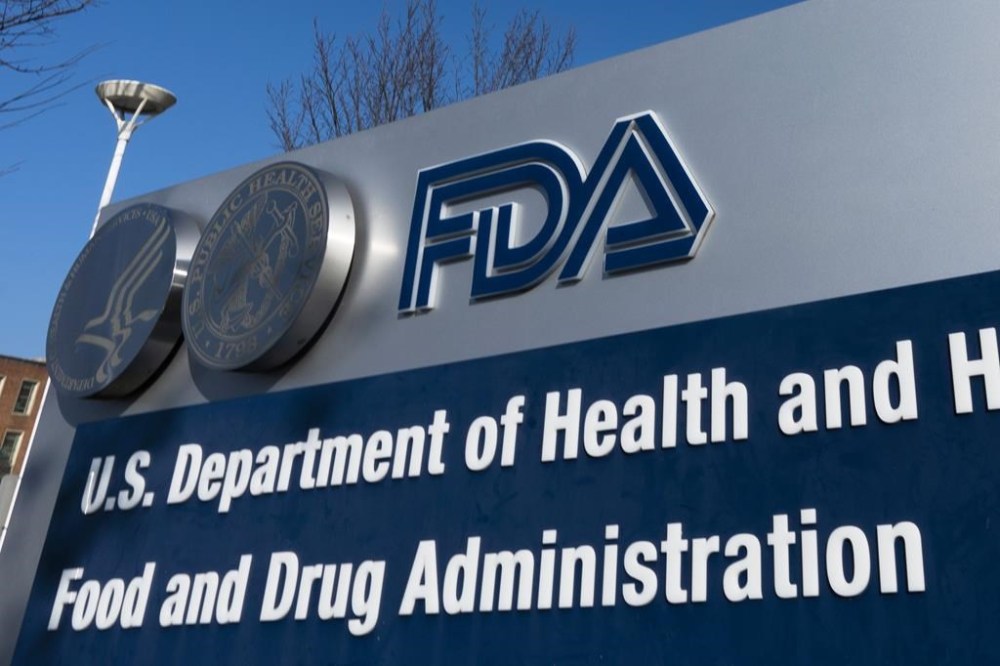
FILE - A sign for the Food and Drug Administration is displayed outside their offices in Silver Spring, Md., on Dec. 10, 2020. Makers of thousands of medical tests that have long escaped oversight will have to show that they deliver accurate results, under a government rule vigorously opposed by the testing industry. The regulation finalized Monday, April 29, 2024 brings tests developed by laboratories under control of the FDA, which has warned that the multibillion-dollar industry poses growing risks to patients. (AP Photo/Manuel Balce Ceneta, File)

Califf said inaccurate tests can lead to unnecessary treatment or delays in getting proper care.

But in a significant move, the FDA decided that the tens of thousands of tests currently on the market will not have to undergo federal review. The agency said it will essentially grandfather those tests into approval to address concerns that the new rule “could lead to the widespread loss of access to beneficial” tests.

Under the government’s plan, most newly developed tests that pose a high risk — such as those for life-threatening diseases — will need to be FDA approved within 3 1/2 years. Lower risks tests will have four years to obtain approval.

All lab tests — old and new — will be required to register with the agency and report problems or errors. Based on this information, FDA officials said they will be able to target problematic tests.

“If we identify problems with the tests we can move forward to take action against them,” said Dr. Jeff Shuren, director of the FDA’s device center. “We think this overall strikes the right balance.”

The agency also won’t require approval of tests for which there are no alternatives, such as those for certain rare diseases.

The FDA already reviews tests and kits made by medical device manufacturers.

But labs, large hospitals and universities that develop their own in-house tests have been able to market them without each one undergoing agency review. The industry has resisted additional scrutiny for decades, saying it will stifle innovation and drive up costs.

There are an estimated 80,000 medical tests currently available from about 1,200 labs, according to the agency’s estimate. They include tests for complex diseases, as well as simpler conditions like high cholesterol and sexually transmitted infections.

In the 1970s and ’80s, most lab-based tests were “lower risk, small volume” products used mostly for local patients, according to the FDA.

Over time, the tests have grown into a nationwide business, with labs processing thousands of blood, urine and other samples per week from hospitals and clinics. Others advertise directly to consumers — including some claiming to measure the risk of developing ailments like Alzheimer’s and autism.

FDA officials have long voiced concerns about the accuracy of some tests, pointing to patients who have received inaccurate results for heart disease, Lyme disease and other conditions. Inaccurate tests can lead to patients getting an incorrect diagnosis, skipping treatments or receiving unnecessary medication or surgery.

More than a decade ago, the agency drafted tougher guidelines for the industry, but they were never finalized. For years, U.S. labs have successfully lobbied Congress and other federal institutions against tougher regulation.

When FDA released a draft of the new rule last September, a leading industry group argued the agency did not have legal authority to step into the testing market.

The American Clinical Laboratory Association said Monday it “has grave concerns about this rule as a matter of both policy and law. The rule will limit access to scores of critical tests, increase health care costs, and undermine innovation in new diagnostics.”

The group represents large testing chains such as Quest Diagnostics and LabCorp, as well as smaller labs and test makers.

___

The Associated Press Health and Science Department receives support from the Howard Hughes Medical Institute’s Science and Educational Media Group. The AP is solely responsible for all content.
Report Error Submit a Tip

More Stories

The election of our discontent: City at a crumbling crossroads, grumbling residents say in poll

Matthew Frank 7 minute read Preview

The election of our discontent: City at a crumbling crossroads, grumbling residents say in poll

Matthew Frank 7 minute read Yesterday at 2:37 PM CDT

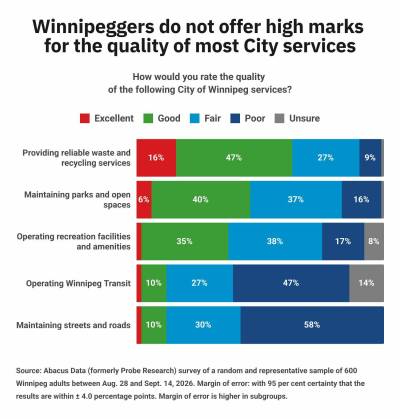
There’s an undercurrent of unhappiness running through the Winnipeg electorate as the municipal election day approaches.

One-half of Winnipeggers believe the city is heading in the wrong direction, according to a new Abacus Data poll, with nearly one-third unsure if Winnipeg is regressing or progressing.

Only 21 per cent of residents believe the city is on the right track, the Free Press-commissioned poll found.

That discontentment extends to how the city spends its tax dollars, with four in 10 Winnipeggers believing they receive poor value for what they pay in property taxes.

Read
Yesterday at 2:37 PM CDT

Thank Manitoba’s teachers by investing in students

Lillian Klausen 5 minute read 2:00 AM CDT

Manitoba’s students are settling into a new school year. Whether you graduated in 1986 or 2006, today’s classrooms look very different from the ones you remember.

Students reflect the changing makeup of our communities — differences in social, emotional, physical and cognitive abilities and socioeconomic stresses are all increasingly present and adding to the complexity of our classrooms.

Meeting these differing individual needs is no easy feat. It requires manageable class sizes, school counsellors, social workers, specialized resource teachers and investment in the systems that can help students thrive. But when those supports aren’t available, students’ needs don’t disappear. Increasingly, it falls to classroom teachers to try to fill the gaps.

When I started working as a teacher more than 30 years ago, we had budgets for resources when we needed them. Today, the needs of students have diversified and increased, but the funding for our public schools is failing to meet them.

‘Amazing honour’: Winnipeg distribution centre continues award-winning ways for McKesson Canada

Aaron Epp 5 minute read Preview

‘Amazing honour’: Winnipeg distribution centre continues award-winning ways for McKesson Canada

Aaron Epp 5 minute read 6:00 AM CDT

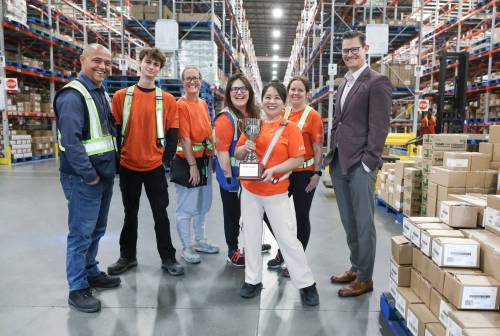
After a three-year absence, the trophy is back in Winnipeg.

Last week, McKesson Canada named its 120,000-square-foot pharmaceutical distribution centre in the northwest part of the Manitoba capital its Distribution Centre of the Year. The award recognizes the facility’s role in helping essential medications reach communities across the province and some of Canada’s remote regions.

This is the fourth time the Winnipeg facility has earned the company-wide award since it opened five years ago. McKesson previously honoured the centre in 2021, 2022 and 2023. The recognition comes with a trophy, as well as a banner that was hung from the rafters on Thursday.

More than 100 employees work across the centre’s day-and-night operations, processing between 80,000 and 100,000 medication units daily. Last year, the centre distributed more than 21 million medication units while maintaining more than 99 per cent accuracy.

Read
6:00 AM CDT

Wasteful operations should be held accountable

Barry E. Prentice 5 minute read Preview

Wasteful operations should be held accountable

Barry E. Prentice 5 minute read 2:00 AM CDT

Rising water bills are a top-of-mind issue for residents of Winnipeg going into the fall election. Management of the water and waste system is under question, with citizen’s groups, as well as the Free Press, calling for proper oversight of rates (Time for the PUB to review Winnipeg water rates, Editorial, Sept. 26).

The need to increase rates to build the North End sewage plant is understandable. Siphoning off utility proceeds to make up other tax revenue shortfalls is another matter. But it is not the only questionable practice. If there was Public Utilities Board oversight of Winnipeg’s water and sewer rates, it would certainly be asking why the city is spending more than $3 million annually to operate the 164-kilometre-long, Greater Winnipeg Water District railway (GWWD) on ratepayers’ behalf.

The GWWD has come to the attention of the Railway Relocation Study, led by Lloyd Axworthy. All existing rail lines within the city are under review, as is the feasibility of a new railway bypass.

The GWWD is an example of a railway that has outlived its usefulness and sits on a pocket of land close to downtown that could be converted to higher-value uses.

Read
2:00 AM CDT

Six high school hockey programs ceased operations following new Hockey Manitoba policy

Joshua Frey-Sam 7 minute read Preview

Six high school hockey programs ceased operations following new Hockey Manitoba policy

Joshua Frey-Sam 7 minute read Friday, Oct. 2, 2026

She lived the best of both worlds.

For the last three years, the 17-year-old wore a sweater for two different hockey programs — her high school team and AAA club in the Manitoba Female Hockey League — and was preparing to flourish in both colours again this winter.

Recently, however, the blue-liner was disappointed to learn she is no longer eligible to play her Grade 12 season with her school owing to a new policy imposed by Hockey Manitoba that bans players from participating in the Manitoba Women’s High School Hockey League if they are rostered on a U18 AAA team.

The rule applies to all athletes who play for both Winnipeg-based and rural AAA teams.

Read
Friday, Oct. 2, 2026

Today’s horoscope

Georgia Nicols 4 minute read Preview

Today’s horoscope

Georgia Nicols 4 minute read 2:00 AM CDT

MOON ALERT: There are no restrictions to shopping or important decisions today. The moon is in Leo.

ARIES (March 21-April 19)

Social plans are unpredictable. Likewise, sports and playful activities with children are potentially accident-prone. Be vigilant! Nevertheless, this is a powerful day to make creative advances in the arts, financial speculation and the entertainment world.

TAURUS (April 20-May 20)

Read
2:00 AM CDT