The Stanley Cup Final in American Sign Language is a welcome addition for Deaf community
Advertisement
Read this article for free:
or
Already have an account? Log in here »
To continue reading, please subscribe:

Digital Subscription
One year of digital access for only $205*
- Enjoy unlimited reading on winnipegfreepress.com
- Read the E-Edition, our digital replica newspaper
- Access News Break, our award-winning app
- Play interactive puzzles
*First annual payment billed as $205.00 + GST for one year. This annual subscription will automatically renew at $233.00 + GST every 52 weeks (10% off the regular annual price of $259.35). Offer available to new and qualified returning subscribers only. Cancel any time.
To continue reading, please subscribe:
Add Free Press access to your Brandon Sun subscription for only an additional
$1 for the first 4 weeks*
- Enjoy unlimited reading on winnipegfreepress.com
- Read the E-Edition, our digital replica newspaper
- Access News Break, our award-winning app
- Play interactive puzzles
*Your next Brandon Sun subscription payment will increase by $1.00 and you will be charged $17.95 plus GST for four weeks. After four weeks, your payment will increase to $24.95 plus GST every four weeks.
Read unlimited articles for free today:
or
Already have an account? Log in here »
Hey there, time traveller!
This article was published 13/06/2024 (842 days ago), so information in it may no longer be current.
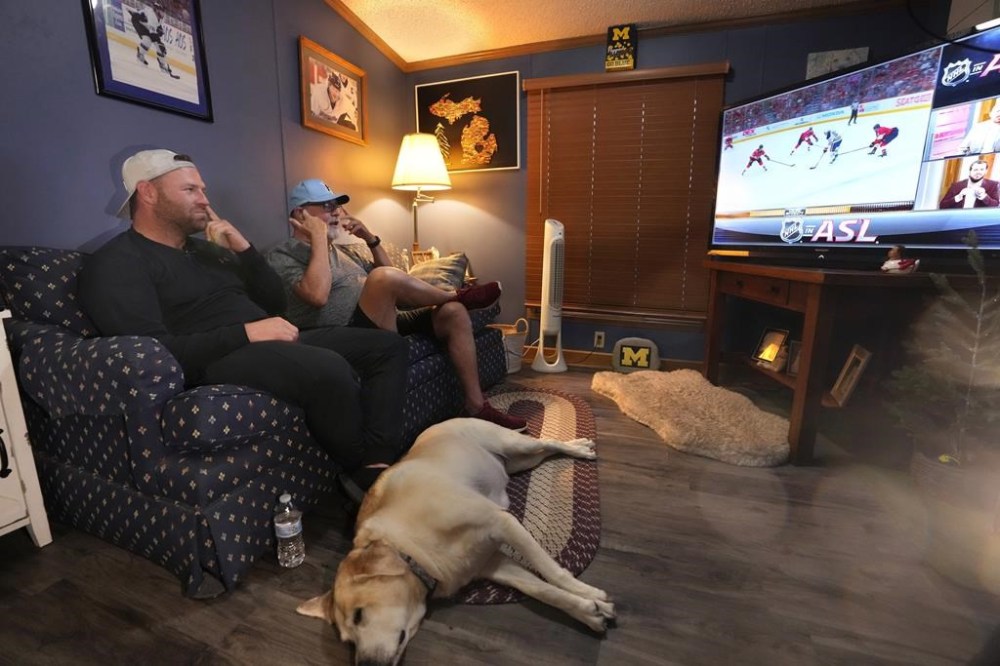
GENOA TOWNSHIP, Mich. (AP) — Bob Madden’s eyes darted from right to left, watching Game 2 of the Stanley Cup Final from a couch with his son, Jonathan, at his side and the family dog, Ruby, at their feet.
Madden, who is deaf, was enjoying the view with access to the commentary delivered in American Sign Language in what is believed to be a first for a major sports league game broadcast.
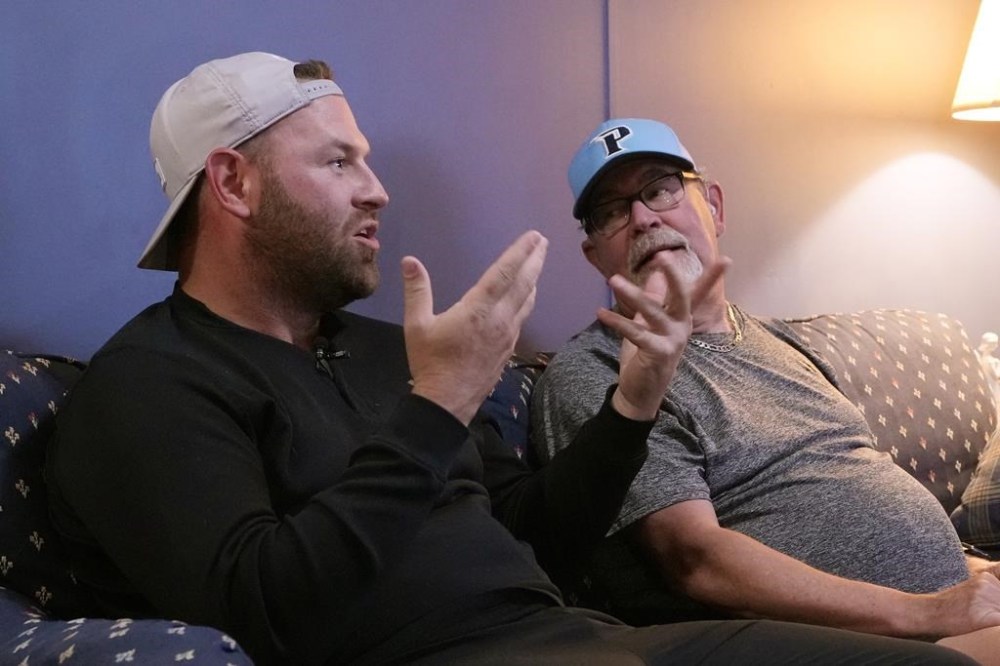
“I think I’m starting to like this,” the 68-year-old Madden said Monday night in his home about 50 miles northwest of Detroit. “It’s something new for the Deaf community. When I was a boy, we didn’t even have closed captioning.”
Closed captioning has been around since 1980, but the boxes of text in English do not provide true access to viewers in the Deaf community, whose first language is ASL.
The NHL became the first major sports league to offer play by play and analysis in ASL during a live broadcast last week when Florida hosted Edmonton in the Cup Final opener on Saturday night. ESPN+ and Sportsnet+ will feature the groundbreaking platform again Thursday night for Game 3, with the Oilers down 0-2 in the best-of-seven series.
“It’s a proud moment for our sport and it’s a great example of what can be done to support all communities,” said Kim Davis, the NHL’s senior executive VP of social impact, growth initiatives and legislative affairs. “Authentically demonstrating that the Deaf community is an important fan base, a fan-in-waiting fan base, is the essence of what inclusion is all about.”
A company that works to improve access to ASL in sports partnered with the NHL to deliver play-by-play and commentary for the underserved community: PXP Chief Operating Officer Jason Altmann, who is deaf, and Noah Blankenship from Denver’s Office of Deaf and Hard of Hearing Services appear on the right side of a split screen next to live coverage of the games.
“I grew up watching sports with my dad and it was our way to bond,” Altmann said via FaceTime in ASL in an interview with The Associated Press a day after Game 2. “I remember watching ESPN with Chris Berman and Dan Patrick and saying, ‘I wish I could do that, but I am deaf and it would be difficult in this world.’ While this is a full-circle moment for me, I don’t view it as an opportunity for me. This is an opportunity for the Deaf community to be elevated and provided access.
“The Deaf community is so often pushed aside and the NHL ASL project is an opportunity to show how vibrant the community is with a rich history and language,” he added. “We have gotten feedback from deaf children, who have said how happy they are to see deaf people on TV and to say that they feel like they’re being seen. That’s the best part about this job.”
And, the job is difficult for Altmann, Blankenship and viewers.
Hockey, especially at the NHL level with a championship at stake, does not provide many pauses in the frantic, end-to-end action for the commentators to share insights in ASL.
“The challenge is to find the right time to tell a short story or provide analysis as an added value to the viewers,” Altmann said.
Madden, meanwhile, had the challenge of watching the game and the commentary at the same time on a screen that also included other potential distractions. Graphics such as ice time for the players on the ice, statistics, play by play and a crowd intensity meter that measures crowd noise were also shown.
“It’s hard to watch with one eye going on way and one eye going the other,” Madden said. “It’s the same challenge with closed captioning, but this is better in ASL.”
Hearing commentators are not heard during the NHL ASL broadcasts, which includes only sounds that would be heard in the arena such as the officials calling a penalty, blowing a whistle, skates cutting through ice and sticks hitting pucks.

“This is the first time we have done this for the Deaf community,” Altmann said. “I have high expectations, but I have told my colleagues, we need to give ourselves some grace.”
The initiative allows the Deaf and Hard of Hearing communities to enjoy the “excitement and intricacies of the game on an equal footing,” said Bobbie Beth Scoggins, the interim CEO of the National Association of the Deaf.
“The inclusion of American Sign Language coverage during NHL hockey games is a groundbreaking and historic moment for our Deaf communities,” Scoggins said. “This initiative marks a significant step towards inclusivity and equal access in sports broadcasting.”
___
AP NHL playoffs: https://apnews.com/hub/stanley-cup and https://www.apnews.com/hub/NHL
Related Articles
Panthers' Barkov suits up, Oilers' Kane sits in Game 3 of Stanley Cup final


Advertisement Advertise With Us
Advertisement Advertise With Us