Nova Scotia judge rejects constitutional arguments for Indigenous cannabis shops

Advertisement

Advertise with us

HALIFAX - A Nova Scotia judge has rejected arguments from four defendants claiming they have treaty and aboriginal rights to sell cannabis at dispensaries on Indigenous land north of Halifax.

Read this article for free:


or

Already have an account? Log in here »

To continue reading, please subscribe:

Subscribe and receive a limited-edition Free Press branded hat or tote.

Digital Subscription

One year of digital access for only $205*

  • Enjoy unlimited reading on winnipegfreepress.com
  • Read the E-Edition, our digital replica newspaper
  • Access News Break, our award-winning app
  • Play interactive puzzles

*First annual payment billed as $205.00 + GST for one year. This annual subscription will automatically renew at $233.00 + GST every 52 weeks (10% off the regular annual price of $259.35). Offer available to new and qualified returning subscribers only. Cancel any time.

To continue reading, please subscribe:

Add Free Press access to your Brandon Sun subscription for only an additional

$1 for the first 4 weeks*

  • Enjoy unlimited reading on winnipegfreepress.com
  • Read the E-Edition, our digital replica newspaper
  • Access News Break, our award-winning app
  • Play interactive puzzles
Start now

*Your next Brandon Sun subscription payment will increase by $1.00 and you will be charged $17.95 plus GST for four weeks. After four weeks, your payment will increase to $24.95 plus GST every four weeks.

Hey there, time traveller!
This article was published 14/06/2024 (809 days ago), so information in it may no longer be current.

HALIFAX – A Nova Scotia judge has rejected arguments from four defendants claiming they have treaty and aboriginal rights to sell cannabis at dispensaries on Indigenous land north of Halifax.

In a ruling released Thursday, provincial court Judge Ronda Van der Hoek said she agreed with the Crown’s argument that two expert reports provided by the defendants failed to support their claims. As a result, the defendants no longer have the option of arguing for exemptions from the law under the Constitution.

“I grant the (Crown’s) application to summarily dismiss the constitutional issues, based on the information before me at this time,” the decision says, adding that the application for constitutional arguments was “manifestly frivolous.”
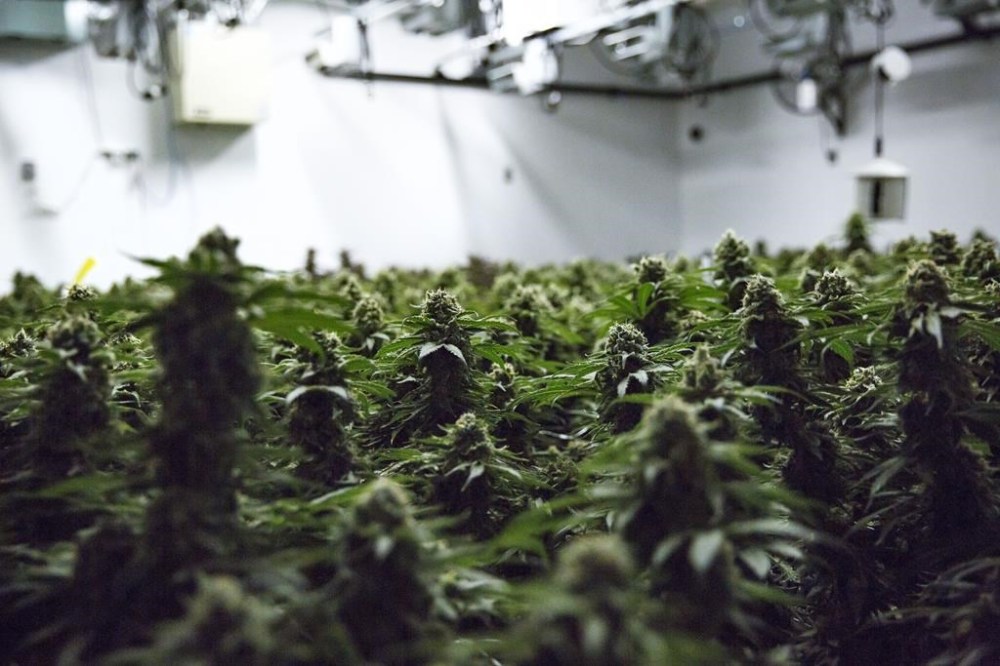
Cannabis plants grow inside a production facility in Simcoe, Ont. on Tuesday, April 13, 2021. A Nova Scotia judge a rejected arguments from four defendants claiming they have treaty and aboriginal rights to sell cannabis at dispensaries on Indigenous land north of Halifax and are not required to pay duties under the federal Excise Act. THE CANADIAN PRESS/Tara Walton

In Nova Scotia, sales of cannabis must be conducted from Nova Scotia Liquor Commission outlets, and all cannabis products are subject to provincial and federal duties.

The four were charged under the federal Cannabis Act with illegally possessing cannabis for the purpose of selling and distributing it, and distributing cannabis they knew was illicit. They were also charged with failing to pay federal duties on their products.

Two of the defendants argued that as the operators of an Indigenous business on the Millbrook Frist Nation, they are exempt from federal laws governing the sale of cannabis and are entitled to operate a parallel system based on their status as band members.

In her decision, the judge says the Supreme Court of Canada has confirmed that two Mi’kmaq treaties signed in the 1700s granted the aboriginal right to trade, but the top court said that right is limited to items traditionally harvested as part of their hunting, fishing and gathering activities.

“The relevant time period … is prior to European contact,” the judge said. “The claimant must demonstrate that a practice, custom or tradition was integral to the Indigenous community’s distinctive existence and relationship to the land in the period before European contact.”

The Crown argued there is a lack of evidence that the historic Mi’kmaq community ever used the psychoactive cannabis plant, let alone traded in it.

Van der Hoek determined the expert reports provided no evidence that cannabis was used or traded by the Mi’kmaq before European contact, and she found there was no mention of the cannabis plant being used, other than as hemp.

“The respondents have provided no argument whatsoever to support a modern interpretation of such trading evolving to include the sale of cannabis and the avoidance of duties pursuant to the (federal) Excise Act,” the decision says.

The defendants had also argued the federal government failed to consult the Mi’kmaq before passage of the Cannabis Act, but the judge said Ottawa’s “duty to consult” Indigenous Peoples does not extend to the enactment of legislation that criminalizes their conduct.

“They are unable to advance the duty to consult argument based on the exercise of legislative authority alone,” the judge said.

Van der Hoek said her decision was not taken lightly.

“It cannot be understated that decisions affirming and defining … aboriginal and treaty rights are significant for the communities who advance them and Nova Scotians,” she wrote.

“The court is aware that we are all treaty people, but how the treaties are interpreted must be based on a foundation that warrants consideration. At this time, that foundation has not been established for cannabis sales outside the lawful regime, and the existing regime applies to all Nova Scotians.”

This report by The Canadian Press was first published June 14, 2024.

Report Error Submit a Tip

More Stories

Security guard in stable condition after grocery store assault

Scott Billeck 2 minute read Preview

Security guard in stable condition after grocery store assault

Scott Billeck 2 minute read Updated: Yesterday at 2:31 PM CDT

A security guard was taken to hospital after an assault at a Sargent Avenue FreshCo Friday, just days after another guard was stabbed during a robbery at a St. James Dollarama.

Read
Updated: Yesterday at 2:31 PM CDT

Hydro announces CEO out after two years

Chris Kitching 6 minute read Preview

Hydro announces CEO out after two years

Chris Kitching 6 minute read Friday, Aug. 28, 2026

Allan Danroth is out as Manitoba Hydro’s president and CEO — a departure that came as a surprise to some observers — just two years after he was hired.

Danroth left for personal reasons, the Crown corporation’s board chair, Jamie Wilson, said Friday, while announcing chief operating officer Hal Turner as interim president and CEO ahead of a national and international search for a replacement.

“Today’s one of those days where you have a lot of mixed emotions,” Turner told reporters at Hydro’s downtown Winnipeg headquarters. “I just want to say on behalf of all the employees in Manitoba Hydro, we very much appreciate Allan’s leadership over the last two years.”

Turner wouldn’t say whether he will apply to be the next permanent CEO.

Read
Friday, Aug. 28, 2026

Letters, Aug. 31

7 minute read Preview

Letters, Aug. 31

7 minute read Updated: 7:48 AM CDT

Connor Hellebuyck, as we know, backstopped the U.S.A. to Olympic gold. Shortly after winning, he was invited to the Oval Office and accepted the Presidential Medal of Freedom from his country, a medal that has been awarded to numerous famous athletes — Babe Ruth, Billie Jean King, Jackie Robinson, Muhammad Ali, Michael Jordan, to name a few.

Read
Updated: 7:48 AM CDT

Security company rolling out Indigenous ambassador program

Chris Kitching 6 minute read Preview

Security company rolling out Indigenous ambassador program

Chris Kitching 6 minute read 5:53 PM CDT

A Winnipeg security firm has put an Indigenous community ambassador in a downtown Dollarama store, as companies and advocates seek new ways to build bridges and prevent trouble.

Impact Security owner Ron D’Errico said he is planning to expand the new program to additional retailers and communities, and hire up to 20 more ambassadors to work alongside his company’s security guards.

“Security companies need to be better. That’s just the nature of this industry,” he said. “We’re far gone from the days where we hire a guy to sit in a store or watch an empty building. We’re at an age now where people need to understand cultural sensitivity, roots of the problems, layers of why crimes happen and how to deal with challenges such as confrontation.”

D’Errico said the program is the first of its kind in Manitoba. It stems from a Feb. 28 incident where an Impact Security guard allegedly used brass knuckles while assaulting an Indigenous man at the Dollarama at 295 Portage Ave.

Read
5:53 PM CDT

Looking back on Bombers shocking, and convincing, win over CFL’s top team

Taylor Allen 7 minute read Preview

Looking back on Bombers shocking, and convincing, win over CFL’s top team

Taylor Allen 7 minute read Saturday, Aug. 29, 2026

It was getting harder and harder to believe in the 2026 edition of the Winnipeg Blue Bombers.

If anyone outside their locker room picked them to beat the Montreal Alouettes, they must’ve kept it to themselves, as pundits — this one included — and armchair quarterbacks across the nation doubted their chances heading into Friday night.

And honestly, rightfully so. The Bombers had left a lot to be desired through their opening 10 games.

But no matter what the stats say or what outsiders think, they play the games for a reason.

Read
Saturday, Aug. 29, 2026

Nightclub owner, divorced dad sentenced for involvement in cocaine-trafficking case

Erik Pindera 5 minute read Preview

Nightclub owner, divorced dad sentenced for involvement in cocaine-trafficking case

Erik Pindera 5 minute read Saturday, Aug. 29, 2026

Three people, including a Winnipeg nightclub owner and a divorced dad desperate for cash, have been sentenced in a cocaine-trafficking case city police were once concerned had been compromised by a corrupt cop.

The trio was charged in early 2024 as part of Project Roasted, a lengthy investigation into a drug trafficking network by the Winnipeg Police Service organized crime unit.

Investigators arrested two of the men, Mohamed Ali and Abdullah Khan, as they left the Stella’s on Pembina Highway in early February 2024. Two kilograms of cocaine was found in Khan’s car.

On the same day, Ahmed Dini was arrested at his River Avenue suite, where investigators found more than 200 rocks of crack cocaine.

Read
Saturday, Aug. 29, 2026