From ‘latte makeup’ to ‘girl dinners,’ TikTok has launched tons of trends. Will its influence last?
Advertisement
Read this article for free:
or
Already have an account? Log in here »
To continue reading, please subscribe:

Digital Subscription
One year of digital access for only $205*
- Enjoy unlimited reading on winnipegfreepress.com
- Read the E-Edition, our digital replica newspaper
- Access News Break, our award-winning app
- Play interactive puzzles
*First annual payment billed as $205.00 + GST for one year. This annual subscription will automatically renew at $233.00 + GST every 52 weeks (10% off the regular annual price of $259.35). Offer available to new and qualified returning subscribers only. Cancel any time.
To continue reading, please subscribe:
Add Free Press access to your Brandon Sun subscription for only an additional
$1 for the first 4 weeks*
- Enjoy unlimited reading on winnipegfreepress.com
- Read the E-Edition, our digital replica newspaper
- Access News Break, our award-winning app
- Play interactive puzzles
*Your next Brandon Sun subscription payment will increase by $1.00 and you will be charged $17.95 plus GST for four weeks. After four weeks, your payment will increase to $24.95 plus GST every four weeks.
Read unlimited articles for free today:
or
Already have an account? Log in here »
Hey there, time traveller!
This article was published 03/07/2024 (834 days ago), so information in it may no longer be current.
NEW YORK (AP) — TikTok and its bite-sized videos arrived in the United States as a global version of the Chinese app Douyin. Less than six years later, the social media platform is deeply woven into the fabric of American consumerism, having shortened the shelf life of trends and revamped how people engage with food and fashion.
The popularity of TikTok coupled with its roots in Beijing led Congress, citing national security concerns, to pass a law that would ban the video-sharing app unless its Chinese parent company sells its stake. Both the company, ByteDance, and TikTok have sued on First Amendment grounds.
But while the platform faces uncertain times, its influence remains undisputed — and for now, arguably unrivaled.
Interest in bright pink blush and brown lipstick soared last year, for example, after the cosmetics were featured in TikTok videos with looks labeled as “cold girl” and “latte” makeup. An abundance of clothing fads with quirky names, from “cottagecore” to “coastal grandma,” similarly owe their pervasiveness to TikTok.
Silly video snippets have spun food hacks like “smash burger” tacos – a burger fried with a tortilla on top – and “girl dinners” — shorthand for a snack plate that requires less cooking and cleaning up than a typical evening meal – into cultural currency. And sometimes, into actual dollars for creators and brands.
Plenty of TikTok-spawned crazes last only a week or two before losing steam. Yet even mini trends have challenged businesses to decipher which ones are worth jumping on and stocking up for. A majority of the more than 170 million Americans who use TikTok belong to the under-30 age group coveted by retailers, according to the Pew Research Center. Whether fans of the platform or not, shoppers may have a #tiktokmademebuyit moment without knowing the origin story behind an eye-catching product.
“The impact has been almost immeasurable,” Christopher Douglas, a senior manager of strategy at the influencer marketing agency Billion Dollar Boy, said.
What made TikTok such a trendsetter compared to predecessor platforms? Researchers and marketing analysts have often described the platform’s personalized recommendation algorithm as the “secret sauce” of TikTok’s success. The company has disclosed little about the technology it employs to populate users’ “For You” feeds.
Jake Bjorseth, founder of the advertising agency Trndsttrs, which specializes in Generation Z, thinks the app’s use of an interest-based algorithm instead of personal contacts to connect like-minded people is what gave TikTok the edge. Predecessors like Instagram, Facebook and Snapchat were known more for peer-to-peer networks.
TikTok also changed the standard for what was considered desirable in social media content. Because the platform was designed to be easy to use, many videos lacked filters, lighting setups or production-level audio. “These minimally planned and produced” recordings made TikTok creators seem more authentic and allowed them to develop more intimate relationships with their followers than earlier breeds of influencers, Bjorseth said.
In the early days of the app, TikTok recruited influencers from rival platforms by paying them to join and post content, according to Brendan Gahan, the CEO of influencer marketing agency Creator Authority. “Video-makers with as few as 1,000 followers still can earn commissions by promoting products in their videos, although those with at least 10,000 followers – and a minimum number of video views – are eligible for programs that pay them based on viewership.
The platform naturally has plenty of critics. Some experts argue that TikTok, like other social media sites, can be addictive and promote hours of endless scrolling, as well as unnecessary spending. Others accuse TikTok of promoting harmful behavior, like young girls engaging in skin care rituals and procedures intended for older women.
Some observers accuse prolific TikTok video-makers of using gimmicks to concoct ersatz trends or repackaging the looks of an earlier era with attention-grabbing names. Yet for all the detractors who won’t mourn TikTok if it goes away, a vocal base of fans hopes it doesn’t come to that.
Niki Maragos, a 26-year-old digital marketer from Charlotte, North Carolina, is one. She credits TikTok with transforming her personal style. Before frequenting the platform, she wore clothes from a single genre at a time and followed the same makeup routine.
Now she’s into experimenting. To attend a recent music festival, for example, Maragos wore white ruffled bloomers, a black top and cowboy boots — a vintage-inspired look known as “cottagecore” in TikTok speak. She’s also tried applying faux freckles — a sun-kissed cosmetics trick that’s experiencing a renaissance — and latte-toned makeup.
“TikTok has allowed everybody to be their own fashionista,” Maragos said. “I have become free. I am going outside the box.”
FASHION AND ACCESSORIES:
Casey Lewis, a trend analyst based in New York who previously worked as an editor at Teen Vogue, said TikTok’s clout in the fashion arena first became apparent to her when videos about Birkenstock’s Boston clogs overtook her “For You” feed in 2022.
Lewis thought it was odd since her brother, whom she described as a “frat boy” and not a fashionista, wore the cork-soled comfort shoes in college. As the number of TikTok videos exploded, some creators took to advising their followers where they could find the suddenly sold-out clogs.
“I’m not a psychologist, but I’m sure there’s some psychology where your brain goes from thinking like, ‘How weird? Is that fashion?'” she said. “And then suddenly you’re obsessed with it.”
Eventually, two other out-of-style shoes, UGG boots and Crocs, also saw their sales rebound after gaining a foothold with young consumers, Lewis said. The pace with which TikTok-shaped trends popped up — many of them tagged with the suffix “core” in a reference to the wearer’s style — was so dizzying that Lewis devoted much of her Substack newsletter to them.
In the last year, the hot pink ensembles of “Barbiecore” coexisted with the down-to-earth, deliberately unsexy looks of “dadcore” — think chunky white sneakers, baggy jeans and polo shirts. The oversized cardigans and linen separates of “coastal grandmother,” meanwhile, gave rise to “eclectic grandpa” a unisex aesthetic featuring sweater vests, loafers and mismatched prints.
Looks based on the reimagined aesthetics of mob wives and Gilded Age author Edith Wharton also had short-lived moments. While the rotating cast of “cores” may not drive their adherents to buy entire wardrobes, they’re “influencing spending in small ways, and that adds up,” Lewis said.
“It’s easy to dismiss them as simply micro-trends that aren’t actually meaningful when it comes to consumer spending,” she said. “But often, they actually are more meaningful.”
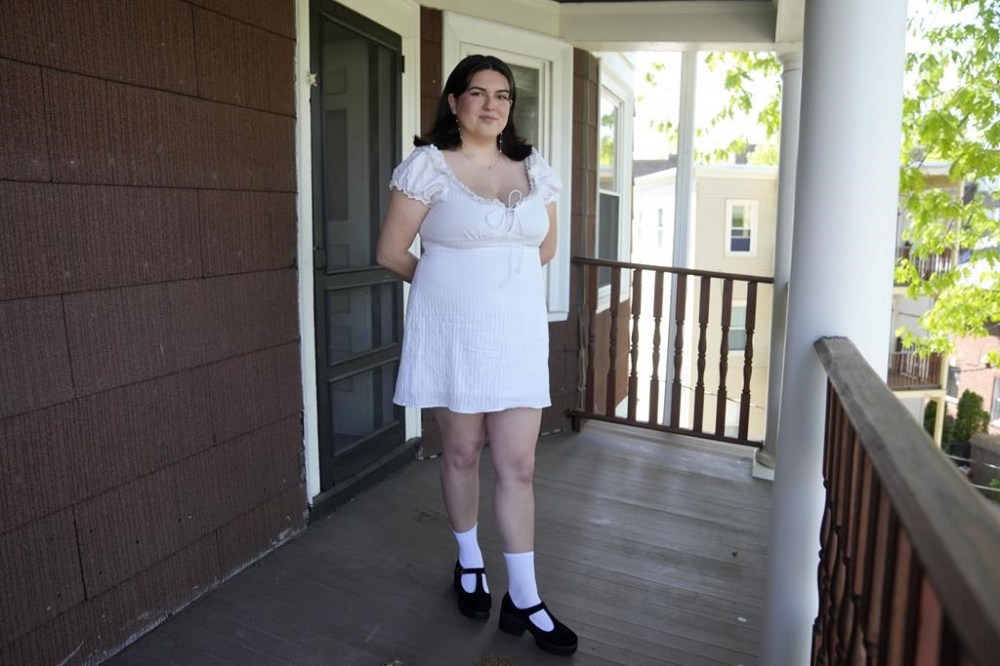
Daniella López White, 21, who graduated from Emerson College in Boston this year and is on a tight budget, said TikTok influencers have helped her with tips on how to find affordable clothes at places like H&M and thrift shops. But the platform also connected López White to plus-size creators who feature fashions for larger-bodied women, which made her more confident in trying out new styles.
“Those TikTok trends really helped me figure out what parts of my body I want to accentuate and feel cute in and still incorporate my sense of style,” she said.
After trying the “dark academia” trend, a blend of vintage fashion, tweed blazers and turtleneck sweaters, and “cottagecore,” she has moved onto the “office siren” look, which combines corporate clothing with form-fitting pieces like pencil skirts and cinched blazers.
FOOD:
With easy-to-follow cooking videos and clever hacks, TikTok became a go-to spot for home cooks during the COVID-19 pandemic. The platform made humble ingredients a star but in the process earned endorsements from some of the stars of the food world.
“Every day, honestly, I am blown away by the creativity from the FoodTok community,” restaurateur and chef Gordon Ramsay said in a TikTok video late last year.
Like the clothing styles of earlier eras, foods that had fallen out of fashion were resurrected via TikTok. U.S. sales of cottage cheese jumped 34% between April 2022 and April 2024 after videos promoting cottage cheese ice cream, cottage cheese toast and other recipes racked up millions of views.
Ben Sokolsky, the general manager of sales and marketing for Dallas-based dairy company Daisy Brand, said cottage cheese is seeing its highest sustained growth in nearly 50 years. The curdled milk product used to be a “secret sensation,” but social media helped expose new customers to the protein-rich, low-carb food, Sokolsky said.
The trend has had real impacts for Daisy Brand, which saw its cottage cheese sales double over the last five years. In April, the company announced a $626.5 million investment to expand a manufacturing facility in Iowa with at least 106 new jobs.
Some topics that went viral on TikTok even spawned analog equivalents. Last summer, TikToker Olivia Maher posted what she called her “girl dinner” of bread, cheese, pickles and grapes. It was a hit, with more than 1.6 million views. A handful of “girl dinner” cookbooks soon followed.
But the eagerness to try trendy foods had its downside. A 14-year-old in Massachusetts died after trying an extremely spicy tortilla chip popularized in so-called One Chip Challenge videos on TikTok and other social media sites. An autopsy of the boy, who had a congenital heart defect, found that eating a large quantity of chile pepper extract caused his death. Paqui, the maker of the chip, pulled it off the market.
BEAUTY:
TikTok has upended the cosmetics industry by promoting do-it-yourself skin and hair treatments, causing ingredients to get labeled as the next miracle cure or to be avoided, and featuring videos of people gleefully applying or panning the contents of their latest shopping hauls.
Get Ready with Me videos, which first became popular on YouTube, are also everywhere these days in shorter forms mainly due to TikTok. Makeup tutorials also were a fixture on YouTube before TikTok turbo-charged purchases for creating a new look du jour, such as the “glazed donut” skin and “strawberry makeup” popularized by Hailey Bieber.
Influencers on TikTok and elsewhere have made freckles an asset with clips showing how to add faux ones with eyebrow pencils or broccoli florets. The “clean girl” aesthetic, a renamed version of the no-makeup makeup look, prompted both luxury and drugstore brands to rush out their own versions of skin tints and lip oils.
Tiffany Watson, a college student who posts makeup tutorials on TikTok, says the platform has made the beauty space more fun by giving specific looks winsome titles.
“It brings lightheartedness. It’s fun to be able to put a cute little name on it, try something new and then see a community of people trying the same thing,” said Watson, who currently has more than 31,000 followers on TikTok and has done paid partnerships with brands like Colourpop Cosmetics.
Similar to YouTube, TikTok has helped popularize so-called “dupes” — less expensive alternatives to pricier products — to the benefit of brands such as e.l.f. Beauty, Revolution Beauty and NYX .
“TikTok is one of the highly effective platforms for our community to talk to us — and each other — directly,” Kory Marchisotto, the chief marketing officer at cosmetics brand e.l.f. Beauty, said. “They’ll directly compare it to more expensive premium products, sometimes as a split-screen with e.l.f. and another brand.”
Some veteran users of TikTok have noted the platform is almost too good in its role as both a tastemaker and a shopping search engine. Videos of influencers “decluttering” drawers filled with piles of barely used lipsticks, blushes and eyeshadow palettes are often as popular as the ones of people reviewing the products from their shopping sprees.
On the positive side, its defenders credit TikTok with promoting a more inclusive image of beauty and forcing brands to create products for a wider range of skin tones and hair types. Beauty retailer Sephora, which has more than 1.3 million followers on TikTok, announced last year a partnership to help new brands owned by women of color to expand their presence on the platform.
Though the desire for clicks can encourage creators to follow the same hair and makeup trends, it also has given a diverse group of influencers a larger platform on which to champion or call out brands, Lewis said. She pointed to a recent controversy involving Youthforia, a brand that was criticized by some Black content creators after it released a foundation shade that resembled jet black paint.

“With TikTok, people who otherwise weren’t heard were suddenly heard,” Lewis said.
Watson, too, says the platform has helped bring more diversity to beauty videos compared to other platforms, where users had to intentionally seek out the type of creators they wanted to follow.
“I see more diversity on TikTok because (with) every video you’re swiping, you’re seeing somebody new,” she said.
___
AP journalist Beatrice Dupuy contributed to this report.