The uncertainty that plagues life in crisis-ridden Venezuela is also wreaking havoc on relationships
Advertisement
Read this article for free:
or
Already have an account? Log in here »
To continue reading, please subscribe:

Digital Subscription
One year of digital access for only $205*
- Enjoy unlimited reading on winnipegfreepress.com
- Read the E-Edition, our digital replica newspaper
- Access News Break, our award-winning app
- Play interactive puzzles
*First annual payment billed as $205.00 + GST for one year. This annual subscription will automatically renew at $233.00 + GST every 52 weeks (10% off the regular annual price of $259.35). Offer available to new and qualified returning subscribers only. Cancel any time.
To continue reading, please subscribe:
Add Free Press access to your Brandon Sun subscription for only an additional
$1 for the first 4 weeks*
- Enjoy unlimited reading on winnipegfreepress.com
- Read the E-Edition, our digital replica newspaper
- Access News Break, our award-winning app
- Play interactive puzzles
*Your next Brandon Sun subscription payment will increase by $1.00 and you will be charged $17.95 plus GST for four weeks. After four weeks, your payment will increase to $24.95 plus GST every four weeks.
Read unlimited articles for free today:
or
Already have an account? Log in here »
Hey there, time traveller!
This article was published 18/07/2024 (807 days ago), so information in it may no longer be current.
CARACAS, Venezuela (AP) — Victoria Estevez finally met someone who saw past her shyness. They spent two months learning about their likes and dislikes, texting about their families and friends, and walking around their hometowns on Venezuela’s Caribbean coast. On a trip to the capital in December, they held each other for the first time.
I-like-yous followed, and by February, they were calling it a relationship.
And then came heartbreak.
“Remember I had told you that I have a brother in the Dominican Republic? Well, I am going to leave the country, too,” Estevez, 20, recalled reading in an early March WhatsApp message from her new boyfriend. He was the second guy in a row to blindside her with imminent plans to emigrate.
Nothing, not even love, has been spared the uncertainty that plagues everyday life in crisis-ridden Venezuela, which has seen several million people leave in the last decade or so. As a presidential election looms later this month along with questions about Venezuela’s future, many more are considering emigrating, wreaking havoc on the country’s economy, its politics and its dating scene.
Young people are debating online and among themselves whether it’s worth it to start a relationship — or whether to end one. Others are wondering when it is too soon or too late to ask the crucial question: Will you leave the country?
“How had he not told me that there was a possibility he would leave?” Estevez asked after she was crushed.
In a country rife with instability, dating is not spared
The last 11 years under President Nicolás Maduro have transformed Venezuela and Venezuelans.
In the 2000s, a windfall of hundreds of billions of oil dollars allowed then- President Hugo Chávez’s government to launch numerous initiatives, including providing ample public housing, free health clinics and education programs.
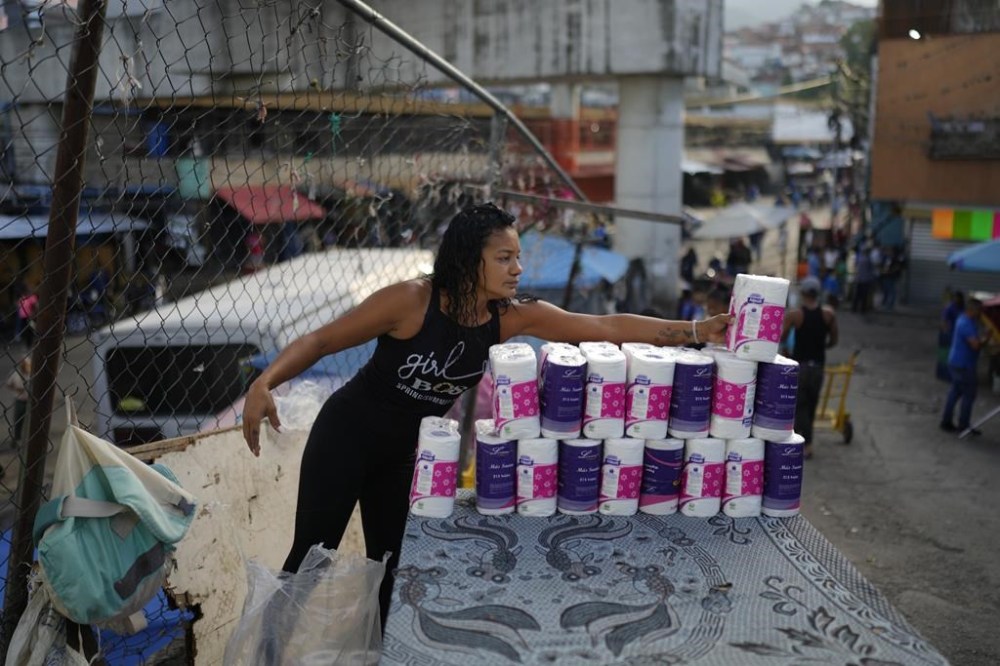
But a global drop in oil prices, government mismanagement and widespread corruption pushed the country into the political, social and economic crisis that has marked the entirety of his successor’s presidency: Decent paying jobs are rare. Water, electricity and other public services are unreliable. Food prices have skyrocketed.
The country that once welcomed Europeans fleeing war and Colombians escaping a bloody internal conflict has now seen more than 7.7 million people flee its shores.
The government faces its toughest test in decades in a July 28 election.
A nationwide poll conducted in April by the Venezuela-based research firm Delphos showed that roughly a fourth of people are thinking about emigrating. Of those, about 47% said a win by the opposition would make them stay and roughly the same amount indicated that an improved economy would keep them in their home country. The poll had a margin of error of plus or minus 2 percentage points.
Accountant Pedro Requena has seen many a friend leave, but the news hit differently when the woman he had spent three “incredible” months dating in 2021 told him she was moving with her mom to Turkey. Requena, 26, was swooning over her, but he was committed to finishing his university degree and did not consider migrating.
With no guarantee she would ever return or he would ever be able travel across the world to see her, they still decided to give long-distance a try. They woke up early or went to bed late so that they could have video calls despite their seven-hour time difference. They watched movies and TV shows simultaneously. They texted and texted and texted.
“Venezuelans adapt to anything,” he said. “The crisis changes you.”
Indeed, Venezuelans adapted their diets when food shortages were widespread and again when groceries became available but unaffordable. They sold cars and switched to motorcycles or stopped driving, when lines at gas stations stretched kilometers (miles). They stocked up on candles when power outages became the norm. They used the U.S. dollar when the Venezuelan bolivar became worthless.
But that unpredictability is disastrous for forming lasting bonds.
“With the dating scenarios in Venezuela now, there’s like a certain built-in insecurity, or lack of safety, in the system because people don’t know what’s going to happen,” said Dr. Amir Levine, a psychiatrist and research professor at Columbia University. “The political instability actually introduces the instability into the relationship or into dating in general.”
A blow to self-confidence
Bumble, Tinder, Grindr and other dating apps are available in Venezuela, but education student Gabriel Ortiz has used a feature of the messaging app Telegram to connect with people near him. That is how he found a man in October with whom he exchanged messages for a month before they met up.
A few dates followed and by the time they headed off to spend Christmas and New Year with their families, the 18-year-old thought he might soon be able to call the guy his boyfriend.
They exchanged text and voice messages while apart. A plan to leave Venezuela never came up.
“He gives me the news that he is leaving for the United States,” Ortiz said of the WhatsApp messages he received in January.
It was a Sunday night. The man was leaving on Tuesday — and there wouldn’t even be time for a goodbye.
Ortiz tried to be supportive in the conversation. The tears came later.
He said he understands many people choose to leave because of the economic and political upheaval — but the unexpected news was a blow to his self-confidence.
“This fosters insecurities in you because you ask yourself questions like: Could it be that he didn’t like me enough to be honest with me from the beginning?” Ortiz said.
Levine, who co-authored the relationship book “Attached,” said that just as people should be blunt on dating profiles and first dates about their expectations for marriage and children, Venezuelans should talk about their migration plans. It is never too soon to ask.
“Let yourself ask the right questions and not believe that everything is going to work out,” he said.
Estevez learned that lesson the hard way. Caught off guard first by a guy who left her for Spain and now one who is moving to the Dominican Republic, she is very clear about what any future first date will look like.
“The first thing I’m going to ask is, ‘Are you going to leave the country?’” she said. “You can’t leave everything to fate! One has to say from the beginning, ‘Look, I’m leaving.’”
A disillusioned generation
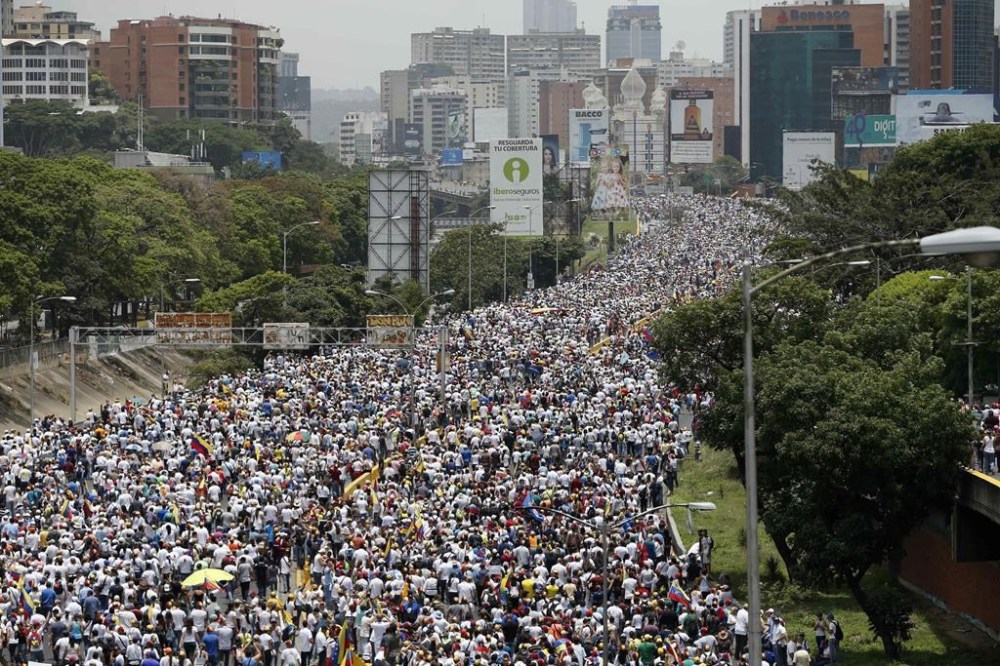
For many of the young people fleeing Venezuela now, migration was not their first choice. First, they protested, standing on the front lines of massive anti-government demonstrations in 2017, when they were students.
The movement was met with repression and sometimes deadly force — and nothing changed: Maduro is still president, well paying jobs are nonexistent, and a car, a house and other symbols of adulthood did not materialize for this generation.
Now, instead of planning demonstrations, they spend their time planning one-way trips abroad.
Half of Kelybel Sivira’s graduating class from law school has left the country, worn out, as she put it, by devoting so much of themselves to the protests only to see that “the country simply moved on as if nothing happened.”
In turn, the dating pool for her generation shrank.
Sivira, a 29-year-old commercial lawyer, reconnected online with a former classmate in May 2021, after he had already emigrated to the U.S. with his family. Their friendly conversations turned romantic, and they began to consider a relationship toward the end of 2022.
They have not seen each other in person for years. They don’t know when they will even be able to hold hands. He lives in the U.S. illegally; her tourist visa was denied last year and her two applications for a special permit to enter the U.S. are pending approval. He is seriously considering returning to Venezuela in August regardless of the election outcome. She does not want that.
“I’m afraid that he will return to the country and say, ‘Venezuela, I still hate you. This is not what I want,’” Sivira said. “I don’t want to feel guilty.”
Sivira just earned a degree in actuarial science and thinks that may open up job opportunities in Spain or another country where the two could eventually move. But even with an outline of a plan, uncertainty persists.
Requena is also in a kind of limbo. Though he and his long-distance girlfriend decided to see other people after a year living on different continents, he still longs for the person he said was his perfect match.
“We keep in touch. The affection is always present,” he said. “It ended, but the future is uncertain, and even more so with this country.”