Quebec introduces salmon fishing restrictions amid decline in migration to rivers

Advertisement

Advertise with us

MONTREAL - Quebec has introduced new restrictions on Atlantic salmon fishing because of annual fish migrations that are well below average in most of the province's rivers.

Read this article for free:


or

Already have an account? Log in here »

To continue reading, please subscribe:

Subscribe and receive a limited-edition Free Press branded hat or tote.

Digital Subscription

One year of digital access for only $205*

  • Enjoy unlimited reading on winnipegfreepress.com
  • Read the E-Edition, our digital replica newspaper
  • Access News Break, our award-winning app
  • Play interactive puzzles

*First annual payment billed as $205.00 + GST for one year. This annual subscription will automatically renew at $233.00 + GST every 52 weeks (10% off the regular annual price of $259.35). Offer available to new and qualified returning subscribers only. Cancel any time.

To continue reading, please subscribe:

Add Free Press access to your Brandon Sun subscription for only an additional

$1 for the first 4 weeks*

  • Enjoy unlimited reading on winnipegfreepress.com
  • Read the E-Edition, our digital replica newspaper
  • Access News Break, our award-winning app
  • Play interactive puzzles
Start now

*Your next Brandon Sun subscription payment will increase by $1.00 and you will be charged $17.95 plus GST for four weeks. After four weeks, your payment will increase to $24.95 plus GST every four weeks.

Hey there, time traveller!
This article was published 31/07/2024 (795 days ago), so information in it may no longer be current.

MONTREAL – Quebec has introduced new restrictions on Atlantic salmon fishing because of annual fish migrations that are well below average in most of the province’s rivers.

But a conservation group that represents the interests of Atlantic salmon fishers in Quebec believes the province should go further.

While it was satisfied with the changes, the exceptional nature of this year’s salmon runs justifies a more cautious approach, said Normand Fiset, president of the Fédération québécoise pour le saumon atlantique.
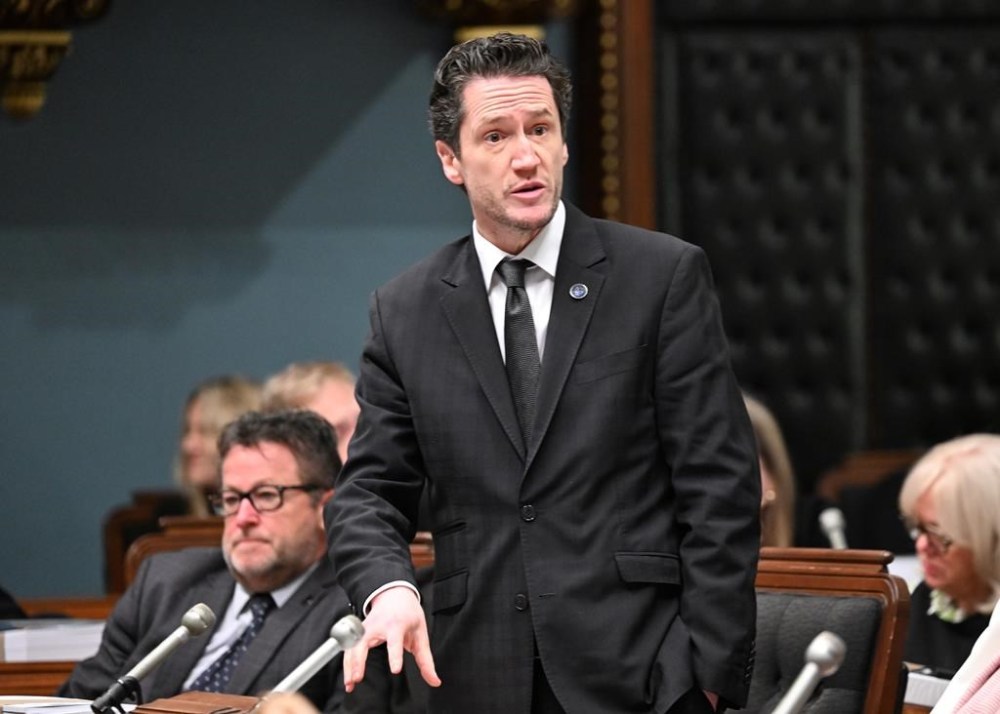
Quebec has introduced new restrictions on Atlantic salmon fishing in the province due to annual fish migrations that are well below average in most of the province's rivers. Quebec Environment Minister Benoit Charette responds to the Opposition during question period, Tuesday, March 12, 2024 at the legislature in Quebec City. THE CANADIAN PRESS/Jacques Boissinot

“In order for us to be coherent with our conservation strategies, we recommend to go (100 per cent) catch and release, at least for the rest of this season,” Fiset said. “And we’re going to have to sit down during the winter with (the environment department) to figure out what kind of management plan to put in place starting 2025.”

The restrictions issued by the province’s environment department went into effect July 25. They apply to rivers in the Lower St-Lawrence region, the provincial capital, the North Shore including Anticosti Island, the Gaspé Peninsula and Saguenay-Lac-St-Jean.

The new rules for rivers in southern Quebec prohibit sport fishers from catching salmon that are larger than 63 centimetres and that have spent two or more winters at sea. Salmon that size are predominantly female and are responsible for “significant” deposits of eggs in rivers, the government says. The rules are in place until at least the end of this year’s season in September.

For grilse — small salmon — the daily quotas vary from river to river. A grilse is a young Atlantic Salmon that has returned to freshwater to spawn after spending a single winter feeding at sea.

For rivers classified as “healthy,” the daily number of grilse permitted to be caught per fisher has dropped from two to one. Fishers will be allowed to keep one and sometimes zero salmon on rivers labelled “caution,” depending on the precarity of the stock. In rivers classified as “critical,” no salmon at all is permitted to be kept.

As for catch and release fishing, the new rules reduce the daily quota from three catches to two in all of the affected regions except the lower North Shore, where quotas were previously non-existent and are now set at three.

Quebec has left open the possibility of changing the rules as of Aug. 1, Fiset noted.

While grilse don’t have a huge affect on reproduction, Fiset said that given the current situation it’s better to be prudent and require fishers to release all salmon caught over the next few weeks.

Quebec is the only jurisdiction that manages its Atlantic salmon fishery; the other provinces rely on the federal fisheries department.

In an open letter published Tuesday in Le Soleil newspaper, some fishers called for a moratorium on recreational salmon fishing. But Myriam Bergeron, the salmon federation’s executive director, said in an interview that a moratorium wouldn’t lead to more salmon returning to Quebec’s rivers.

The province’s rivers remain quite productive, Fiset said, but fewer fish are returning to spawn after spending the winter at sea.

“Close to every river that runs into the (Gulf of St. Lawrence) is experiencing that decline and if we compare other rivers, some in Nova Scotia, Newfoundland and northern Labrador, which run directly into the Labrador Sea, don’t seem to be having the same kind of problem,” Fiset said.

There has been a higher than usual mortality rate for grilse in recent years, Fiset said, and fishers expected there to be fewer of them returning this year to the province’s rivers. “We’re not quite sure what it is, nobody’s sure of it,” Fiset said of the underlying reasons.

“We know that the source of the problem is probably the warming of the sea surface temperature in the Gulf of St. Lawrence because it seems like most of the rivers that run into the gulf are more affected than other rivers.”

Fiset said he hopes to get all interested parties on the same page. “I think it’s very important that we mobilize everybody that’s involved in Atlantic salmon conservation in North America … to get a better grasp of what’s going on at sea,” Fiset said.

This report by The Canadian Press was first published July 31, 2024.

Report Error Submit a Tip

More Stories

Puzzles Palace

1 minute read Monday, Jul. 27, 2026

To solve our puzzles, please subscribe with this special offer: |

A 22-year-old man is dead and an 18-year-old is in hospital in critical condition after a two-vehicle crash on Highway 8 on Thursday evening.

A Gimli RCMP officer was driving north on the highway, near Riverton, when he witnessed the collision at about 6:45 p.m.

A vehicle headed north had passed the Mountie at a high speed before colliding with an SUV that was turning west onto Provincial Road 329 from Highway 8.

The driver of the first vehicle, an 18-year-old man from Arborg, was rushed to hospital by a helicopter ambulance with injuries RCMP describe as serious and life-threatening.

Moving drama at MTYP gives voice to boy who changed law

Holly Harris 5 minute read Preview

Moving drama at MTYP gives voice to boy who changed law

Holly Harris 5 minute read 2:37 PM CDT

The heroic true tale of Norway House Cree Nation-born Jordan River Anderson came home Friday night, as Manitoba Theatre for Young People presented Yvette Nolan’s Jordan.

The touring production, a collaboration with Geordie Theatre, runs weekends through Oct. 11, with additional stops in Toronto, Vancouver and Ottawa’s National Arts Centre.

Having several of Anderson’s family members witness the local première underscored the evening with poignancy. Elder and Pine Creek First Nation member Barbara Nepinak added her own dignified presence and prayers following MTYP artistic director Pablo Felices-Luna’s welcoming remarks.

The season-opener also marks the Winnipeg-raised playwright’s homecoming; the Algonquin playwright, director, dramaturg, actor and educator was a fixture in our local theatre community for many years before going on to serve as artistic director for Native Earth Performing Arts from 2003 to ‘11, among other contributions.

Read
2:37 PM CDT

Sisters relieved hospital takes accountability after mother’s death

Scott Billeck 6 minute read Preview

Sisters relieved hospital takes accountability after mother’s death

Scott Billeck 6 minute read Thursday, Oct. 1, 2026

Eight months after losing their mother, two Winnipeg sisters say an internal hospital review has finally given them something they had been seeking since her death: accountability.

Chelsea Mann and Samantha Burns said St. Boniface Hospital officials acknowledged mistakes were made in the care of their mother, Judy Burns, during a recent meeting to discuss the findings of a critical incident review into her death.

The acknowledgement marked a significant departure from an earlier meeting with hospital officials, when they felt their concerns were largely dismissed.

Burns, 68, died on Jan. 21, three days after being admitted, after experiencing rectal bleeding.

Read
Thursday, Oct. 1, 2026

Brandonmeat packer thriving on its own

Abiola Odutola 3 minute read Preview

Brandonmeat packer thriving on its own

Abiola Odutola 3 minute read 2:01 AM CDT

BRANDON — Canada Packers has strengthened its business and laid the foundation for future growth during its first year as an independent company, its president says.

The Brandon-based pork producer, separated from Maple Leaf Foods in October 2025, established its own leadership, strategy, systems, culture and identity while continuing operations across its hog production farms and regional hog barns in southern and eastern Manitoba.

The company’s first year was focused on building a successful standalone business while continuing to serve customers, communities and shareholders, president Dennis Organ said.

“Market conditions over the past year have been more challenging than we anticipated when we became a separate entity,” he said in an email. “Despite that, we continued to execute against our priorities, including increasing processing volumes, maintaining disciplined operations and strengthening the business.”

Read
2:01 AM CDT

Gordon Bell rings in a century

Maggie Macintosh 13 minute read Preview

Gordon Bell rings in a century

Maggie Macintosh 13 minute read Updated: Yesterday at 8:06 PM CDT

Mischka Valencia had gotten used to the hum of heavy machinery at Gordon Bell High School.

“Ever since I’ve been here, it’s all been under construction,” the Grade 12 student said, standing on the sidelines of the brightly painted revamped outdoor basketball court. “I had no idea this was a court.”

The Filipina teenager landed in Winnipeg several months after the inner-city campus had transformed into a construction site.

It was the fall of 2023 and Mischka’s priorities were fitting in, befriending classmates and learning a third language via first-period French.

Read
Updated: Yesterday at 8:06 PM CDT