After a stroke, this musician found his singing voice again with help from a special choir
Advertisement
Read this article for free:
or
Already have an account? Log in here »
To continue reading, please subscribe:

Digital Subscription
One year of digital access for only $205*
- Enjoy unlimited reading on winnipegfreepress.com
- Read the E-Edition, our digital replica newspaper
- Access News Break, our award-winning app
- Play interactive puzzles
*First annual payment billed as $205.00 + GST for one year. This annual subscription will automatically renew at $233.00 + GST every 52 weeks (10% off the regular annual price of $259.35). Offer available to new and qualified returning subscribers only. Cancel any time.
To continue reading, please subscribe:
Add Free Press access to your Brandon Sun subscription for only an additional
$1 for the first 4 weeks*
- Enjoy unlimited reading on winnipegfreepress.com
- Read the E-Edition, our digital replica newspaper
- Access News Break, our award-winning app
- Play interactive puzzles
*Your next Brandon Sun subscription payment will increase by $1.00 and you will be charged $17.95 plus GST for four weeks. After four weeks, your payment will increase to $24.95 plus GST every four weeks.
Read unlimited articles for free today:
or
Already have an account? Log in here »
Hey there, time traveller!
This article was published 14/08/2024 (755 days ago), so information in it may no longer be current.
In the 1980s and ’90s, Ron Spitzer played bass and drums in rock bands — Tot Rocket and the Twins, Western Eyes and Band of Susans. He sang and wrote songs, toured the country and recorded albums. When the bands broke up, he continued to make music with friends.
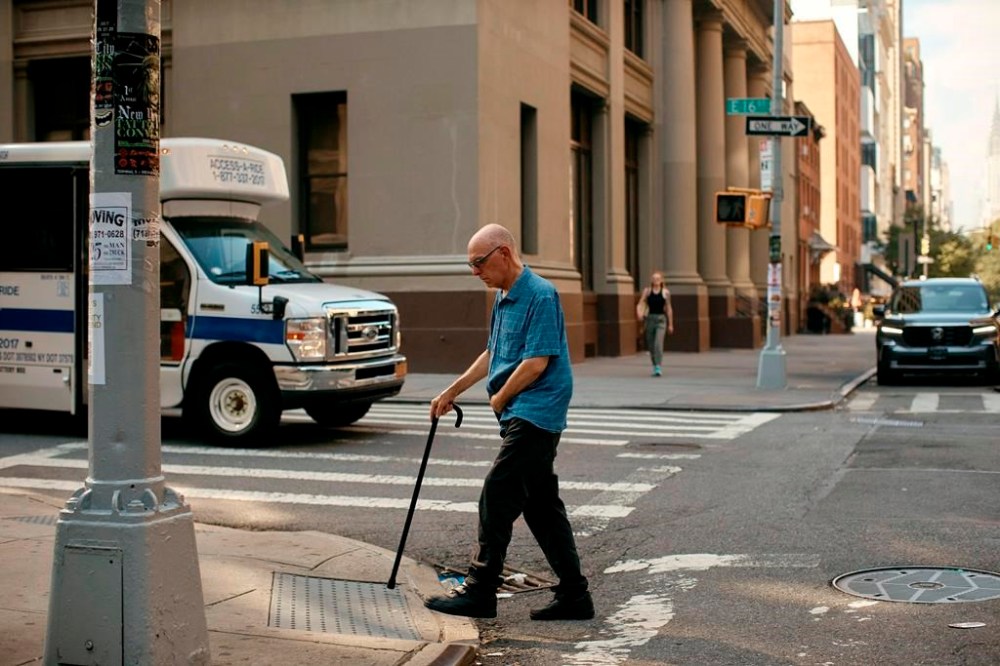
But a stroke in 2009 put Spitzer in a wheelchair, partially paralyzing his left arm and leg. He gave away his drum kit. His bass sat untouched. His voice was a whisper.
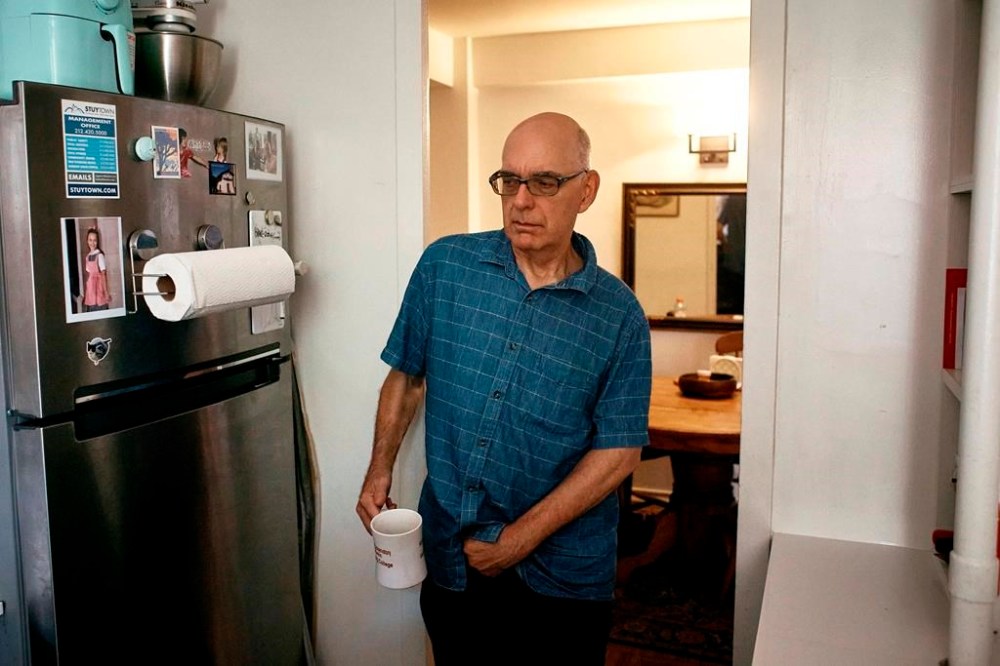
Now music is part of his healing. Spitzer sings each week in a choir for people recovering from stroke at the Louis Armstrong Center for Music and Medicine at Mount Sinai in New York.
“I’ve found my voice, quite literally,” Spitzer said.
Scientists are studying the potential benefits of music for people with dementia, traumatic brain injuries, Parkinson’s disease and stroke. Music lights up multiple regions of the brain, strengthening neural connections between areas that govern language, memories, emotions and movement.
And music seems to increase levels of a specific protein in the brain that’s important for making new connections between neurons, said Dr. Preeti Raghavan, a stroke rehabilitation expert at Johns Hopkins Medicine and volunteer for the American Stroke Association.
“It increases the possibility that the brain will rewire,” Raghavan said.
Choirs like the one at Mount Sinai offer the hope of healing through music while also providing camaraderie, a place where stroke survivors don’t have to explain their limitations.
“We’re all part of the same tribe,” Spitzer said.
Strokes often damage cells in the brain’s left-hemisphere language center, leaving survivors with difficulty retrieving words, a condition called aphasia. Yet the ability to sing fluently can remain, said Jessica Hariwijaya, a research fellow at Mount Sinai who is studying the stroke choir.
Singing can help stroke survivors improve their ability to speak. The National Aphasia Society maintains a list of music and arts programs, including choirs that meet online, for people with the condition.
Spitzer’s stroke damaged the right side of his brain, which some scientists identify as important for processing musical pitch patterns. He lost the ability to sing familiar music. Once, a Beatles song came on the radio and he tried to sing along but the tune was gone from his mind. He called it an “out-of-body experience.”
“It was like, ‘This isn’t me,’” he said
Rigorous research is in its early days, with the National Institutes of Health supporting studies on how music works in the brain and how it might be used to treat symptoms of various conditions.
That level of research will be important for music therapy to be more widely reimbursed by health insurers, Raghavan said.

The Mount Sinai study will gauge how participation in the choir affects speech and mood, as researchers compare 20 patients randomly assigned to choir therapy with 20 patients receiving standard care. The study also will measure the effects on the patients’ caregivers who participate in the choir.
Now 68, Spitzer has completed other rehabilitation programs that helped him regain physical skills. He walks with a cane, can yell like any New Yorker and has recovered his singing voice.
“I attribute a good amount of this recovery to the stroke choir,” he said. “For me, just getting back to being able to sing a tune was very invigorating.”
___
The Associated Press Health and Science Department receives support from the Howard Hughes Medical Institute’s Science and Educational Media Group. The AP is solely responsible for all content.