A hunter’s graveyard shift: grabbing pythons in the Everglades
Advertisement
Read this article for free:
or
Already have an account? Log in here »
To continue reading, please subscribe:

Digital Subscription
One year of digital access for only $205*
- Enjoy unlimited reading on winnipegfreepress.com
- Read the E-Edition, our digital replica newspaper
- Access News Break, our award-winning app
- Play interactive puzzles
*First annual payment billed as $205.00 + GST for one year. This annual subscription will automatically renew at $233.00 + GST every 52 weeks (10% off the regular annual price of $259.35). Offer available to new and qualified returning subscribers only. Cancel any time.
To continue reading, please subscribe:
Add Free Press access to your Brandon Sun subscription for only an additional
$1 for the first 4 weeks*
- Enjoy unlimited reading on winnipegfreepress.com
- Read the E-Edition, our digital replica newspaper
- Access News Break, our award-winning app
- Play interactive puzzles
*Your next Brandon Sun subscription payment will increase by $1.00 and you will be charged $17.95 plus GST for four weeks. After four weeks, your payment will increase to $24.95 plus GST every four weeks.
Read unlimited articles for free today:
or
Already have an account? Log in here »
Hey there, time traveller!
This article was published 17/08/2024 (779 days ago), so information in it may no longer be current.
HOLEY LAND WILDLIFE MANAGEMENT AREA, Fla. (AP) — It’s after midnight when the windshield fogs up on Thomas Aycock’s F-250 pickup truck. He flashes a low smile as he slowly maneuvers through the sawgrass, down dirt roads deep in the Florida Everglades.
His windshield just confirmed it: When the dew point drops in the dead of the night, it’s prime time for pythons.
“I catch more pythons when that happens,” Aycock explained. “It’ll make things start moving.”
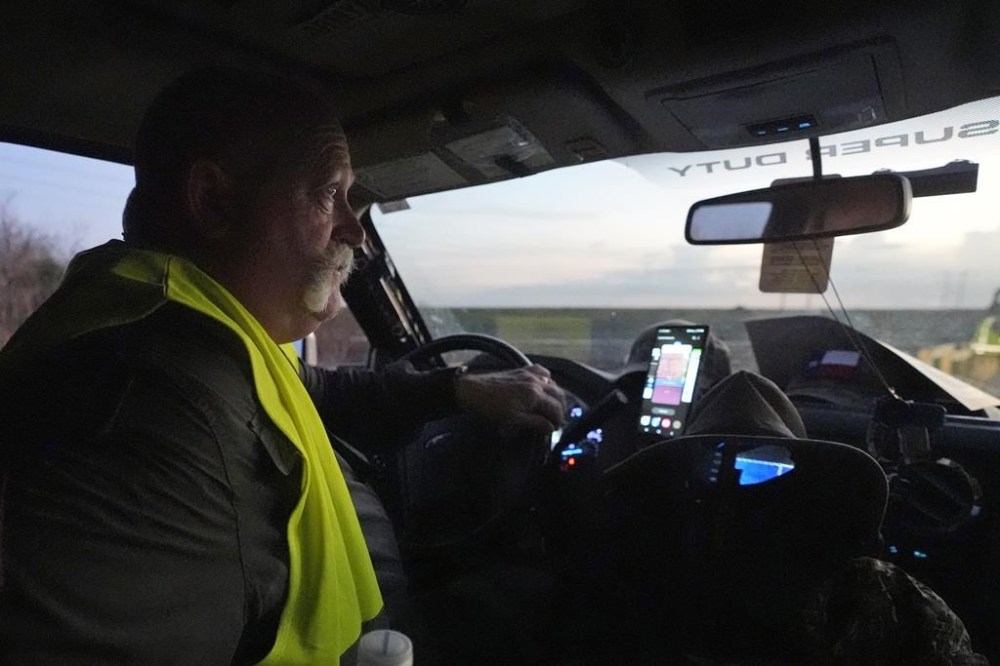
Aycock, a contractor with the Florida Fish and Wildlife Conservation Commission, has hunted Burmese pythons in the Everglades for 11 years. The retired U.S. Army veteran divides his time between North Carolina, the Florida Panhandle and Homestead, Florida, where he keeps a recreational vehicle.
He always participates in the Florida Python Challenge, hosted by the wildlife commission to incentivize people to track down invasive Burmese pythons that thrive in Florida’s preserved wetlands. This year’s 10-day challenge ends at 5 p.m. Sunday.
The timing is intentional: Pythons typically hatch from their small, leathery eggs each August before wriggling away into the swamp.
Aycok loves snakes. He’s also passionate about preserving the Everglades and understands the “greater ecological issue with these pythons,” a prolific apex predator threatening Florida’s native snakes and mammals.
These pythons are notoriously hard to spot in the wild and determining their numbers is difficult, but the United States Geological Survey conservatively estimates tens of thousands have spread from South Florida. With each female laying clutches of 29-50 eggs on average, their impact has been devastating.
In one 2012 study, the USGS found populations of raccoons had declined by 99.3%, opossums by 98.9% and bobcats by 87.5% since the early 2000s. Controlling this voracious snake species, scientists say, is a critical goal.
More than 600 hunters participated in this year’s challenge, hoping to top last year’s total of 209 pythons killed. The grand prize winner, who humanely kills the most, receives $10,000.
The competition is designed to raise awareness and has succeeded on that score, attracting celebrities and inspiring reality television shows.
But the need for python control is so much bigger. Since 2017, Florida has been paying some 100 contractors to round them up year-round in a project shared by the wildlife agency and the South Florida Water Management District.
Through 2023, more than 18,000 pythons have been removed from the wild, with about 11,000 taken out by contractors like Aycock.
It’s a decent supplemental income — $13 an hour while driving the backroads, or $18 an hour if they walk into the swamp — and contractors also get paid per snake: $50 for the first 4 feet (1.2 meters) in length, plus $25 per subsequent foot.
“You’re not going to make a living doing this full-time. There’s no way you could do it,” Aycock said.
Florida prohibits hunters from using firearms to kill pythons, and they aren’t venomous, so capturing them is very much a hands-on exercise.
Aycock goes into the wetlands to check on known hatching spots and grabs at them when he can. But mostly he drives down lonely roads in the dead of night, training a spotlight into the swamps to the sounds of croaking frogs.
These bug-filled drives are like therapy sessions for Aycock. Sometimes he brings along fellow members of the Swamp Apes, a veterans therapy nonprofit he belongs to that catches invasive snakes in the wild, clears overgrown trails and works toward environmental preservation.
The group’s founder, Tom Rahill, and two other Swamp Apes followed behind as an Associated Press team rode along with Aycock and another Swamp Ape member during this year’s challenge.
Rahill is a contractor too, and said he knows the swamp so well that he can smell a python’s distinct “musk” odor and can feel in his gut if the night is ripe.
There is an art to catching a snake, these men say, and it varies from hunter to hunter. Some use a snake hook and then jump on them before shoving them into bags. Rahill prefers using his hands if the snake is docile enough.
“Instead of jumping on the snake, you just kind of gently get up to it and then just pick it up,” Rahill said. “Then you can stroke their belly, their belly scales, and you can just pick up a wild python and do this.”’
But Burmese pythons, constrictors that have no natural predators and can swallow animals whole, aren’t always calm.
Aycock described the time when he caught a 17-foot (5-meter) python: He and his wife had to dance around the snake before he could wrangle the animal and control its head to keep the predator from lunging at them. Even then, a hunter needs a helper to keep the snake uncoiled until it calms down and can be double-bagged to prevent escape.
Once the snakes are caught, the hunters have 24 hours to deliver them to the wildlife agency. It is illegal for any person other than a licensed contractor to transport a live, invasive snake.

Aycock takes them home first to be euthanized with a captive bolt, which shows it has been “humanely killed.”
“That’s the part of the job that I really just … hate,” Aycock said. “I hate having to kill snakes.”
On this night, the AP called it quits long after midnight, after Aycock came up empty-handed. An hour later, Rahill spotted a hatchling.
That’s the way snake hunting goes. Aycock said he has gone months without finding one. But on a lucky night, hunters get a burst of joy when they spot the oily sheen of a Burmese python hiding in the high grass.
“I think I get an adrenaline rush every time,” Aycock said. “When it’s lunging toward me, it’s a good day.”