‘Doorways to wilderness’: Caddy Lake tunnels attract boaters to eastern Manitoba
Advertisement
Read this article for free:
or
Already have an account? Log in here »
To continue reading, please subscribe:
Digital Subscription
One year of digital access for only $1.44 a week*
- Enjoy unlimited reading on winnipegfreepress.com
- Read the E-Edition, our digital replica newspaper
- Access News Break, our award-winning app
- Play interactive puzzles
*Billed as $5.77 plus GST every four weeks. After 52 weeks, price increases to the regular rate of $19.95 plus GST every four weeks. Offer available to new and qualified returning subscribers only. Cancel any time.
To continue reading, please subscribe:
Add Free Press access to your Brandon Sun subscription for only an additional
$1 for the first 4 weeks*
- Enjoy unlimited reading on winnipegfreepress.com
- Read the E-Edition, our digital replica newspaper
- Access News Break, our award-winning app
- Play interactive puzzles
*Your next Brandon Sun subscription payment will increase by $1.00 and you will be charged $17.95 plus GST for four weeks. After four weeks, your payment will increase to $24.95 plus GST every four weeks.
Read unlimited articles for free today:
or
Already have an account? Log in here »
Hey there, time traveller!
This article was published 24/08/2024 (788 days ago), so information in it may no longer be current.
CADDY LAKE, Man. – Every summer, outdoor enthusiasts flock to a set of cavelike tunnels just west of the Ontario-Manitoba boundary.
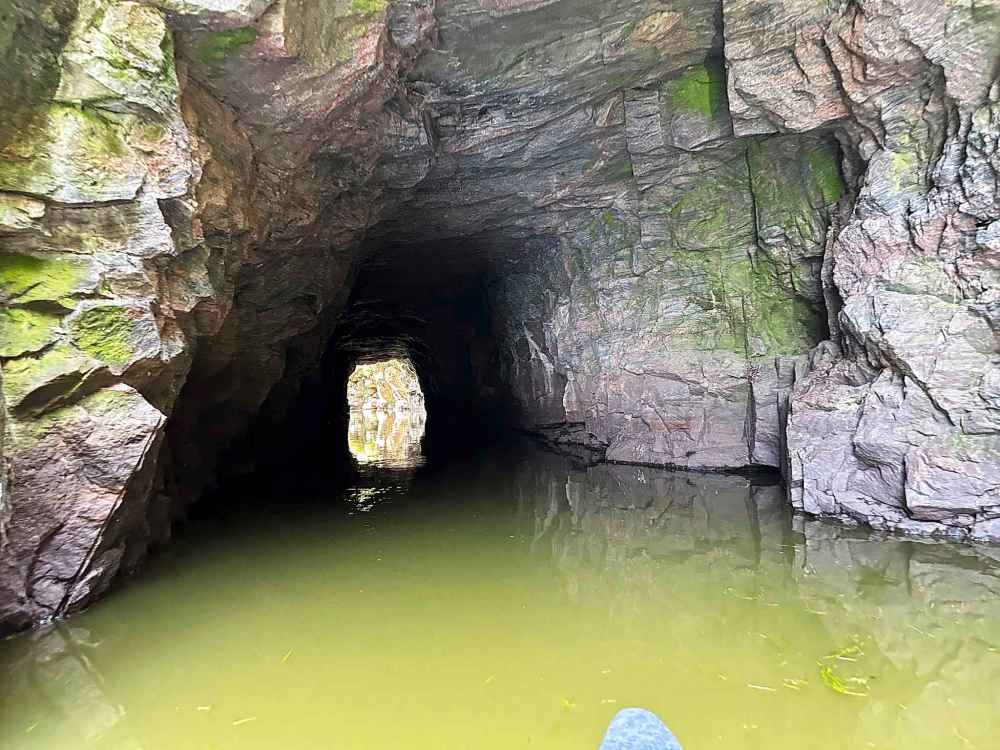
The Caddy Lake tunnels were created more than a century ago as part of railway construction. Workers blasted through solid Canadian Shield rock to let water flow and reduce the chance of flooded tracks.
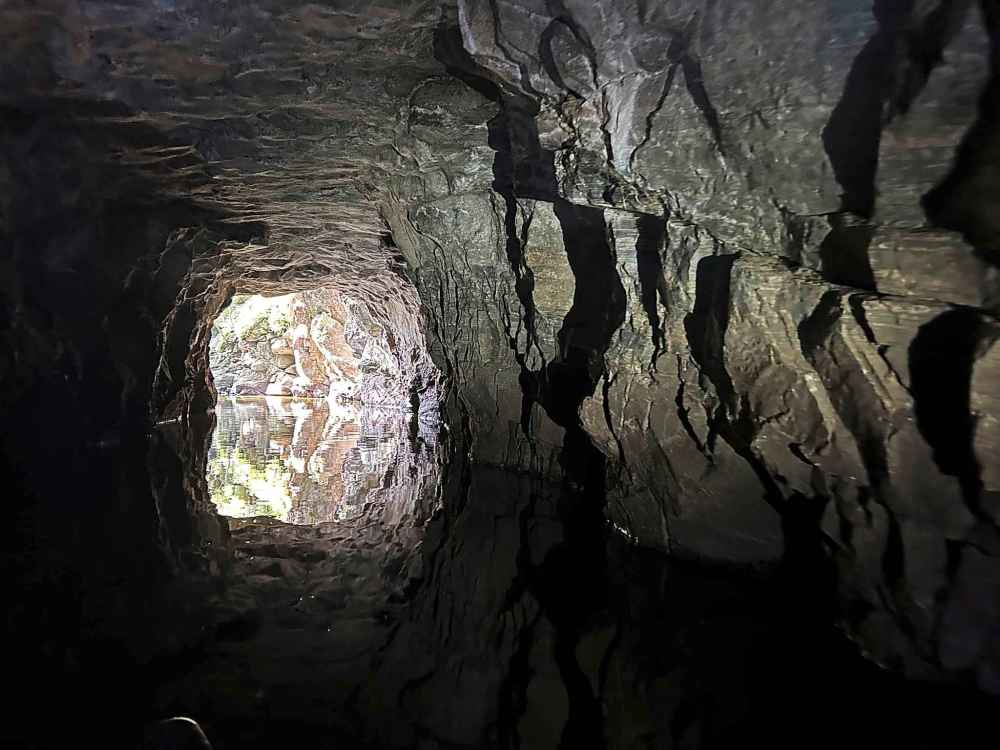
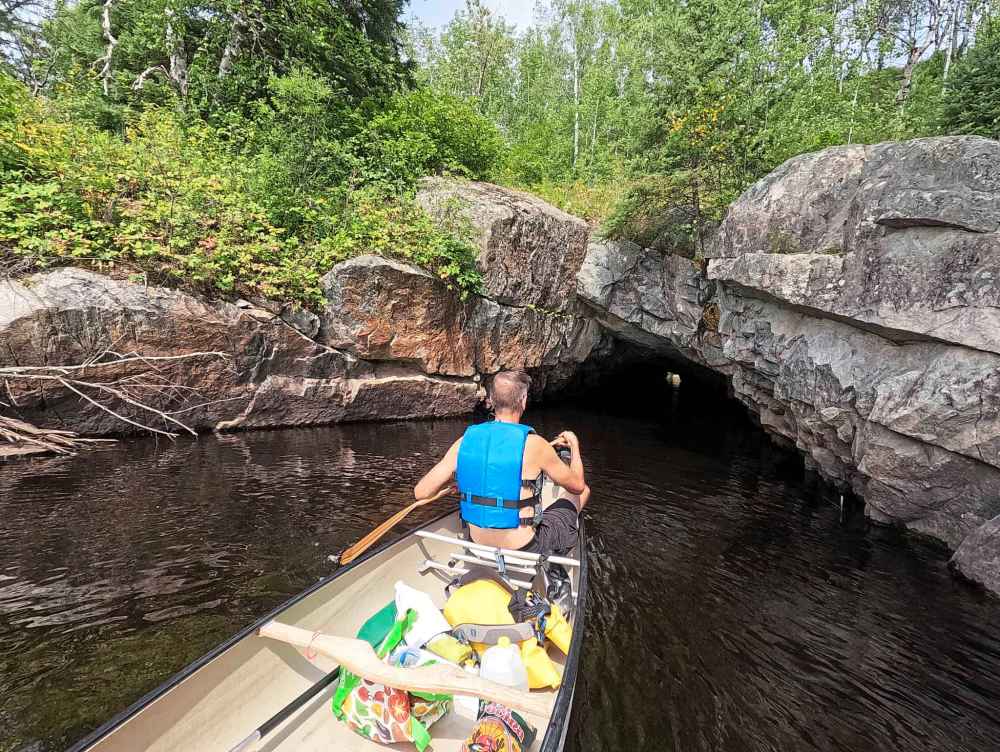
In the ensuing decades, people have been able to travel by canoe, kayak or small motorboat under and through the jagged rock. For a moment, the light at either end of the tunnels can almost disappear, creating a spooky atmosphere made eerier by small birds swooping just above your head.
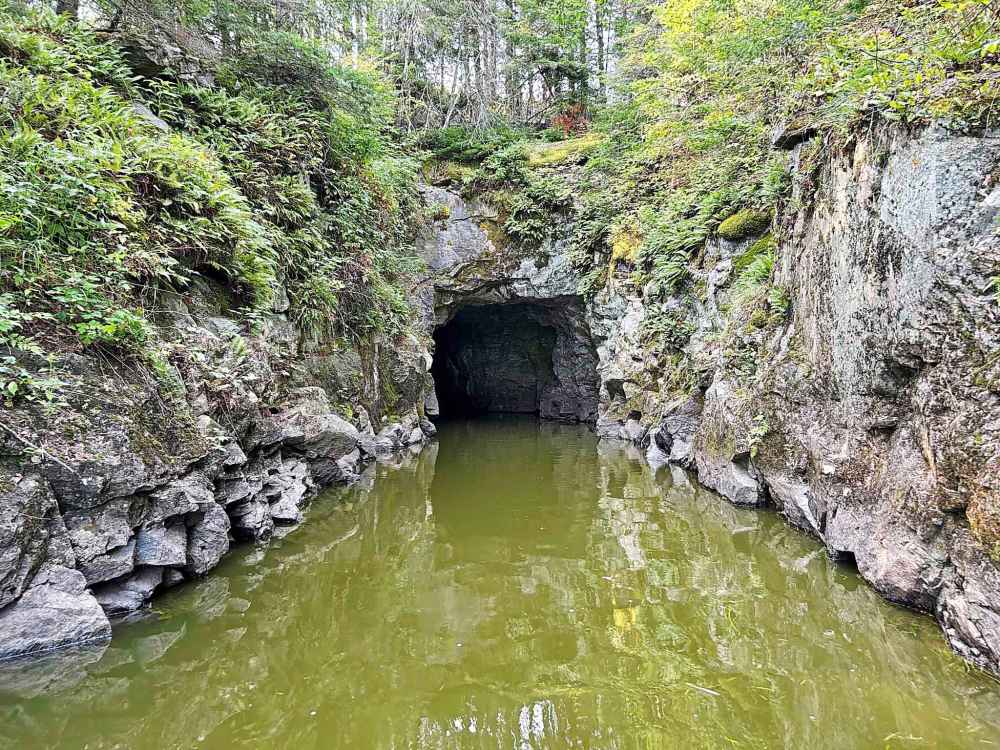
“I still think it’s pretty special how there are these doorways to wilderness there,” Tony Lavilla, who owns property in the area, said this week.
“People we take up there are just blown away.”
There is a campground, a public launch area and two resorts with rental watercraft on Caddy Lake, where most people start the tunnel tour.
The lake is wide and open to the wind until you approach the first tunnel — a high-ceiling, narrow passage with a bend about halfway through. You can reach out and touch the rough, uneven rock walls that jut out sideways. It’s three kilometres from the start — roughly 45 minutes each way if you’re paddling in good weather.
That tunnel spills out into South Cross Lake and more open water. Getting to the second tunnel is a more arduous affair. The journey is an additional six kilometres or 90 minutes of paddling each way and many people turn back beforehand. The second tunnel has much less head room, and is sometimes closed during high water, but it is longer and can often be done in solitude because of the reduced crowds.
There are also other tunnels on a nearby creek that are more traditional and clearly human-designed, made with brick or other material and showing smooth, neat walls.
It’s a trek that has attracted people of all skill levels, some of whom have had to be rescued or have returned exhausted after several hours on the water. The lakes don’t have much of a current, but a windy day can produce waves and make paddling more challenging and time-consuming.
“Definitely, if the wind picks up sometimes, then we’ve got to go out there and make sure they can get back,” says Brett Haiko, the owner of Caddy Lake Resort.
Lavilla came across two very tired paddlers earlier this summer with his motorboat.
“I tied the two kayaks and towed them into Green Bay (Resort),” Lavilla said.
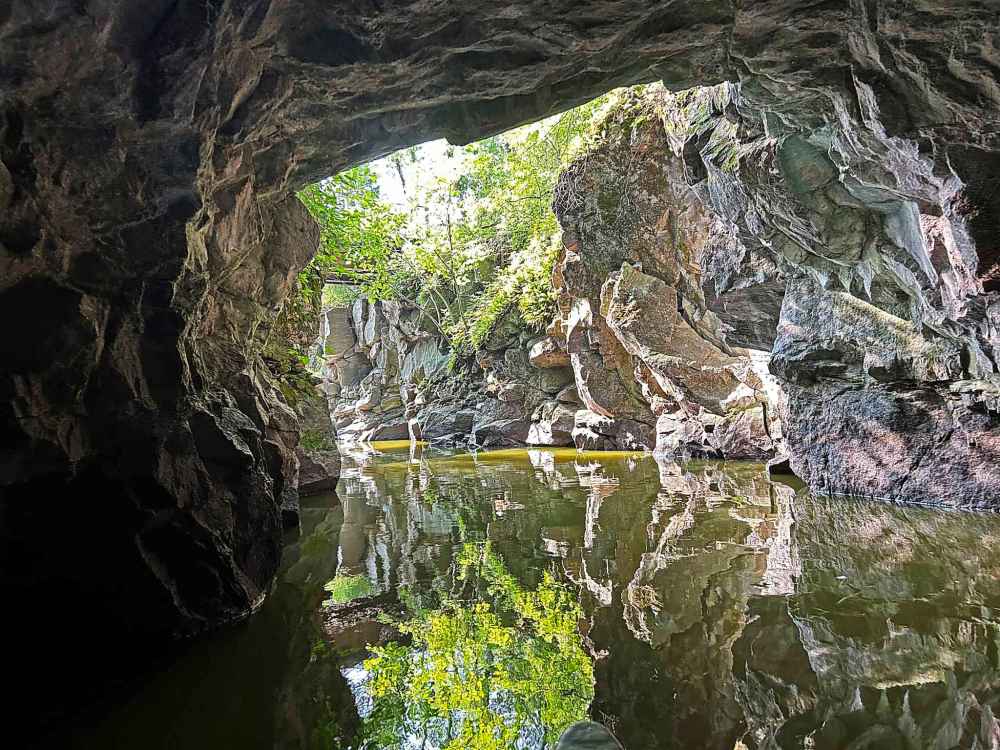
People can rent motorboats to make the trip a simple one. Many people in kayaks and canoes turn back after the first tunnel to make things easier.
Doing the full two-tunnel tour is very doable, Haiko said, as long as you pick a day without strong winds. He also advises people to be prepared for a trip that can take up much of the day.
“Lots of water and bring some food … you’re going to definitely want to take some supplies.”
This report by The Canadian Press was first published Aug. 24, 2024