

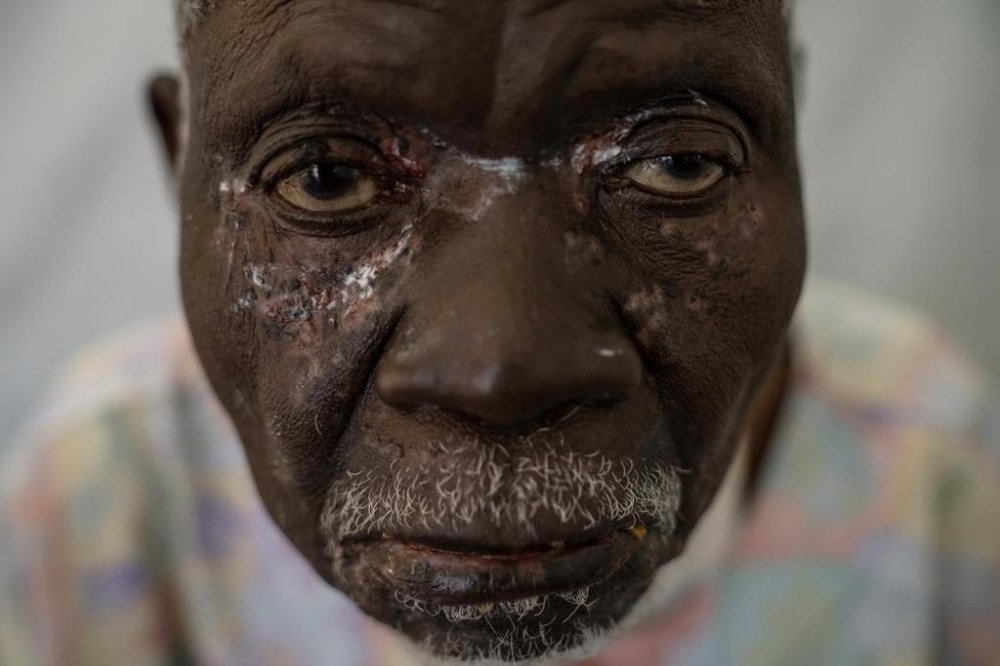
A photographer captures the mpox health crisis in Africa in a closeup
Advertisement
Read this article for free:
or
Already have an account? Log in here »
To continue reading, please subscribe:
Monthly Digital Subscription
$0 for the first 4 weeks*
- Enjoy unlimited reading on winnipegfreepress.com
- Read the E-Edition, our digital replica newspaper
- Access News Break, our award-winning app
- Play interactive puzzles
*No charge for 4 weeks then price increases to the regular rate of $19.00 plus GST every four weeks. Offer available to new and qualified returning subscribers only. Cancel any time.
Monthly Digital Subscription
$4.75/week*
- Enjoy unlimited reading on winnipegfreepress.com
- Read the E-Edition, our digital replica newspaper
- Access News Break, our award-winning app
- Play interactive puzzles
*Billed as $19 plus GST every four weeks. Cancel any time.
To continue reading, please subscribe:
Add Free Press access to your Brandon Sun subscription for only an additional
$1 for the first 4 weeks*
*Your next subscription payment will increase by $1.00 and you will be charged $16.99 plus GST for four weeks. After four weeks, your payment will increase to $23.99 plus GST every four weeks.
Read unlimited articles for free today:
or
Already have an account? Log in here »
Hey there, time traveller!
This article was published 25/08/2024 (473 days ago), so information in it may no longer be current.
GOMA, Congo (AP) — Moses Sawasawa, a freelance photographer in Congo who began his career in 2015 at the age of 18, has been collaborating with The Associated Press since 2021. He covers humanitarian issues, culture, health and daily life. He grew up in a time of conflict but, instead, has focused his work on capturing everyday activities with his camera. What fascinates him most is the human being, especially women and children, who are almost omnipresent in his photographs.
Why this photo?
I took this photo a few days after the World Health Organization declared mpox a global emergency. Most cases of mpox are in children — about 70% are under 15, according to the Africa CDC — so I wanted to illustrate that 30% with a photo of an adult.
How I made this photo
I waited in a room where a 90-year-old man was sleeping. I waited until he woke up to make the photo a bit more lively.
I spent quite some time waiting and chatting with the man’s grandson, who was his caregiver, to learn about the old man’s life. I waited for 20 to 30 minutes before he woke.

I have a Sony a7R Mark IV and a 24-70mm GM 2.8 lens. I got a bit closer to the old man, wearing protective clothing, of course. I set the aperture to 2.8 to create a slight blur on his multicolored robe.
Why this photo works
This photo works because it is unique. Yes, there were other sick adults, but for me, I chose to wait for the old man because I found him very photogenic, with the mpox disfiguring his face and his mustache partially gone.
I took several photos of this man — of his hands, his feet — but I preferred this one because it perfectly tells the story. I am convinced that even in bad news, we photographers are supposed to find something beautiful in an unfortunate story. It’s a photo with a story behind it, and it could also make a nice painting.
___ For more extraordinary AP photography, click here. Follow Sawasawa on Instagram.