Loss for words For new Canadians, waning ability to speak a heritage language can mean a diminished connection with one’s roots and culture
Read this article for free:
or
Already have an account? Log in here »
To continue reading, please subscribe:

Digital Subscription
One year of digital access for only $205*
- Enjoy unlimited reading on winnipegfreepress.com
- Read the E-Edition, our digital replica newspaper
- Access News Break, our award-winning app
- Play interactive puzzles
*First annual payment billed as $205.00 + GST for one year. This annual subscription will automatically renew at $233.00 + GST every 52 weeks (10% off the regular annual price of $259.35). Offer available to new and qualified returning subscribers only. Cancel any time.
To continue reading, please subscribe:
Add Free Press access to your Brandon Sun subscription for only an additional
$1 for the first 4 weeks*
- Enjoy unlimited reading on winnipegfreepress.com
- Read the E-Edition, our digital replica newspaper
- Access News Break, our award-winning app
- Play interactive puzzles
*Your next Brandon Sun subscription payment will increase by $1.00 and you will be charged $17.95 plus GST for four weeks. After four weeks, your payment will increase to $24.95 plus GST every four weeks.
Read unlimited articles for free today:
or
Already have an account? Log in here »
Hey there, time traveller!
This article was published 30/08/2024 (746 days ago), so information in it may no longer be current.
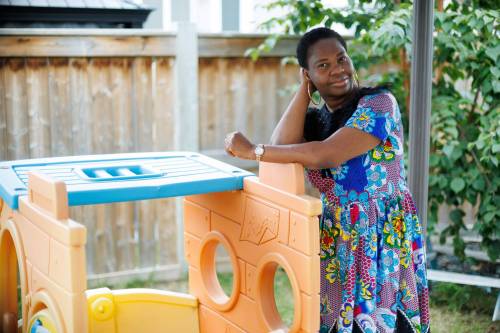
Abiodun Adetu, who immigrated to Canada from Nigeria in 2019, cheerfully shares that her three children’s time spent playing in the neighbourhood is like a melting pot of diverse cultures.
Her next-door neighbour is Ethiopian, the other one is Italian. Right across from her home is a Cameroonian family, and there is also a French-speaking family nearby.
The children from the families intermingle and play together — their common ground is that they are all Canadian. “But we know where we come from, and we speak our mother tongues at home,” Adetu says.
Adetu, who is also the social secretary of the Nigerian Association of Manitoba, is happy to see the children learn about each other’s language and culture.
She says her seven-year-old son, who cannot speak French, asked if he can teach Yoruba — his heritage language and one of several prominent languages spoken in Nigeria — to his friend.
Abiodun Adetu, who immigrated to Canada from Nigeria in 2019, says her three children’s time spent playing in the neighbourhood is a melting pot of diverse cultures. 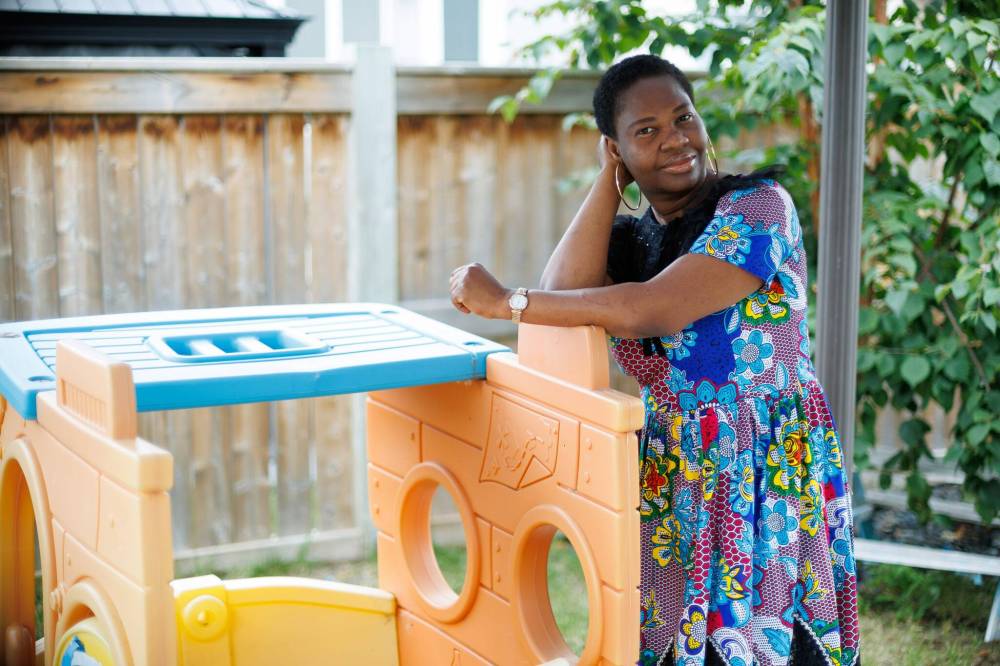
“I’m like, yeah, teach them your language. It’s an exchange between all the kids, and it’s so sweet and nice to see, but we also have to do it with the adults as well,” she says.
Adetu also serves as the editor-in-chief of the newly launched Kara Magazine, which empowers Africans in Canada to reconnect with their roots and celebrate their cultural heritage with pride.
Like many other immigrants who have come to Canada in search of a better life, Adetu hopes integration into Canadian society won’t mean losing her language, culture, identity and history.
According to the 2021 Statistics Canada census, one in four people in Canada has a mother tongue other than English or French, and about 12 per cent predominantly speak a non-official language at home as of 2020. This increase is directly linked to the country’s strong immigration policy.
The census also noted a significant rise in the number of Canadians who primarily speak South Asian languages, such as Punjabi, Gujarati, Hindi or Malayalam since 2016, again driven by immigration.
In Manitoba, 13 per cent of people predominantly speak another language at home, up from 11.5 per cent in 2016. The data reveal nearly 1.1 million Manitobans primarily speak English at home, followed by 33,565 who speak Tagalog, one of the major languages of the Philippines. The next most common languages spoken at home are Punjabi (29,395), German (18,585) and French (14,715).
“Language is a treasure trove of human history.”– Khwaja Latif
However, proficiency in immigrants’ heritage languages tends to fade after a generation or two.
Félix Mathieu, associate professor in the department of political science at the University of Winnipeg, says linguistic diversity is largely a byproduct of migration dynamics.
“This diversity reflects Canada’s long-standing history of immigration and its commitment to welcoming people from various cultural backgrounds.”
While multiculturalism is an integral part of the country’s “political DNA,” it falls short of committing to preserve heritage languages of immigrants — leading to a loss of history and identity crisis.
“Canadian multiculturalism is a philosophy of integration, aiming to integrate (though not assimilate) newcomers with the Canadian public culture and institutional landscape,” Mathieu explains.
He adds that although Canadian multiculturalism celebrates diversity and cultures, it does not aim to assist immigrants in maintaining proficiency in their mother tongue.
“This goes beyond the policy’s scope and the Canadian state’s social justice commitments towards its citizens and newcomers.”
For immigrants however, multiculturalism and multilingualism go hand-in-hand. As languages are more than just tools for communication; they are also carriers of culture, tradition, history, and heritage.
Khwaja Latif, a founding member of Manitoba Bangladesh Bhaban Corp., harbours a profound love for his mother tongue, Bangla.
Driven by this deep passion, Latif played a pivotal role in establishing the International Mother Language Plaza in Winnipeg’s Kirkbridge Park. The monument is a heartfelt tribute to and replica of the Shaheed Minar in Dhaka, Bangladesh, Latif’s beloved homeland.
For Khawja Latif, a founding member of Manitoba Bangladesh Bhaban Corp., language is connection.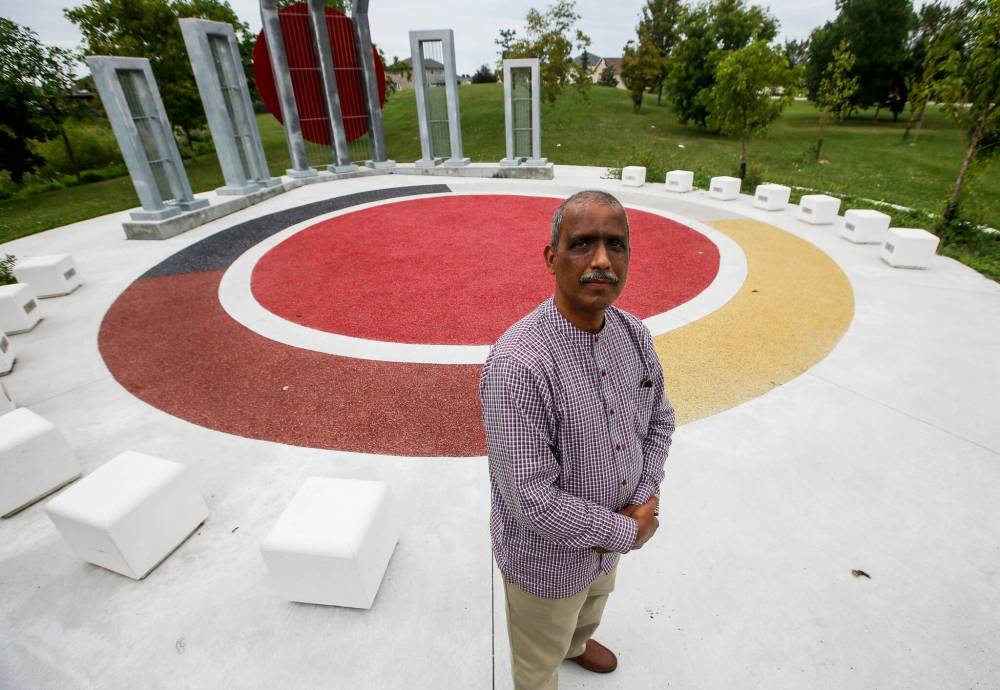
“Language is a treasure trove of human history. A treasure trove of connecting to the environment of a specific country or a specific location. This should be given some kind of priority,” says the 66-year-old engineer.
Bangladesh was born in 1971 after a struggle for the recognition of its Bangla language, culture and heritage, separating from Pakistan, where Urdu was dominant. As a result of its hard-fought freedom movement, Bangladeshis hold their language and culture in high regard.
Latif immigrated to Canada with his family in 2001. Despite his deep attachment to the language and culture of his native country, he feels a poignant sadness that his next generation doesn’t share the same connection to their roots.
The ties to his heritage that he cherishes seem to be slipping away from his children. Latif says that while his younger son can speak Bangla, he has forgotten how to read and write in the language.
“To me, it’s a tragic thing that he basically is not fluent in Bangla. He can speak, but he does not understand the culture. And that’s a serious thing.”
The father adds that his son’s loss of Bangla culture has led to a diminished connection between them, as he does not understand much of Bangla tradition, or other things that are important to him.
Expressing his fear, he envisions himself on his deathbed, surrounded by people who cannot understand his language. He fears a deep sense of isolation and anonymity.
“Nobody knows who you are until you speak and express yourself. If you don’t belong to Canadian culture, people won’t understand you. Essentially, you’ll feel like a lost person,” he says.
“Policies and families should seriously attempt to encourage keeping these languages alive.”– Amir Kalan
Latif is not alone in feeling a loss of belonging due to the erosion of his language and culture as an immigrant in a new country.
To counter this, newcomers to Canada from diverse backgrounds work to preserve their language and, by extension, their culture, by teaching it to their children.
Homeschooling, exposing children to films in their heritage language, participating in cultural community programs, and enrolling them in language courses are some of the ways immigrant parents strive to maintain their traditional ties.
Amir Kalan, an assistant professor in the department of integrated studies in education at McGill University, says language preservation often serves as a tool for maintaining and asserting one’s identity in a new environment, particularly as a form of anti-discrimination.
“This phenomenon (next generations losing their heritage languages) might happen organically, especially when it occurs gradually and across multiple generations,” Kalan says.
“However, policies and families should seriously attempt to encourage keeping these languages alive. The danger of disrupting the linguistic flow between generations arises when it interferes with questions of identity and developing a sense of belonging, and also when it becomes a social foundation for possible discrimination.”
Multiculturalism is beneficial for Canadian society. Linguistic and cultural diversity drives society to understand the world from various perspectives, which is seen positively, U of W’s Mathieu says.
“It relates to the ‘contact theory,’ suggesting that daily encounters with individuals from different cultural backgrounds lead people to view cultural differences as a value-added rather than a threat.”
Zuher Almasure, a community video journalist and an Arab who moved to Canada in 2019, says his family has a rule they strictly adhere to — only speak Arabic at home and don’t use any foreign words when communicating with each other.
“This not only helps us preserve our language and culture, but also creates a strong bond within our family,” says the father of two daughters.
SUPPLIED Zuher Almasure’s family speaks Arabic at home.
His wife is an Arabic teacher and has made sure their children know how to read and write Arabic.
He says that while these efforts have a positive impact, it is crucial to recognize the need for more schools offering heritage language immersion courses and for enhanced co-operation between home and external environments to promote multilingualism.
“By increasing the availability of language education and fostering collaboration, the effect of preserving the mother language can be amplified, leading to greater cultural preservation, stronger community bonds and improved integration in the new country.”
Aline Tezcucano, who immigrated from Mexico in 2003, says her seven-year-old son, born in Canada, speaks English as his first language. “Right now, he understands Spanish but responds in English.”
Tezcucano’s mother lives with the family and speaks only Spanish. She often finds it challenging to communicate with her grandson. “Sometimes when they try to talk, he gets frustrated,” Tezcucano says.
Despite these struggles, Tezcucano sees progress. “It’s been a journey, but he’s improving since I started homeschooling him in Spanish. He now plans to learn Spanish from his grandmother and teach her English.”
Aline Tezcucano, who immigrated from Mexico in 2003, plays a Spanish-language word game at home with her son Riley, 7.
Tezcucano is part of the board of directors at Mex y Can Association Of Manitoba Inc. She and her husband are active members of the association so they can stay connected to their roots and pass down their heritage to their child.
“You want to transmit that pride of your culture to your next generations.”
Tezcucano’s active involvement in the community has garnered her notable recognition. She has been inducted into the Personalities Wall at the Manitoba Museum, a permanent exhibit honouring 30 influential figures in Winnipeg’s history.
Additionally, in 2022, she was named one of the 10 Most Influential Hispanic Canadians by TLN (Univision Canada).
If languages are not actively preserved, they are eventually going to be lost, and with them connection with one’s history and heritage.
The 2021 Statistics Canada census reveals a decline in diverse European languages, including Italian, Polish and Greek, in Canada.
David Fuller studied at the University of Iceland for two years.
David Jón Fuller, a web copy editor at the Free Press, has observed this in his own family. He is English on his father’s side; his mother is of Icelandic descent. His great-great-grandparents came from Iceland to Canada in the 1890s.
“My langamma (great-grandmother in Icelandic), who I knew when I was growing up in the 1970s and 1980s, was born in 1896 and lived in Selkirk.”
He blames the loss of Icelandic language in his family to the pressure to assimilate and speak English in order to find work and fit in in Canada.
“My amma (my mother’s mother) spoke Icelandic as a first language until she started elementary school, but after that she spoke primarily English. My afi, her husband, spoke Icelandic I believe for most of his life as well as English — he died when I was not yet a year old,” he says.
Fuller developed a fascination with Icelandic sagas and Norse myths and wanted to explore the language. It became a way for him to connect with his ancestors and culture.
Fortunately, he twice received scholarships to study at the University of Iceland that covered two years of tuition and living expenses.
“Immersion was much more difficult but also more effective at learning the complex Icelandic grammar and sometimes difficult pronunciation. It also gave me the chance to meet some of my relatives in Iceland, including an elderly relative who spoke no English but had corresponded with my langamma in Icelandic over the years,” he says.
His children sadly do not speak the language; nor do many Canadian settlers with Nordic ancestry. He calls this unfortunate and a disconnect from his history and roots.
Arian Arianpour, the president of the Iranian Community of Manitoba, explains how the small but active community is trying to maintain its language against all odds.
Arianpour says there are roughly just 2,000 Iranians in Manitoba, with the majority residing in Winnipeg. “Our community, while small compared to others, is highly active and engaged,” he says.
Arian Arianpour says language classes for kids
and adults can help foster stronger connections
to cultural roots. 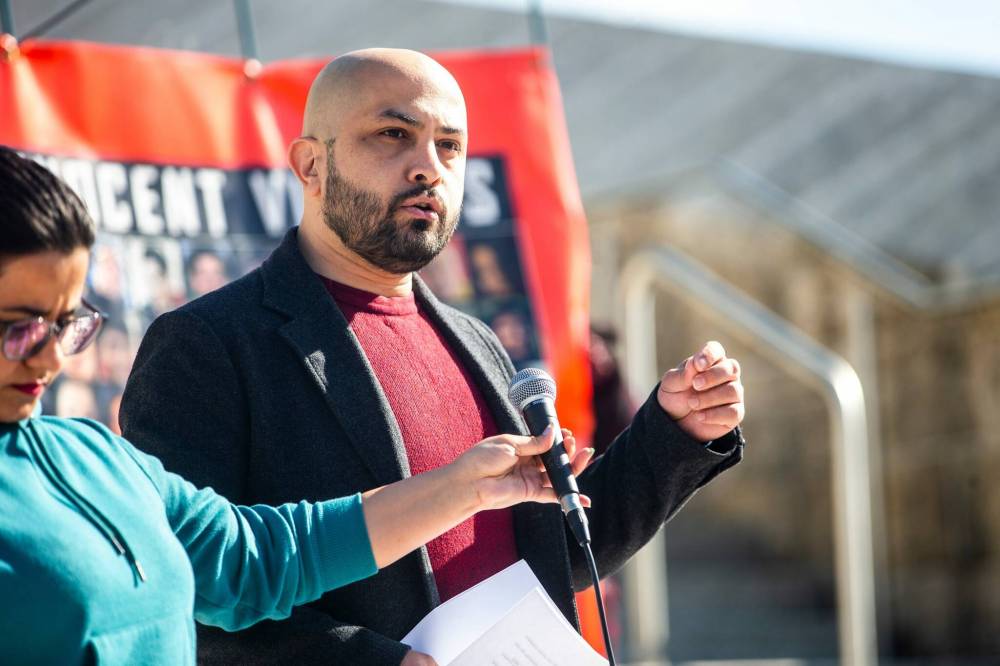
The Iranian Community of Manitoba is dedicated to preserving the Persian language through cultural events, language classes and community gatherings that celebrate their heritage.
“We offer Persian language classes for both children and adults to ensure fluency is sustained across generations,” he says.
The impact of these classes has been significant in maintaining language proficiency among younger generations and fostering a strong connection to their cultural roots, he adds. Preserving their language is vital, as it is a fundamental part of their identity and heritage, he says.
The U of W’s Mathieu explains that maintaining the vitality of minority languages is challenging without formal institutional support.
“Even with such support, minority languages often struggle against dominant languages like English, which hold significant economic, political and cultural power. Francophone official-language minority communities in Canada are acutely aware of these challenges.”
Similarly, McGill University’s Kalan suggests the need to move beyond the notion of “official language,” especially when this concept is used to marginalize Indigenous and non-official languages, which often happens in many institutions.
“Canada has been described as a post-national state, which necessitates a different definition of language officiality. While official bilingualism creates more spaces than official monolingualism, it is not enough and remains problematic in many ways, as it still adheres to 19th-century notions of nationhood, which connected nationhood with a national or ethnic language.”
India, one of the most linguistically diverse countries in the world, does not have a national language. English and Hindi serve as official languages for central government work. Additionally, the country’s constitution recognizes 22 scheduled languages, which receive official recognition and support to be safeguarded and preserved by law.
Delvinder Zamir, an Indian Punjabi who was raised in Singapore before moving to Canada in 2009, praises Singapore’s education system and suggests it could serve as a model for Canada.
“Singapore, which is also very multicultural, used English as the primary language in schools, and we all had to learn our mother tongue,” says Zamir.
Delvinder Zamir suggests more immersion programs are needed in Canadian schools.
She explains that in Singapore schools, Mother Tongue Language (MTL) is offered as a compulsory second-language subject.
A bilingual Punjabi program is available at Amber Trails School in the Seven Oaks Division. The program is well-received and appreciated by the community.
Zamir says more immersion programs are needed in Canadian schools, offering multiple languages, since sending kids to private school or language classes can be expensive.
Twenty-four of Manitoba’s 37 public school divisions currently offer immersion to some extent. It is available in Tagalog, Spanish, French and Punjabi, among a few other languages.
Canada is internationally respected for its progressive immigration and language policies. Kalan says the language diversity we witness daily in Canada’s cities reflects a rich reservoir of multiplicity coming together from different parts of the world.
“We need to find ways to recognize and utilize this reservoir effectively.”
tahira.khan@freepress.mb.ca

History
Updated on Sunday, September 1, 2024 11:08 AM CDT: Corrects reference to Seven Oaks' bilingual program