Instagram makes teen accounts private as pressure mounts on the app to protect children
Advertisement
Read this article for free:
or
Already have an account? Log in here »
To continue reading, please subscribe:

Digital Subscription
One year of digital access for only $205*
- Enjoy unlimited reading on winnipegfreepress.com
- Read the E-Edition, our digital replica newspaper
- Access News Break, our award-winning app
- Play interactive puzzles
*First annual payment billed as $205.00 + GST for one year. This annual subscription will automatically renew at $233.00 + GST every 52 weeks (10% off the regular annual price of $259.35). Offer available to new and qualified returning subscribers only. Cancel any time.
To continue reading, please subscribe:
Add Free Press access to your Brandon Sun subscription for only an additional
$1 for the first 4 weeks*
- Enjoy unlimited reading on winnipegfreepress.com
- Read the E-Edition, our digital replica newspaper
- Access News Break, our award-winning app
- Play interactive puzzles
*Your next Brandon Sun subscription payment will increase by $1.00 and you will be charged $17.95 plus GST for four weeks. After four weeks, your payment will increase to $24.95 plus GST every four weeks.
Read unlimited articles for free today:
or
Already have an account? Log in here »
Hey there, time traveller!
This article was published 17/09/2024 (723 days ago), so information in it may no longer be current.
Instagram is making teen accounts private by default as it tries to make the platform safer for children amid a growing backlash against how social media affects young people’s lives.
Beginning Tuesday in the U.S., U.K., Canada and Australia, anyone under 18 who signs up for Instagram will be placed into restrictive teen accounts and those with existing accounts will be migrated over the next 60 days. Teens in the European Union will see their accounts adjusted later this year.
Parent company Meta acknowledges that teenagers may lie about their age and says it will require them to verify their ages in more instances, like if they try to create a new account with an adult birthday. The Menlo Park, California company also said it is building technology that proactively finds teen accounts that pretend to be grownups and automatically places them into the restricted teen accounts.
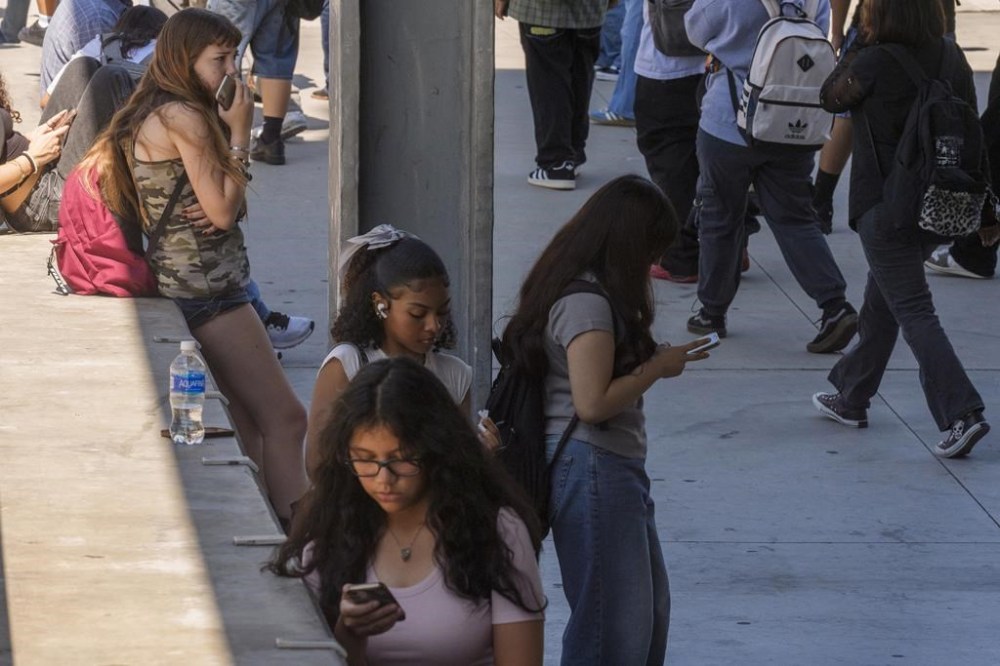
The teen accounts will be private by default. Private messages are restricted so teens can only receive them from people they follow or are already connected to. “Sensitive content,” such as videos of people fighting or those promoting cosmetic procedures, will be limited, Meta said. Teens will also get notifications if they are on Instagram for more than 60 minutes and a “sleep mode” will be enabled that turns off notifications and sends auto-replies to direct messages from 10 p.m. until 7 a.m.
While these settings will be turned on for all teens, 16 and 17-year-olds will be able to turn them off. Kids under 16 will need their parents’ permission to do so.
“The three concerns we’re hearing from parents are that their teens are seeing content that they don’t want to see or that they’re getting contacted by people they don’t want to be contacted by or that they’re spending too much time on the app,” said Naomi Gleit, head of product at Meta. “So teen accounts is really focused on addressing those three concerns.”
The announcement comes as the company faces lawsuits from dozens of U.S. states that accuse it of harming young people and contributing to the youth mental health crisis by knowingly and deliberately designing features on Instagram and Facebook that addict children to its platforms.
While Meta didn’t give specifics on how the changes might affect its business, the company said the changes may mean that teens will use Instagram less in the short term. Emarketer analyst Jasmine Enberg said the revenue impact of the changes “will likely be minimal.”
“Even as Meta continues to prioritize teen safety, it’s unlikely that it’s going to make sweeping changes that would cause a major financial hit,” she said, adding that the teen accounts are unlikely to significantly affect how engaged teens are with Instagram “not in the least because there are still plenty of ways to circumvent the rules, and could even make them more motivated to work around the age limits.”
New York Attorney General Letitia James said Meta’s announcement was “an important first step, but much more needs to be done to ensure our kids are protected from the harms of social media.” James’ office is working with other New York officials on how to implement a new state law intended to curb children’s access to what critics call addictive social media feeds.
Others were more critical. Nicole Gill, the co-founder and executive director of the nonprofit Accountable Tech, called Instagram’s announcement the “latest attempt to avoid actual independent oversight and regulation and instead continue to self-regulate, jeopardizing the health, safety, and privacy of young people.”
“Today’s PR exercise falls short of the safety by design and accountability that young people and their parents deserve and only meaningful policy action can guarantee,” she said. “Meta’s business model is built on addicting its users and mining their data for profit; no amount of parental and teen controls Meta is proposing will change that.”
Sen. Marsha Blackburn (R-Tenn.), the co-author of the Kids Online Safety Act that recently passed the Senate, questioned the timing of the announcement “on the eve of a House markup” of the bill.
“Just like clockwork, the Kids Online Safety Act moves forward and industry comes out with a new set of self-enforcing guidelines,” she said.
In the past, Meta’s efforts at addressing teen safety and mental health on its platforms have also been met with criticism that the changes don’t go far enough. For instance, while kids will get a notification when they’ve spent 60 minutes on the app, they will be able to bypass it and continue scrolling.
That’s unless the child’s parents turn on “parental supervision” mode, where parents can limit teens’ time on Instagram to a specific amount of time, such as 15 minutes.

With the latest changes, Meta is giving parents more options to oversee their kids’ accounts. Those under 16 will need a parent or guardian’s permission to change their settings to less restrictive ones. They can do this by setting up “parental supervision” on their accounts and connecting them to a parent or guardian.
Nick Clegg, Meta’s president of global affairs, said last week that parents don’t use the parental controls the company has introduced in recent years.
Meta’s Gleit said she thinks the teen accounts will incentivize parents to start using them.
“Parents will be able to see, via the family center, who is messaging their teen and hopefully have a conversation with their teen,” she said. “If there is bullying or harassment happening, parents will have visibility into who their teen’s following, who’s following their teen, who their teen has messaged in the past seven days and hopefully have some of these conversations and help them navigate these really difficult situations online.”
U.S. Surgeon General Vivek Murthy said last year that tech companies put too much responsibility on parents when it comes to keeping children safe on social media.
“We’re asking parents to manage a technology that’s rapidly evolving that fundamentally changes how their kids think about themselves, how they build friendships, how they experience the world — and technology, by the way, that prior generations never had to manage,” Murthy said in May 2023.
——
Associated Press writer Anthony Izaguirre in New York contributed to this report.
——
This story has been updated to correct the name of Nicole Gill.