Niche internet culture serves up Halloween costume inspiration

Advertisement
Read this article for free:
or
Already have an account? Log in here »
To continue reading, please subscribe:
Digital Subscription
One year of digital access for only $1.44 a week*
- Enjoy unlimited reading on winnipegfreepress.com
- Read the E-Edition, our digital replica newspaper
- Access News Break, our award-winning app
- Play interactive puzzles
*Billed as $5.77 plus GST every four weeks. After 52 weeks, price increases to the regular rate of $19.95 plus GST every four weeks. Offer available to new and qualified returning subscribers only. Cancel any time.
To continue reading, please subscribe:
Add Free Press access to your Brandon Sun subscription for only an additional
$1 for the first 4 weeks*
- Enjoy unlimited reading on winnipegfreepress.com
- Read the E-Edition, our digital replica newspaper
- Access News Break, our award-winning app
- Play interactive puzzles
*Your next Brandon Sun subscription payment will increase by $1.00 and you will be charged $17.95 plus GST for four weeks. After four weeks, your payment will increase to $24.95 plus GST every four weeks.
Read unlimited articles for free today:
or
Already have an account? Log in here »
Hey there, time traveller!
This article was published 26/10/2024 (723 days ago), so information in it may no longer be current.
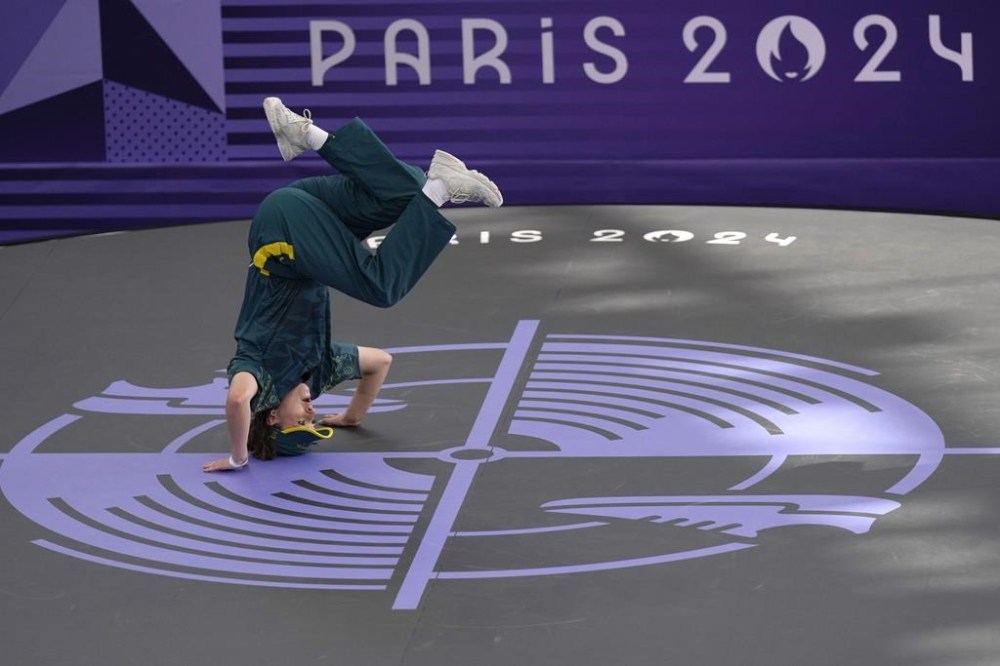
It makes sense that two of Halloween 2024’s most popular costumes come from two of 2024’s most viral moments: Raygun and Moo Deng.
The former is the much-memed Australian breakdancer who got zero points at the Paris Summer Olympics. The latter is the much-memed pygmy hippo from Thailand.
Halloween costumes are all about escapism and expressions of creativity — but they can also come with the pressure to be topical, referential and, above all, original. There’s always been a competitive aspect to dressing up for Halloween, whether fuelled by IRL Best Costume competitions or the chance to go viral.
And meme costumes, such as Raygun and Moo Deng, satisfy all three of those pressures (topical, referential, original — to a point).
A recent Atlantic article posits that the Chronically Online are sucking the joy from Halloween with their increasingly obscure costumes based on increasingly fleeting internet memes. I agree with many points the piece made except for possibly the central one. Because … are they?
First of all, asking and/or answering the question, “Who are you supposed to be?” is pretty fundamental to the whole Halloween costume-wearing experience. Some Halloween costumes go over one’s head because they are obscure, yes, but some costumes are just poorly executed.
Secondly, if you participate in the Reason for the Season — a.k.a. trick or treating — then you know kids have their own culture. Yes, you’ve still got your pumpkins and panda bears, but kids are also coming to my house dressed as all kinds of things I’ve never heard of because I am Chronically Childfree. I’ve had many characters witheringly kidsplained to me and you know what? Good! Keeps me young.
And third: can the joy ever truly be sucked from a holiday that is exclusively dedicated to fun? To quote Garfield (or Lasagna-Loving Orange Cat, as he might be known in the drugstore): “Halloween is my kind of holiday … no dumb bunnies, no fireworks, no relatives. Just candy.”
Even if you’ve never heard of the characters that inspired two of this year’s most popular costumes, it doesn’t matter. They could both be sold at the Spirit of Halloween currently haunting your closest stripmall as their generic counterparts “Charming Hippo” and “Funny Breakdancer.” In other words, a “Moo Deng costume” can also just be a hippopotamus costume.
But meme culture’s infiltration into Halloween raises an interesting question: is there even such a thing as “popular culture” anymore?

Let’s go back to Halloween 1997. Wes Craven’s now-iconic slasher flick Scream had come out the December (!) prior and, nearly a full calendar year later, the Ghostface mask worn by the killer was everyone’s costume.
Even if you’d never seen Scream, you recognized Ghostface. It was an easily accessible, current costume. Not the most original, sure, but you were part of a pop-culture moment.
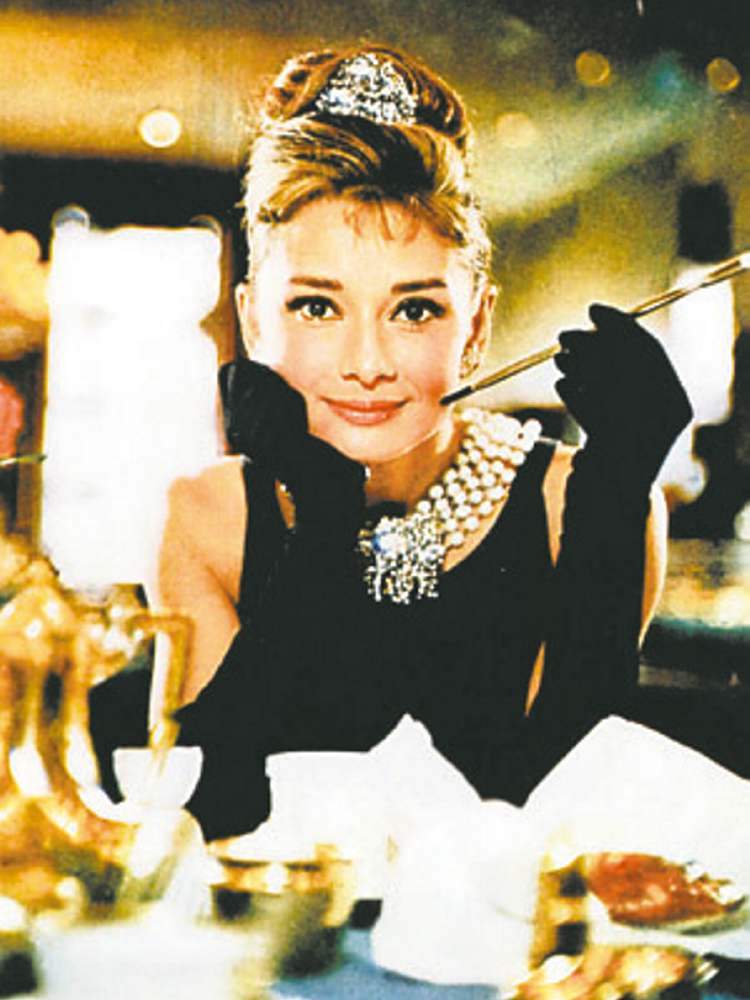
Pop-culture costume standbys like your Marilyn Monroes and your Audrey Hepburns have remained popular among multiple generations because of their enduring and much-reproduced iconography.
The original reference for the classic Hepburn Halloween costume — black dress, tiara, cigarette holder — might be the 1961 rom-com Breakfast at Tiffany’s, but that look remains instantly recognizable because of other pop culture ephemera, such as the Hepburn screenprint from IKEA that many young women had in their first apartments in the 2000s.
But we don’t consume culture the same way anymore. What I might consider “popular culture” might not be what someone else considers “popular culture.” For example, I would consider dressing as pop star Chappell Roan in the pageant getup she appears in on the cover of her album, The Rise and Fall of a Midwest Princess, to be an excellent Halloween 2024 costume, but I also know that many people will read that and say “Chappell who?”
There is so much more content — more movies, more music, more TV shows — that we consume in isolation thanks to streaming that it’s harder to identify the pieces that make up a dominant current popular culture.

Remakes and sequels can help bridge the gap; Shrunken Head Bob, a character from 1988’s Beetlejuice and 2024’s Beetlejuice Beetlejuice is also a popular Halloween costume this year — but then, that movie was shown in a theatre.
This fragmentation — and accelerated life cycle — of popular culture has reached the internet. Like the handful of sitcoms that everyone watched, there used to be a handful of memes that everyone shared. More content means more costume inspiration, but it also increases the probability that your costume might be met with a blank stare if encountered by someone outside your bubble.
What I can get behind is the idea that we should go back to making our costumes — like blowing up a bunch of purple balloons and going as a bunch of grapes. Halloween costumes have become increasingly more elaborate — and more expensive — over the years; dressing up as an obscure meme retains some of that creative DIY spirit, at least.
But look, getting dressed for Halloween is like getting dressed everyday: you should do it for you. If someone else doesn’t “get it,” well, that sounds like a them problem.
jen.zoratti@winnipegfreepress.com
Jen Zoratti is a columnist and feature writer working in the Arts & Life department, as well as the author of the weekly newsletter NEXT. A National Newspaper Award finalist for arts and entertainment writing, Jen is a graduate of the Creative Communications program at RRC Polytech and was a music writer before joining the Free Press in 2013. Read more about Jen.
Every piece of reporting Jen produces is reviewed by an editing team before it is posted online or published in print – part of the Free Press‘s tradition, since 1872, of producing reliable independent journalism. Read more about Free Press’s history and mandate, and learn how our newsroom operates.
Our newsroom depends on a growing audience of readers to power our journalism. If you are not a paid reader, please consider becoming a subscriber.
Our newsroom depends on its audience of readers to power our journalism. Thank you for your support.
Jen Zoratti is a columnist and feature writer working in the Arts & Life department, as well as the author of the weekly newsletter NEXT. A National Newspaper Award finalist for arts and entertainment writing, Jen is a graduate of the Creative Communications program at RRC Polytech and was a music writer before joining the Free Press in 2013. Read more about Jen.
Every piece of reporting Jen produces is reviewed by an editing team before it is posted online or published in print – part of the Free Press‘s tradition, since 1872, of producing reliable independent journalism. Read more about Free Press’s history and mandate, and learn how our newsroom operates.
Our newsroom depends on a growing audience of readers to power our journalism. If you are not a paid reader, please consider becoming a subscriber.
Our newsroom depends on its audience of readers to power our journalism. Thank you for your support.
Advertisement Advertise With Us
Advertisement Advertise With Us