‘Big frustration’: How a limited MAID window affects Alzheimer’s patients
Advertisement
Read this article for free:
or
Already have an account? Log in here »
To continue reading, please subscribe:

Digital Subscription
One year of digital access for only $205*
- Enjoy unlimited reading on winnipegfreepress.com
- Read the E-Edition, our digital replica newspaper
- Access News Break, our award-winning app
- Play interactive puzzles
*First annual payment billed as $205.00 + GST for one year. This annual subscription will automatically renew at $233.00 + GST every 52 weeks (10% off the regular annual price of $259.35). Offer available to new and qualified returning subscribers only. Cancel any time.
To continue reading, please subscribe:
Add Free Press access to your Brandon Sun subscription for only an additional
$1 for the first 4 weeks*
- Enjoy unlimited reading on winnipegfreepress.com
- Read the E-Edition, our digital replica newspaper
- Access News Break, our award-winning app
- Play interactive puzzles
*Your next Brandon Sun subscription payment will increase by $1.00 and you will be charged $17.95 plus GST for four weeks. After four weeks, your payment will increase to $24.95 plus GST every four weeks.
Read unlimited articles for free today:
or
Already have an account? Log in here »
Hey there, time traveller!
This article was published 08/11/2024 (706 days ago), so information in it may no longer be current.
Mary Wilson was rapidly deteriorating with Alzheimer’s when she received a medically assisted death in 2017.
The Alberta woman was still cognitively aware and could carry complex conversations, but those chats might take an hour and a half instead of the usual 15 minutes, says her son, Ken Campbell.
She had also begun retreating from the world as the disease progressed: she put coffee cups in bathroom cabinets and spoons under pillows; she needed help getting dressed and had a loss of bladder control.
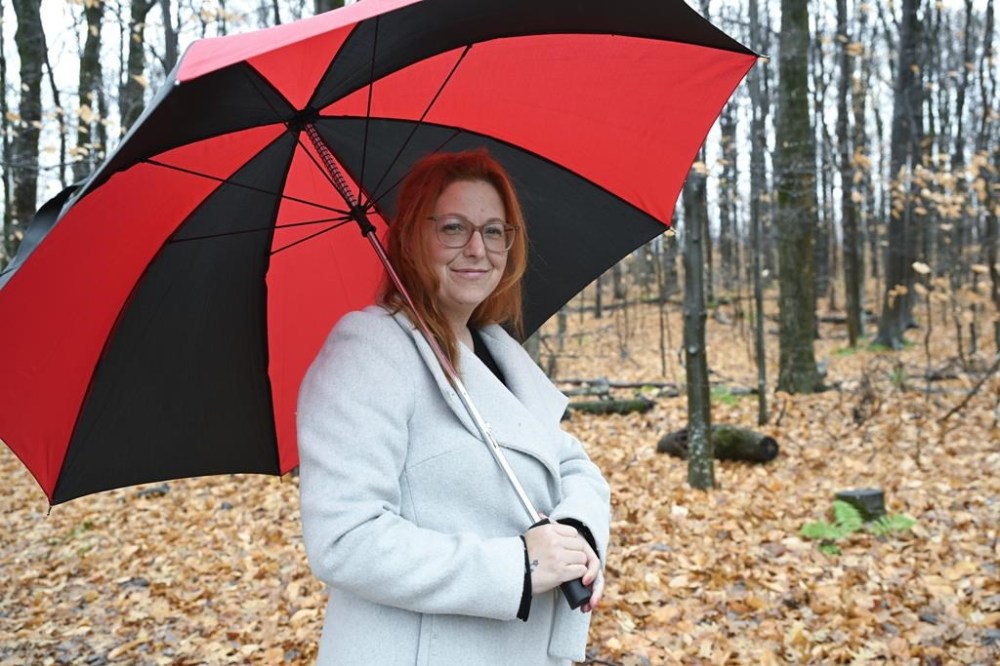
Wilson, an intellectual with three post-secondary degrees, stopped reading and started watching Disney musicals on repeat.
“Talking to my mom was like watching a beginner driver parallel park,” Campbell says of her final days.
Wilson hosted an intimate house party with family and friends before receiving MAID.
At the party she would smile and lean forward as if preparing to speak, but then lose her train of thought as everyone quieted to listen, saying only, “Nevermind,” Campbell says.
Her window for eligibility to receive MAID appeared to be closing – once a person with an untreatable condition loses the mental capacity to consent, it’s illegal to provide them an assisted death.
“Advanced requests were not available, and that was a big frustration for my mother,” says Campbell.
That is no longer the case in Quebec, where a person with a serious and incurable illness like Alzheimer’s can request MAID, months or years before their condition leaves them unable to consent. The move has received praise from patients and advocates who believe people with Alzheimer’s should get to decide if they want to endure the full extent of their decline. But it’s also generated confusion and criticism among some in the medical community who raise moral and legal questions.
In Wilson’s case, she was able to turn to her doctor and say “I’m ready,” recalls Campbell.
But he says that his mother would have wanted to ask for MAID in advance.
Wilson was diagnosed with dementia in 2012 and began a rapid decline in 2017. Her doctors had time to observe the speed and signs of her descent.
The acceleration of an Alzheimer’s patient’s illness – and their window of eligibility – largely varies case-by-case, says Dr. Konia Trouton, president of the Canadian Association of MAID Assessors and Providers.
Neurological conditions accounted for 12.6 per cent of people who received MAID in 2022. Out of those cases, which include Parkinson’s disease and ALS, dementia made up nine per cent, representing 150 people, Statistics Canada data shows.
They have to be in advanced decline, but still able to explain their diagnosis and give consent, says Trouton, who has been providing MAID in British Columbia, Alberta and Ontario since 2016.
Sandra Demontigny, who lives in Lévis, Que., applauds her province for fighting to advance MAID in Canada. She has started drafting personal criteria that would mean she’s ready for the procedure.
Patients making an advanced request must detail the circumstances in which they’d want MAID, such as if they lose control of their bowel, or forget their children’s names.
Demontigny, 45, knew she wanted to apply for MAID when she was diagnosed with Alzheimer’s at 39.
Demontigny saw the distress in her father’s eyes as he suffered from Alzheimer’s – the same illness his mother had – and it was like he was saying “save me,” she says. He could no longer eat or drink at the end of his life. He lay on the floor like a baby learning to walk, she recalls.
She decided that if she was diagnosed, she would seek a medically assisted death.
“I cannot imagine myself, and my children seeing me like that,” Demontigny says, pausing as tears muffle her words.
More than a decade after her father died, signs of her own illness appeared.
Demontigny says she’s already losing her memory, and sometimes asks the same question repeatedly. “I’m not the same person as before,” she says.
The federal government will launch consultations later this month about expanding advanced requests for medical assistance in dying.
Dr. Catherine Ferrier, who has spent four decades diagnosing and treating patients with neurocognitive disorders in Montreal, is firmly opposed to advance requests saying, “I find it barbaric.”
She posits the dilemma of a dementia patient with advanced consent who pulls their arm away when the doctor tries to insert the needle.
“You’re going to have to either hold them down or sedate them in order to do that,” Ferrier says.
If a patient’s refusal is a manifestation of their illness, the MAID practitioner can proceed, she says, but “that leaves a huge leeway for the subjectivity of the doctor.”
“We talk about ageism and we talk about ableism, discrimination against people with disabilities. To me, this displays all of that. Somebody who’s not actively contributing to society anymore, somehow it’s OK to just lower your standards for consent and remove that person from the population,” says Ferrier.
But Trouton says this is why the details of a person’s request are so important: “They’re going to have to outline what suffering will look like and how that can be objectively identified, like five or 10 years later.”
“That does mean that when a patient refuses, like a person with dementia who’s happy, it’s going to be hard for us to indicate, what does a refusal look like,” says Trouton.

The Quebec government website states that health and social services professionals, such as nurses and social workers, are expected to answer a patient’s MAID-related questions and help them find a provider. A doctor or specialized nurse practitioner would prepare the advanced request with the patient and record it with the provincial registry.
Helping patients write advanced requests will be an intensive process given the level of detail required. Trouton says she worries that there won’t be enough physicians and nurses trained to meet the expected demand.
“It’ll be impossible,” Trouton says. “That’s what I’m quite worried about.”
This report by The Canadian Press was first published Nov. 8, 2024.
Canadian Press health coverage receives support through a partnership with the Canadian Medical Association. CP is solely responsible for this content.