Veterans face challenges starting small businesses but there are plenty of resources to help
Advertisement
Read this article for free:
or
Already have an account? Log in here »
To continue reading, please subscribe:
Digital Subscription
One year of digital access for only $1.44 a week*
- Enjoy unlimited reading on winnipegfreepress.com
- Read the E-Edition, our digital replica newspaper
- Access News Break, our award-winning app
- Play interactive puzzles
*Billed as $5.77 plus GST every four weeks. After 52 weeks, price increases to the regular rate of $19.95 plus GST every four weeks. Offer available to new and qualified returning subscribers only. Cancel any time.
To continue reading, please subscribe:
Add Free Press access to your Brandon Sun subscription for only an additional
$1 for the first 4 weeks*
- Enjoy unlimited reading on winnipegfreepress.com
- Read the E-Edition, our digital replica newspaper
- Access News Break, our award-winning app
- Play interactive puzzles
*Your next Brandon Sun subscription payment will increase by $1.00 and you will be charged $17.95 plus GST for four weeks. After four weeks, your payment will increase to $24.95 plus GST every four weeks.
Read unlimited articles for free today:
or
Already have an account? Log in here »
Hey there, time traveller!
This article was published 10/11/2024 (708 days ago), so information in it may no longer be current.
NEW YORK (AP) — Many veterans who’ve started small businesses tell a similar story: Their military service prepared them mentally for the task, but they were at a disadvantage when it came to the financial part.
“Vetrepreneurs” – veterans that start small businesses or startups — own nearly 2 million small businesses that employ 5.5 million people in the U.S., according to the Small Business Administration. They take in about $1.3 trillion in revenue annually. Their numbers have shrunk, however, as the veteran population has aged. In a 2023 report, the SBA found veteran ownership declined from 11% of businesses in 2014 to 8.1% in 2020.
Veterans enter the business world prepared with skills they gain in the field like leadership and problem-solving. But they haven’t had a chance to build up credit or savings that civilians have had more time to do. That can cause problems because banks use that information to approve loans. Not to mention the mental toll it takes to transition from the military life to civilian life.
According to data from business coaching nonprofit SCORE, about a third of veteran businesses have limited access to capital or lack of financing. That compares to a quarter of non-veteran-owned firms.
SCORE CEO Bridget Weston says the good news is that veterans have plenty of places to turn to for help. Those include nonprofit organizations aimed at getting them on their feet and building up financial literacy, veteran-only loans and grants, and contracts earmarked for veteran owned and disabled veteran owned small businesses.
The place that many start is the Small Business Administration, which offers a program to get certified as a veteran-owned or disabled veteran-owned small business, which can make it easier to get certain loans and federal contracts.
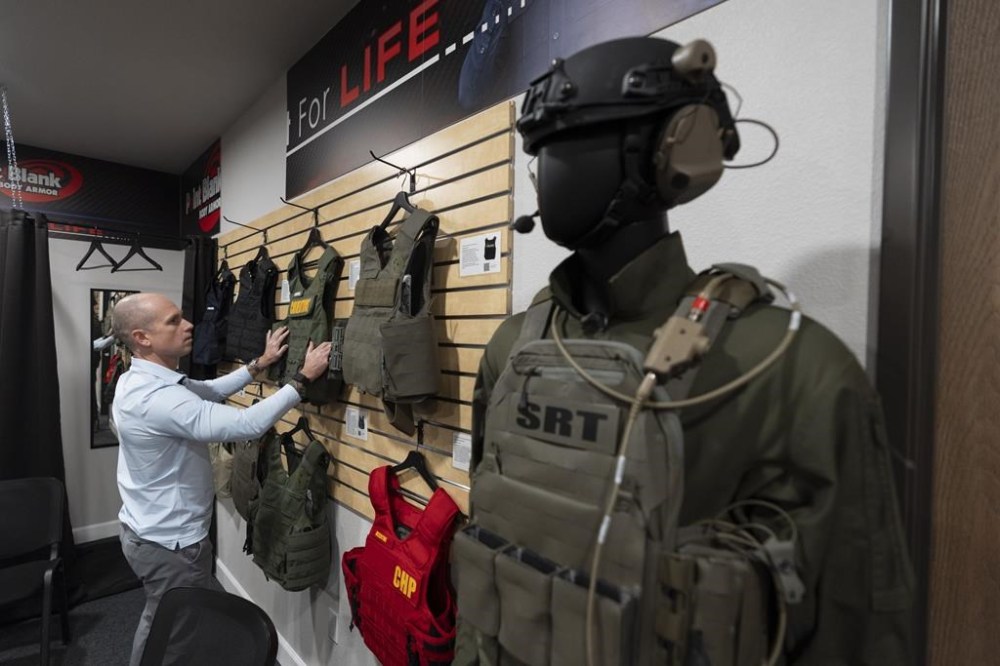
That’s the route Jackson Dalton decided to take when he started Black Box Safety, a maker of personal protective equipment, in 2017. Dalton enlisted in the U.S. Marines in 2000 and was selected for the prestigious Marine Corps Special Operations. But a badly broken leg, suffered during training, eventually forced him medically retire after two years of active duty.
Although the transition back to civilian life was difficult, Dalton went on to get a master’s degree in public health, and spent 10 years working in the health and safety industry. When he ventured out on his own, he decided to focus on federal contracts and got certified by the SBA. He thought prisons would be a good place to start since 3% of their contracts go to disabled veteran businesses. His first contract was selling gloves to a prison in Minnesota. Today, he serves major clients like the Department of Veterans Affairs and the State of California.
Dalton credits his military training with his success.
“The skills and attributes that I picked up in the military were resilience and grit and the ability to adapt, improvise, overcome when you know, when encountering resistance or obstacles and barriers,” he said.
Veteran focused nonprofits can be another key place to look for help.
Adam Isch, a Marine Corp. veteran who served two tours in Iraq, worked with nonprofit Warrior Rising in Salt Lake City, to find a mentor to help him start his business, Isch Body Works in Fort Worth, Texas, which sells men’s hygiene products. The business donates part of its revenue to charities supporting Texas children in foster care and awaiting adoption. Similar nonprofits include Bunker Labs, Tactical Launch, and others around the country.
“Anybody who wants to start a business, especially a veteran, go find a group like a Warrior Rising, there are all kinds of different groups like that getting mentorship,” he said. “There are people who are doing what you do. They’re doing what I do, and they love it and they want to talk about it.”
For some, a veteran-earmarked loan can be what makes or breaks a business. Elizabeth Gore, the co-founder and President of Hello Alice, a financial technology firm that works with small businesses on getting funding, including 117,000 military small business owners. “They have to really struggle more than other groups and demographics on access to capital,” she said.
John Griveas in Buffalo, N.Y. spent two years as a Navy Seal in the mid-1990s and his remaining four years in New York in the active reserves, ending his tenure in 2002. After that he “bounced around” different jobs and spent 10 years in the local collections industry.

But in 2014 he met his current partner, Jackie, and decided her hobby of making all-natural dog treats could be a real business. They formed Fetch! Dog Treats as an LLC in 2015 and today they sell their treats at about 300 independently owned mom and pop brick and mortar stores, news shops, banks and even the Venetian Hotel on the Las Vegas strip.
For himself and other veterans he’s talked to, one of the biggest challenges they face is getting funds. He found a $10,000 grant via the FedEx Entrepreneur Fund, which partners with Hello Alice to give grants to small businesses owned by military veterans. It came at a pivotal time, when his landlord decided to redevelop his space and gave him only a few months to find a new location.
“It was something that quite literally was going to end us,” he said. “And when that grant came through, it was literally a lifesaver for us.”
He advised other veterans to take advantage of veteran resources.
“There’s tons of resources out there,” he said. “Whatever it might be that you know, just helps you get through the day-to-day, because there’s a lot involved with running a business.”