Uniqlo’s chief says fast fashion must change with the times

Advertisement

Advertise with us

TOKYO (AP) — Forty years after its founding, Japanese clothing retailer Uniqlo has more than 2,500 stores worldwide. Sales at its parent company, Fast Retailing Co., recently topped 3 trillion yen ($20 billion) annually for the first time.

Read this article for free:


or

Already have an account? Log in here »

To continue reading, please subscribe:

Subscribe and receive a limited-edition Free Press branded hat or tote.

Digital Subscription

One year of digital access for only $205*

  • Enjoy unlimited reading on winnipegfreepress.com
  • Read the E-Edition, our digital replica newspaper
  • Access News Break, our award-winning app
  • Play interactive puzzles

*First annual payment billed as $205.00 + GST for one year. This annual subscription will automatically renew at $233.00 + GST every 52 weeks (10% off the regular annual price of $259.35). Offer available to new and qualified returning subscribers only. Cancel any time.

To continue reading, please subscribe:

Add Free Press access to your Brandon Sun subscription for only an additional

$1 for the first 4 weeks*

  • Enjoy unlimited reading on winnipegfreepress.com
  • Read the E-Edition, our digital replica newspaper
  • Access News Break, our award-winning app
  • Play interactive puzzles
Start now

*Your next Brandon Sun subscription payment will increase by $1.00 and you will be charged $17.95 plus GST for four weeks. After four weeks, your payment will increase to $24.95 plus GST every four weeks.

Hey there, time traveller!
This article was published 18/11/2024 (685 days ago), so information in it may no longer be current.

TOKYO (AP) — Forty years after its founding, Japanese clothing retailer Uniqlo has more than 2,500 stores worldwide. Sales at its parent company, Fast Retailing Co., recently topped 3 trillion yen ($20 billion) annually for the first time.

The name Uniqlo comes from joining the words for “unique” and “clothing.” The chain’s basic concept is “LifeWear,” or everyday clothing. Uniqlo parent Fast Retailing Co. Chief Executive Tadashi Yanai, ranked by Forbes as Japan’s richest man and estimated to be worth $48 billion, spoke recently to The Associated Press at the company’s Tokyo headquarters. The interview has been edited for length and clarity.

Q: What were the biggest challenges over the past 40 years?
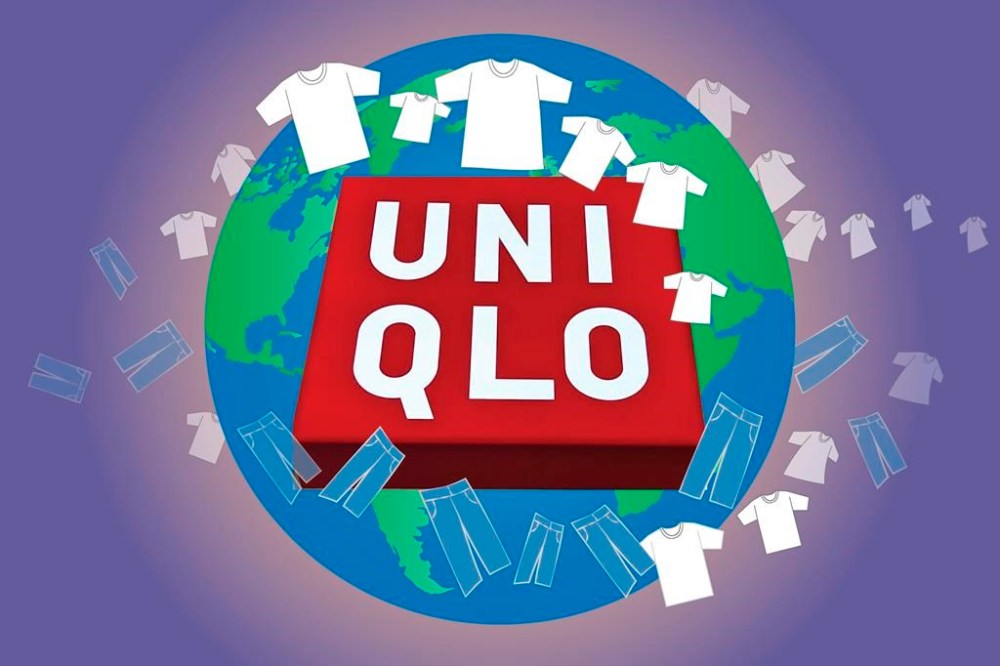
(AP Illustration/Jenni Sohn)

A: Actually 40 years, upon reflection, went by so fast they feel more like three years. You know what they say in Japan: Time flies like an arrow. I started a regional business, then expanded nationwide.

When we became No. 2 or No. 3 in Japan’s casual wear, and being No. 1 was right within reach, we became a listed company in 1994. That was followed by our fleece boom, which doubled our revenue in one year to 400 billion yen ($2.6 billion).

I’d been thinking about going global when our revenue reached 300 billion yen ($2 billion) so we opened 50 stores in Great Britain, hoping to be a winner there just like we had conquered Japan.

Instead, we got totally knocked out.

We opened 21 outlets in a year and a half, but had to close 16 of them, leaving just five. We didn’t succeed as we had hoped. This is not an easy job. It’s very tough.

But these days, our sales are strongest in London, and also Paris. We made progress gradually.

Q: What are some of the sustainability and other key issues you have faced over the years?

A: We make clothes that last a long time. Not just clothes that last for one season.

The cashmere sweater I’m wearing today is $99. But please don’t say “cheap.” Please call it “reasonable.” We sell quality products at reasonable prices.

We’ve done various sustainability efforts, and we talk only about what we have really achieved.

Sustainability is crucial to our operations. And we’ve done just about everything — recycling, employing the disabled, support for refugees.

The prices may be cheaper at Wal-Mart, but our products offer real quality for the price. We take the greatest care and time, and involve a lot of people. Our rivals are more careless.

Q: What is behind Uniqlo’s success and what resonated with global buyers?

A: When we say Uniqlo is “made for all,” one might imagine products for the masses, like what’s at a Wal-Mart or a Target.

But what we mean is a high-quality product that appeals to all people, including the extremely rich, not only those with sophisticated taste and intelligence, but also people who don’t know that much about clothes, and the design is fine-tuned, the material fine quality, and sustainability concerns have been addressed.

We were first a retailer, then a manufacturer-cum-retailer. Now we are a digital consumer retailer. That is why we are successful. If we had stayed the same, then we can’t hope to succeed.

Being a digital consumer retail company means we utilize information at a high level to shape the way we do our work. We gain information about our customers, the workers at the store, the market, all that information.

Changing daily is the only way we can hope for stable growth. The world is changing every day.

Q: Are you confident you can keep it up another 40 years?

A: Of course. We’ve been preparing to reach 3 trillion yen ($20 billion) revenue all these years. And we are finally starting to be known. But we still have a long way to go.

We are just getting started, and we are going to keep growing. There is more potential for growth in Europe and the U.S., as well as China and India, given the 1.4 billion population in each country. Clothing is a necessity, so population size is key.

___

Yuri Kageyama is on X: https://x.com/yurikageyama

Report Error Submit a Tip

More Stories

Khan should’ve taken high road: Goertzen

Carol Sanders 5 minute read Preview

Khan should’ve taken high road: Goertzen

Carol Sanders 5 minute read Yesterday at 6:39 PM CDT

The veteran Progressive Conservative who championed Obby Khan’s leadership bid says the former Blue Bomber dropped the ball by dissing his Tory teammates before he stepped down.

“I wouldn’t recommend it, and I didn’t recommend it,” Kelvin Goertzen (Steinbach) said in an interview Friday.

Khan resigned as PC leader and quit the caucus Monday saying some members were secretly plotting his ouster, even after he won a confidence vote on Sept. 25.

On Tuesday, Khan lashed out in a CJOB interview, naming the alleged plotters, saying constituents deserved to know which of their elected representatives “lacked moral integrity.” Khan told the Free Press he was “deeply emotionally hurt,” and felt stabbed in the back.

Read
Yesterday at 6:39 PM CDT

Volunteer pop-up library axed from Manitoba Youth Centre

Matthew Frank 4 minute read Preview

Volunteer pop-up library axed from Manitoba Youth Centre

Matthew Frank 4 minute read Updated: 11:25 AM CDT

Manitoba Corrections has cancelled a pop-up library program at the Manitoba Youth Centre, leaving inmates without librarian services and fewer options to borrow certain books.

The Prison Libraries Committee, part of the non-profit Manitoba Library Association, operated and funded the volunteer program since 2024 before it was shut down by the province last month. The group previously partnered with the province to offer the service because the facility has no dedicated library of its own.

“It is concerning that community members who are incarcerated, especially youth, are losing out on meaningful programming, access to information and rehabilitation efforts, which are offered at no cost to (Manitoba) Corrections. We urge Manitoba Justice to promote more library services and programming, not less,” said a Sept. 24 letter from the non-profit addressed to the justice minister.

Ashley Huot, chair of the Prison Libraries Committee, said she was puzzled when she received an email last month from Manitoba Corrections stating that the pop-up library was no longer needed.

Read
Updated: 11:25 AM CDT

Province looks to seize notorious drug den

Erik Pindera 5 minute read Preview

Province looks to seize notorious drug den

Erik Pindera 5 minute read 12:00 PM CDT

Provincial justice officials are trying to seize a Dominion Street drug den that has been the source of trouble in the West End for years.

The owner of 982 Dominion St., 45-year-old Robert Edward Johnson, was most recently arrested in June along with several others after a lengthy Winnipeg Police investigation into thefts and illicit drug sales connected to the house.

“The residence has a reputation within the neighbourhood as being a location where individuals habitually attend for the purpose of purchasing and/or consuming controlled substances,” reads a statement of claim filed by the province’s director of civil forfeiture in the Court of King’s Bench last week.

“For several years, the residence has been associated with criminal activity, violence, and disorder, resulting in numerous police attendances and complaints from members of the surrounding community.”

Read
12:00 PM CDT

’Disgusting’ posters being investigated by police

Morgan Modjeski 4 minute read 2:22 PM CDT

The Winnipeg Police Service major crimes unit is investigating what some have labelled offensive and hateful posters on full-display at a Winnipeg home.

One of the people irked by the display is Gracie Garrett. She’s has lived on Ashburn Street in Winnipeg’s Minto neighbourhood for almost ten years. She’s never felt unsafe in the neighbourhood before, but now, a set of posters plastered on a nearby house are making her feel uneasy.

The five signs, posted facing the street prominently on a front window, contain a slur, refer to Nazis as “heroes” and call Muslims, Christians and other groups “evil.”

Learning of the signs Friday, Garrett said she’ll be reporting the posters to police, as she worries they incite and promote violence.

Gordon Bell rings in a century

Maggie Macintosh 13 minute read Preview

Gordon Bell rings in a century

Maggie Macintosh 13 minute read Updated: Yesterday at 8:06 PM CDT

Mischka Valencia had gotten used to the hum of heavy machinery at Gordon Bell High School.

“Ever since I’ve been here, it’s all been under construction,” the Grade 12 student said, standing on the sidelines of the brightly painted revamped outdoor basketball court. “I had no idea this was a court.”

The Filipina teenager landed in Winnipeg several months after the inner-city campus had transformed into a construction site.

It was the fall of 2023 and Mischka’s priorities were fitting in, befriending classmates and learning a third language via first-period French.

Read
Updated: Yesterday at 8:06 PM CDT

Six high school hockey programs ceased operations following new Hockey Manitoba policy

Joshua Frey-Sam 7 minute read Preview

Six high school hockey programs ceased operations following new Hockey Manitoba policy

Joshua Frey-Sam 7 minute read Updated: Yesterday at 8:19 PM CDT

She lived the best of both worlds.

For the last three years, the 17-year-old wore a sweater for two different hockey programs — her high school team and AAA club in the Manitoba Female Hockey League — and was preparing to flourish in both colours again this winter.

Recently, however, the blue-liner was disappointed to learn she is no longer eligible to play her Grade 12 season with her school owing to a new policy imposed by Hockey Manitoba that bans players from participating in the Manitoba Women’s High School Hockey League if they are rostered on a U18 AAA team.

The rule applies to all athletes who play for both Winnipeg-based and rural AAA teams.

Read
Updated: Yesterday at 8:19 PM CDT