China’s aging population fuels ‘silver economy’ boom, but profits can prove elusive
Advertisement
Read this article for free:
or
Already have an account? Log in here »
To continue reading, please subscribe:
Digital Subscription
One year of digital access for only $1.44 a week*
- Enjoy unlimited reading on winnipegfreepress.com
- Read the E-Edition, our digital replica newspaper
- Access News Break, our award-winning app
- Play interactive puzzles
*Billed as $5.77 plus GST every four weeks. After 52 weeks, price increases to the regular rate of $19.95 plus GST every four weeks. Offer available to new and qualified returning subscribers only. Cancel any time.
To continue reading, please subscribe:
Add Free Press access to your Brandon Sun subscription for only an additional
$1 for the first 4 weeks*
- Enjoy unlimited reading on winnipegfreepress.com
- Read the E-Edition, our digital replica newspaper
- Access News Break, our award-winning app
- Play interactive puzzles
*Your next Brandon Sun subscription payment will increase by $1.00 and you will be charged $17.95 plus GST for four weeks. After four weeks, your payment will increase to $24.95 plus GST every four weeks.
Read unlimited articles for free today:
or
Already have an account? Log in here »
Hey there, time traveller!
This article was published 28/11/2024 (689 days ago), so information in it may no longer be current.
HONG KONG (AP) — Every Wednesday, retiree Zhang Zhili travels an hour by bus to an education center, drawn by the pulsing rhythms of the African drum she plays there in a classroom filled with fellow retirees whose hands move in unison, every beat lifting her spirits.
Zhang, 71, has found joy and new friends at the “elderly university” in Beijing. Besides African drums, the former primary school teacher joins social dance classes, paying about 2,000 yuan ($280) for two courses this semester. Seeing herself standing tall in dance class boosts her confidence. After class, she hangs out with her friends.
“When we get old, what do we need?” she said. “To love ourselves.”
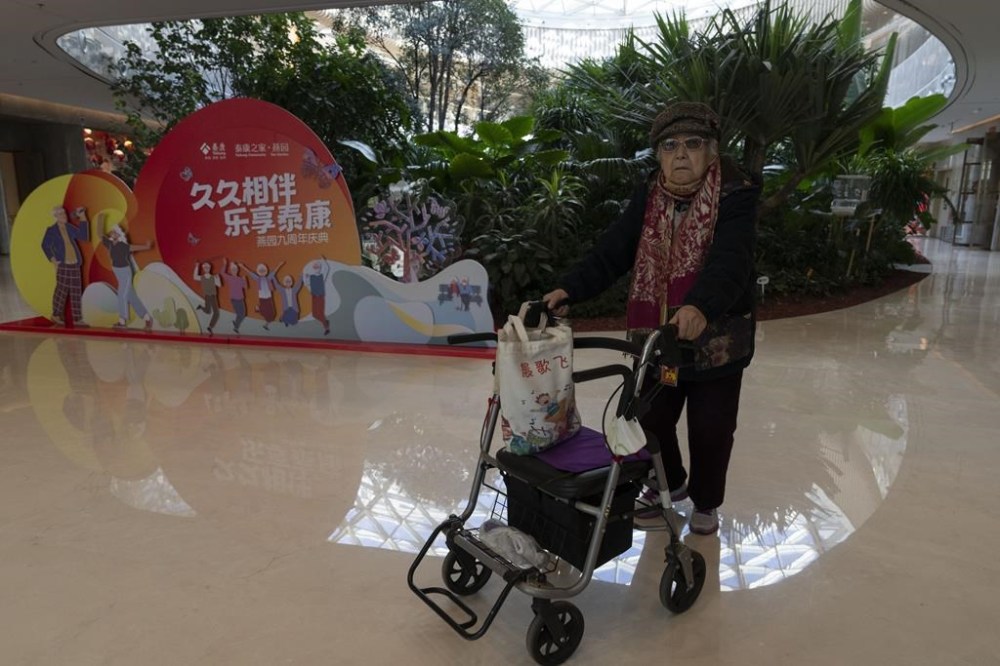
Many older Chinese are looking beyond traditional nursing homes, afraid of abandonment by their families and quality issues. That’s driving a boom in universities, home care services, and communities catering to older adults. Though some providers struggle to turn a profit, they persist because they see promise in the growing market.
China has a rapidly aging population. Last year, about 297 million people were aged 60 or above, over one-fifth of the population. By 2035, this number is forecast to exceed 400 million, or over 30% of all Chinese.
That’s fueling growth in services and products aimed at older adults in what Beijing calls the silver economy, which is projected to balloon from about 7 trillion yuan (about $982 billion) currently to approximately 30 trillion yuan (about $4.2 trillion) in 2035, raising its share in the economy from about 6% to roughly 10%, Hu Zuquan, a researcher at the State Information Center, a public institution affiliated with China’s main planning agency, told state media.
Du Peng, dean of the school of population and health at Beijing’s Renmin University, said the government is expanding basic care services to all older people who need them, moving beyond its traditional focus on those without family support. Last year, officials compiled a list of basic care services they aim to make available nationwide, including providing ability assessments for those over 65 and care training subsidies for family members of those who are disabled.
Filial piety runs deep in China and most older people prefer aging at home with family after they retire, typically when they’re 50 to 60 years old, one of the youngest retirement ages among the world’s major economies. Many help care for their grandchildren, and for some, nursing homes are seen as a kind of abandonment, except in cases of serious disability.
In January, Beijing issued new guidelines calling for expanding home care services and meal deliveries and more clothing, food and tech products tailored for older adults. They include enriching their lives through education.
Home-based services offer a more affordable alternative to nursing homes, alleviating accommodation costs, Du said. Most older Chinese are relatively healthy, and these able people perhaps need richer cultural lives rather than disability care, he said.
Cai Guixia, 60, said she has found fulfillment in African drumming and modeling classes. She thinks she would feel “forsaken” in a conventional nursing home, preferring to hire a domestic helper.
Liu Xiuqin, an owner of two care homes, saw business opportunities in meeting those needs.
She invested more than 800,000 yuan (about $112,000) to open a school in Beijing. Cai and Zhang are among its 150 students attending classes in dance, singing, yoga and modeling training for about 1,000 yuan ($140) per course each semester. Outside the classroom, her team organizes gatherings where students can socialize.
Liu expects to break even in another year and is prepared for the wait. She believes in the market’s future, given that the generation born in the 1960s and later values quality of life and health more than their parents did.
“It’s not about making quick money,” she said. “It requires persistence.”
Turning a profit is proving challenging for some silver economy businesses.
In the southern city of Guangzhou, Wu Tang co-founded a school last year after his geotechnical investigation and surveying business was hit by the downturn in China’s property market. His school offers courses to help people achieve some of their childhood dreams, but he has yet to cover his costs. He also faces competition from cheaper government-run courses.
And there’s Cui Yang, who runs a care station in Beijing, sending helpers zigzagging across the district to provide 30 yuan ($4.20) haircuts at home; accompanying people on hospital visits for 50 yuan ($7) per hour and other services. Even with government subsidies including free rent, Cui is losing money. Without the subsidies, the business would fail, she said.
The struggles aren’t limited to small operators.
Wu Wenjing heads the home care department of a healthcare subsidiary of state-owned financial conglomerate China Everbright Group in southwest China’s Chongqing. It has been in the red for 13 straight years, spending 5 million yuan (about $702,000) annually and still losing 1 million (about $140,000) a year, she said.
Wu’s business employs 70 workers who visit homes as caregivers, rehabilitation therapists and psychotherapists. The industry is competitive and it has a high turnover rate given the difficulties of working alone in clients’ homes. Wu hopes to break even in five years, and is delighted about the government’s efforts to grow the silver economy.
“The spring of China’s elderly care business has finally come,” she said.
Various companies are looking to grab a slice of this government-backed market. Property developers like Vanke Co. and Sino-Ocean Group and insurance companies such as Taikang Insurance Group have built high-end communities for older adults with amenities such as movie-screening and mahjong rooms and dining services.
China’s also working to tackle the problem of dementia, providing cognitive screening tests and training staff who work in memory clinics or as social workers. Several Chinese pharmaceutical and biotechnology companies are working on drugs targeting Alzheimer’s disease and other forms of dementia.
Some vacant schools and kindergartens — casualties of the country’s declining birthrate — are meanwhile being transformed into care facilities for older people.
Government efforts to back the silver economy are paying off: official data showed the country had 410,000 care facilities by June, double the number in 2019.
Still, questions remain about the spending power of many older Chinese.
A 2021 national survey co-conducted by China’s Civil Affairs Ministry found older adults had a median annual income of 11,400 yuan ($1,574). In rural areas it was less than half of that. More than one in 10 older Chinese are living in poverty, with living standards much lower in rural areas and western China, according to data from surveys conducted by Peking University.
China’s silver economy is still in its infancy, said Gary Ng, a senior economist at Natixis Corporate and Investment Banking.
If they lack enough insurance to cover medical and other expenses, many older Chinese must set aside funds for such costs, limiting their spending capacity, he said, and it takes time to build industries producing senior-focused products and people trained to provide such services. Tax incentives and investments in training a skilled workforce would help, he said.
“There are prospects here, but it seems there’s still much that needs to be done,” he said.
___
Associated Press researcher Yu Bing and video producers Caroline Chen and Wayne Zhang in Beijing contributed to this report.