Australia is banning social media for people under 16. Could this work elsewhere – or even there?
Advertisement
Read this article for free:
or
Already have an account? Log in here »
To continue reading, please subscribe:

Digital Subscription
One year of digital access for only $205*
- Enjoy unlimited reading on winnipegfreepress.com
- Read the E-Edition, our digital replica newspaper
- Access News Break, our award-winning app
- Play interactive puzzles
*First annual payment billed as $205.00 + GST for one year. This annual subscription will automatically renew at $233.00 + GST every 52 weeks (10% off the regular annual price of $259.35). Offer available to new and qualified returning subscribers only. Cancel any time.
To continue reading, please subscribe:
Add Free Press access to your Brandon Sun subscription for only an additional
$1 for the first 4 weeks*
- Enjoy unlimited reading on winnipegfreepress.com
- Read the E-Edition, our digital replica newspaper
- Access News Break, our award-winning app
- Play interactive puzzles
*Your next Brandon Sun subscription payment will increase by $1.00 and you will be charged $17.95 plus GST for four weeks. After four weeks, your payment will increase to $24.95 plus GST every four weeks.
Read unlimited articles for free today:
or
Already have an account? Log in here »
Hey there, time traveller!
This article was published 03/12/2024 (679 days ago), so information in it may no longer be current.
It is an ambitious social experiment of our moment in history — one that experts say could accomplish something that parents, schools and other governments have attempted with varying degrees of success: keeping kids off social media until they turn 16.
Australia’s new law, approved by its Parliament last week, is an attempt to swim against many tides of modern life — formidable forces like technology, marketing, globalization and, of course, the iron will of a teenager. And like efforts of the past to protect kids from things that parents believe they’re not ready for, the nation’s move is both ambitious and not exactly simple, particularly in a world where young people are often shaped, defined and judged by the online company they keep.
The ban won’t go into effect for another year. But how will Australia be able to enforce it? That’s not clear, nor will it be easy. TikTok, Snapchat and Instagram have become so ingrained in young people’s lives that going cold turkey will be difficult.
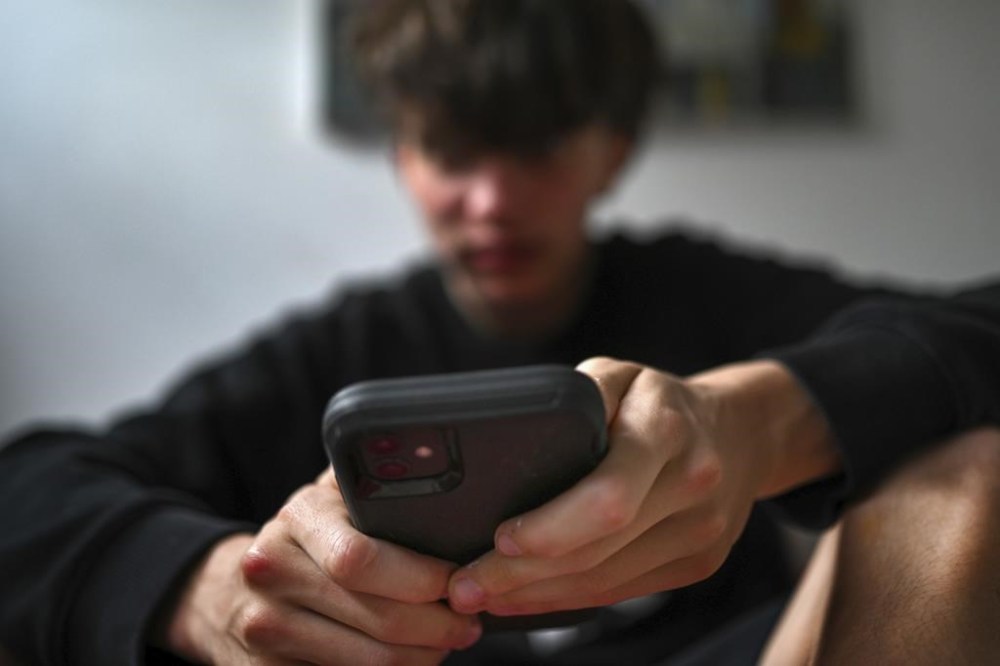
Other questions loom. Does the ban limit kids’ free expression and — especially for those in vulnerable groups — isolate them and curtail their opportunity to connect with members of their community? And how will social sites verify people’s ages, anyway? Can’t kids just get around such technicalities, as they so often do?
This is, after all, the 21st century — an era when social media is the primary communications tool for most of those born in the past 25 years who, in a fragmented world, seek the common cultures of trends, music and memes. What happens when big swaths of that fall away?
Is Australia’s initiative a good, long-time-coming development that will protect the vulnerable, or could it become a well-meaning experiment with unintended consequences?
Platforms will be held liable
The law will make platforms including TikTok, Facebook, Snapchat, Reddit, X and Instagram liable for fines of up to 50 million Australian dollars ($33 million) for systemic failures to prevent children younger than 16 from holding accounts. “It’s clear that social media companies have to be held accountable, which is what Australia is trying to do,” said Jim Steyer, president and CEO of the nonprofit Common Sense Media.
Leaders and parents in countries around the world are watching Australia’s policy closely as many seek to protect young kids from the internet’s dangerous corners — and, not incidentally, from each other. Most nations have taken different routes, from parental consent requirements to minimum age limits.
Many child safety experts, parents and even teens who have waited to get on social media consider Australia’s move a positive step. They say there’s ample reason to ensure that children wait.
“What’s most important for kids, just like adults, is real human connection. Less time alone on the screen means more time to connect, not less,” said Julie Scelfo, the founder of Mothers Against Media Addiction, or MAMA, a grassroots group of parents aimed at combatting the harms of social media to children. “I’m confident we can support our kids in interacting in any number of ways aside from sharing the latest meme.”
The harms to children from social media have been well documented in the two decades since Facebook’s launch ushered in a new era in how the world communicates. Kids who spend more time on social media, especially when they are tweens or young teenagers, are more likely to experience depression and anxiety, according to multiple studies — though it is not yet clear if there is a causal relationship.
What’s more, many are exposed to content that is not appropriate for their age, including pornography and violence, as well as social pressures about body image and makeup. They also face bullying, sexual harassment and unwanted advances from their peers as well as adult strangers. Because their brains are not fully developed, teenagers, especially younger ones the law is focused on, are also more affected by social comparisons than adults, so even happy posts from friends can send them into a negative spiral.
What unintended harms could be caused?
Many major initiatives, particularly those aimed at social engineering, can produce side effects — often unintended. Could that happen here? What, if anything, do kids stand to lose by separating kids and the networks in which they participate?
Paul Taske, associate director of litigation at the tech lobbying group NetChoice, says he considers the ban “one of the most extreme violations of free speech on the world stage today” even as he expressed relief that the First Amendment prevents such law in the United States
“These restrictions would create a massive cultural shift,” Taske said.
“Not only is the Australian government preventing young people from engaging with issues they’re passionate about, but they’re also doing so even if their parents are ok with them using digital services,” he said. “Parents know their children and their needs the best, and they should be making these decisions for their families — not big government. That kind of forcible control over families inevitably will have downstream cultural impacts.”
David Inserra, a fellow for Free Expression and Technology, Cato Institute, called the bill “about as useful as an ashtray on a motorbike” in a recent blog post. While Australia’s law doesn’t require “hard verification” such as an uploaded ID, he said, it calls for effective “age-assurance” that includes an array of ways companies can estimate someone’s age. He said no verification system can ensure accuracy while also protecting privacy and not impacting adults in the process.
Privacy advocates have also raised concerns about the law’s effect on online anonymity, a cornerstone of online communications — and something that can protect teens on social platforms.
“Whether it be religious minorities and dissidents, LGBTQ youth, those in abusive situations, whistleblowers, or countless other speakers in tricky situations, anonymous speech is a critical tool to safely challenge authority and express controversial opinions,” Inserra said. “But if every user of online platforms must first identify themselves, then their anonymity is at risk.”
Other countries are trying to figure it out, too
Parents in Britain and across Europe earlier this year organized on platforms such as WhatsApp and Telegram to promise not to buy smartphones for children younger than 12 or 13. This approach costs almost no money and requires no government enforcement. In the United States, some parents are keeping kids off social media either informally or as part of an organized campaign such as Wait Until 8th, a group that helps parents delay kids’ access to social media and phones.
This fall, Norway announced plans to ban kids under 15 from using social media, while France is testing a smartphone ban for kids under 15 in a limited number of schools — a policy that could be rolled out nationwide if successful.
U.S. lawmakers have held multiple congressional hearings — most recently in January — on child online safety. Still, the last federal law aimed at protecting children online was enacted in 1998, six years before Facebook’s founding. In July, the U.S. Senate overwhelmingly passed legislation designed to protect children from dangerous online content, pushing forward with what would be the first major effort by Congress in decades to hold tech companies more accountable. But the Kids Online Safety Act has since stalled in the House.

While several states have passed laws requiring age verification, those are stuck in court. Utah became the first state to pass laws regulating children’s social media use in 2023. In September, a judge issued the preliminary injunction against the law, which would have required social media companies to verify the ages of users, apply privacy settings and limit some features. NetChoice has also obtained injunctions temporarily halting similar laws in several other states.
And last May, U.S. Surgeon General Vivek Murthy said there is insufficient evidence to show social media is safe for kids. He urged policymakers to address the harms of social media the same way they regulate things like car seats, baby formula, medication and other products children use.
Said Scelfo: “Why should social media products be any different? Kids may try to get around the restrictions — just like they do for alcohol, tobacco or drugs — but nobody is saying that because they try, we should give them unfettered access to them. Parents cannot possibly bear the entire responsibility of keeping children safe online, because the problems are baked into the design of the products. And so we need policies that hold Big Tech accountable for ensuring their products are safe.”
___
Associated Press Writer Laurie Kellman contributed to this story.
Related Articles
TikTok files legal challenge of federal government's shutdown order
Advertisement Advertise With Us
Advertisement Advertise With Us