Google forges ahead with its next generation of AI technology while fending off a breakup threat
Advertisement
Read this article for free:
or
Already have an account? Log in here »
To continue reading, please subscribe:

Digital Subscription
One year of digital access for only $205*
- Enjoy unlimited reading on winnipegfreepress.com
- Read the E-Edition, our digital replica newspaper
- Access News Break, our award-winning app
- Play interactive puzzles
*First annual payment billed as $205.00 + GST for one year. This annual subscription will automatically renew at $233.00 + GST every 52 weeks (10% off the regular annual price of $259.35). Offer available to new and qualified returning subscribers only. Cancel any time.
To continue reading, please subscribe:
Add Free Press access to your Brandon Sun subscription for only an additional
$1 for the first 4 weeks*
- Enjoy unlimited reading on winnipegfreepress.com
- Read the E-Edition, our digital replica newspaper
- Access News Break, our award-winning app
- Play interactive puzzles
*Your next Brandon Sun subscription payment will increase by $1.00 and you will be charged $17.95 plus GST for four weeks. After four weeks, your payment will increase to $24.95 plus GST every four weeks.
Read unlimited articles for free today:
or
Already have an account? Log in here »
Hey there, time traveller!
This article was published 11/12/2024 (642 days ago), so information in it may no longer be current.
SAN FRANCISCO (AP) — Google on Wednesday unleashed another wave of artificial intelligence designed to tackle more of the work and thinking done by humans as it tries to stay on the technology’s cutting edge while also trying to fend off regulatory threats to its empire.
The next generation of Google’s AI is being packaged under the Gemini umbrella, which was unveiled a year ago. Google is framing its release of Gemini 2.0 as a springboard for AI agents built to interpret images shown through a smartphone, perform a variety of tedious chores, remember the conversations consumers have with people, help video game players plot strategy and even tackle the task of doing online searches.
In a blog post, Google CEO Sundar Pichai predicted the technology contained in Gemini 2.0 will “understand more about the world around you, think multiple steps ahead and take action on your behalf, with your supervision.” It’s a similar goal being pursued by hard-charging rivals such as OpenAI, with its chatGPT technology, and industry powerhouse such as Microsoft with a variety of similar tools on its Windows software.
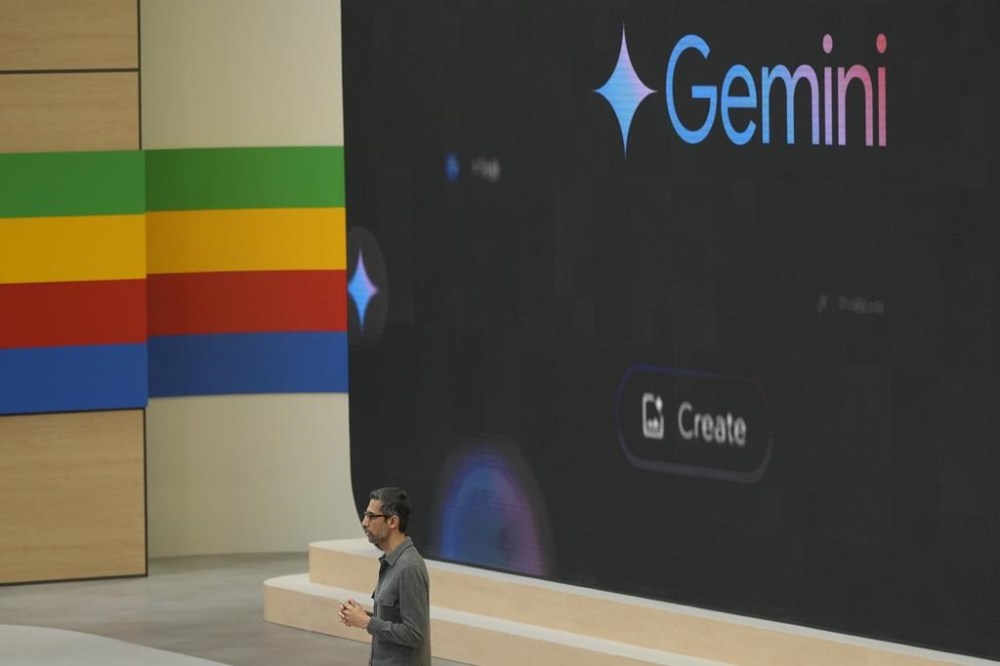
A lot of Google’s latest AI technology will initially be confined to test groups and subscribers who pay $20 per month for Gemini Advanced, but some features will be made available through its search engine and mobile apps. Google is planning wider releases next year that will include the technology popping up in its smorgasbord of free products, including its Chrome browser, digital maps and YouTube.
Besides trying to outshine OpenAI and other ambitious startups, Google is also trying to stay a step ahead of Apple as that trendsetting company begins to blend AI into its latest iPhones and other devices. After releasing a software update enabling the first bundle of the iPhone’s “Apple Intelligence” features that spruced up the device’s Siri assistant, another batch of the AI technology came out with a free software update that was also released Wednesday.
Google is pushing forward with its latest AI advances even as the U.S. Justice Department is trying to break up the Mountain View, California, company to prevent further abusive practices by its dominant search engine, which was declared an illegal monopoly by a federal judge earlier this year as part of a landmark antitrust case.
Among other things, Gemini 2.0 is supposed to improve the AI overviews that Google began highlighting in its search results over its traditional listing of the most pertinent links to websites earlier this year in response to AI-powered “answer engines” such as Perplexity.
After the AI overviews initially produced some goofy suggestions, including putting glue on pizza, Google refined the technology to minimize such missteps. Now, company executives are promising things are going to get even better with Gemini 2.0, which Pichai said will be able to engage in more human-like reasoning while solving more advanced math problems and even churn out some computer code. The improvements to AI Overviews will initially only appear to a test audience before a wider release next year.

The technological upgrade is also supposed to infuse a still-experimental universal AI agent dubbed “Project Astra,” with even more smarts and versatility, enabling people to have more meaningful and helpful conversations with the technology. In a show of confidence, Google said it will expand the number of people testing Project Astra without providing any specifics of the group’s size.
As part of Gemini 2.0, Google is also going to begin testing an extension to Chrome called “Project Mariner,” which can be turned on to do online searches and sift through the results so people don’t won’t have to bother.
If the U.S. Department of Justice gets its way, Google will be forced to sell or spin off Chrome as part of its punishment for deploying its search engine in ways that stifled competition and potential innovation. Google has ridiculed the Justice Department’s proposal as “overly broad” and vowed to resist any attempt to break up the company during federal court hearings scheduled to begin in Washington D.C. next spring.
Even if those proceedings culminate in a court order mandating a breakup, Google could still appeal in a process that could take years to resolve while it continues its AI expansion.
“I can’t wait to see what this next era brings,” Pichai wrote in his blog post, signaling the company doesn’t believe it will be deterred by regulators.