

‘The right way to be’
Unbending, plainspoken and utterly devoted to family, truth, research and a hand-stitched Hungarian tablecloth

Advertisement
Read this article for free:
or
Already have an account? Log in here »
To continue reading, please subscribe:
Digital Subscription
One year of digital access for only $1.44 a week*
- Enjoy unlimited reading on winnipegfreepress.com
- Read the E-Edition, our digital replica newspaper
- Access News Break, our award-winning app
- Play interactive puzzles
*Billed as $5.77 plus GST every four weeks. After 52 weeks, price increases to the regular rate of $19.95 plus GST every four weeks. Offer available to new and qualified returning subscribers only. Cancel any time.
To continue reading, please subscribe:
Add Free Press access to your Brandon Sun subscription for only an additional
$1 for the first 4 weeks*
- Enjoy unlimited reading on winnipegfreepress.com
- Read the E-Edition, our digital replica newspaper
- Access News Break, our award-winning app
- Play interactive puzzles
*Your next Brandon Sun subscription payment will increase by $1.00 and you will be charged $17.95 plus GST for four weeks. After four weeks, your payment will increase to $24.95 plus GST every four weeks.
Read unlimited articles for free today:
or
Already have an account? Log in here »
Hey there, time traveller!
This article was published 21/12/2024 (529 days ago), so information in it may no longer be current.
Dr. Klaus Wrogemann was a doctor with no patients. But, as a scientist and educator, he had an incredible amount of patience.
The German-born Wrogemann never practised as a physician, instead turning his focus to research. He became a leader in the field of muscular dystrophy research, and a professor and associate head of the biochemistry and medical genetics department at the University of Manitoba, his alma mater.
Wrogemann died in October at the age of 83, four years after he was diagnosed with Parkinson’s.
Supplied
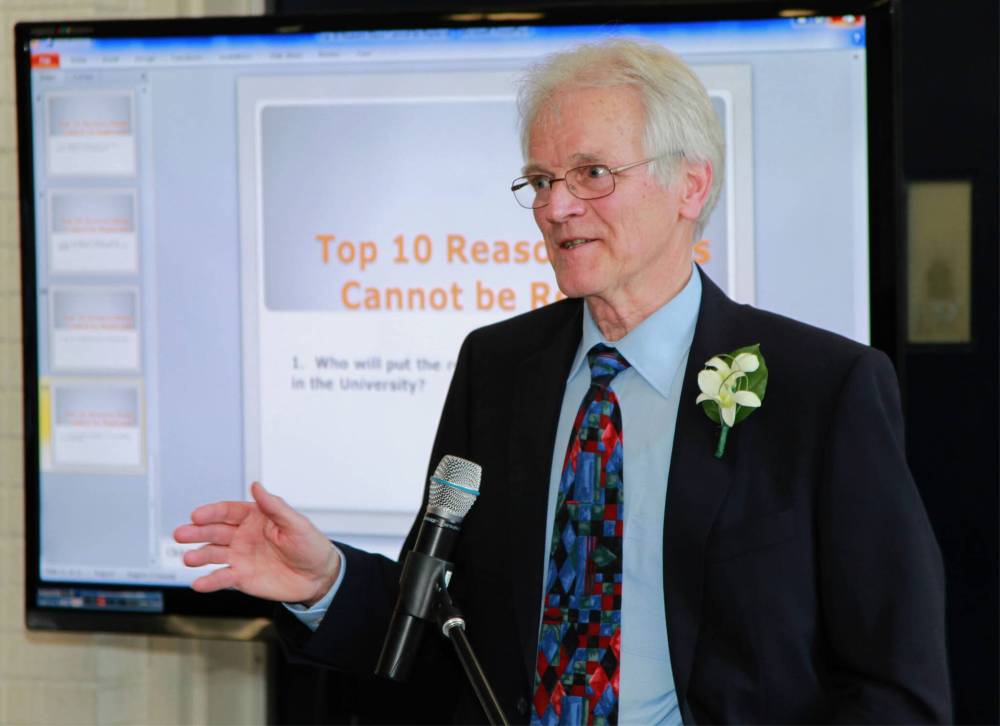
Klaus Wrogemann would eschew titles such as ‘Dr.’ or ‘Professor’ and never sought accolades or recognition, but received plenty of both.
“You would think that a guy with two PhDs and an MD would have a bit of an elitist bent, but definitely not,” says Jens Wrogemann, the eldest of three children born to Wrogemann and his wife, Dorit.
In fact, Wrogemann would often eschew titles such as “Dr.” or “Professor” unless absolutely necessary. He never sought accolades or recognition, though he did receive plenty of both.
“My dad would always have this line that I frequently heard him use with new people that were inviting us into their space or to their home, he would always say, ‘We’re very simple people. We’re not complicated,’” says Sylvia Buchholz, his daughter. “And that was true. I always appreciated that. When you look at his accomplishments, he seems like he could be an intimidating person. But no. He liked simple things.”
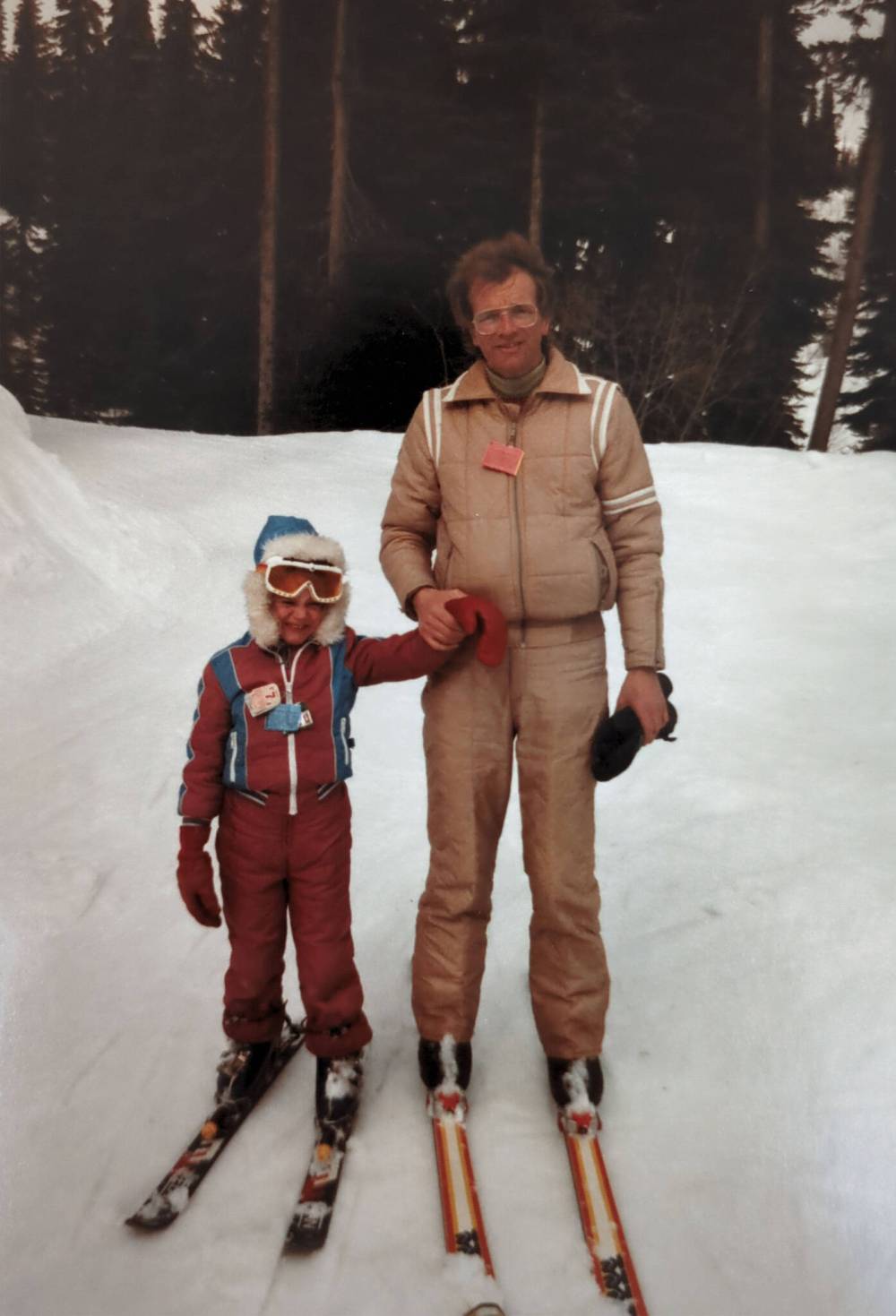
As a father, Wrogemann was always eager to teach his kids things he’d figured out. Shortcuts, secrets, that one little trick.
“No matter what was going on, he would always — to the point of annoying us — wanted to give little lessons about this or that,” says Mark, his middle son.
“For Christmas, he would give me just, like, a pile of electronics components that he would buy at Radio Shack and a book, and kind of just leave that with me to figure out what to do with it, and, and sometimes I did, sometimes I didn’t.”
Wrogemann was kind and good to people, but he was not the touchy-feely type.
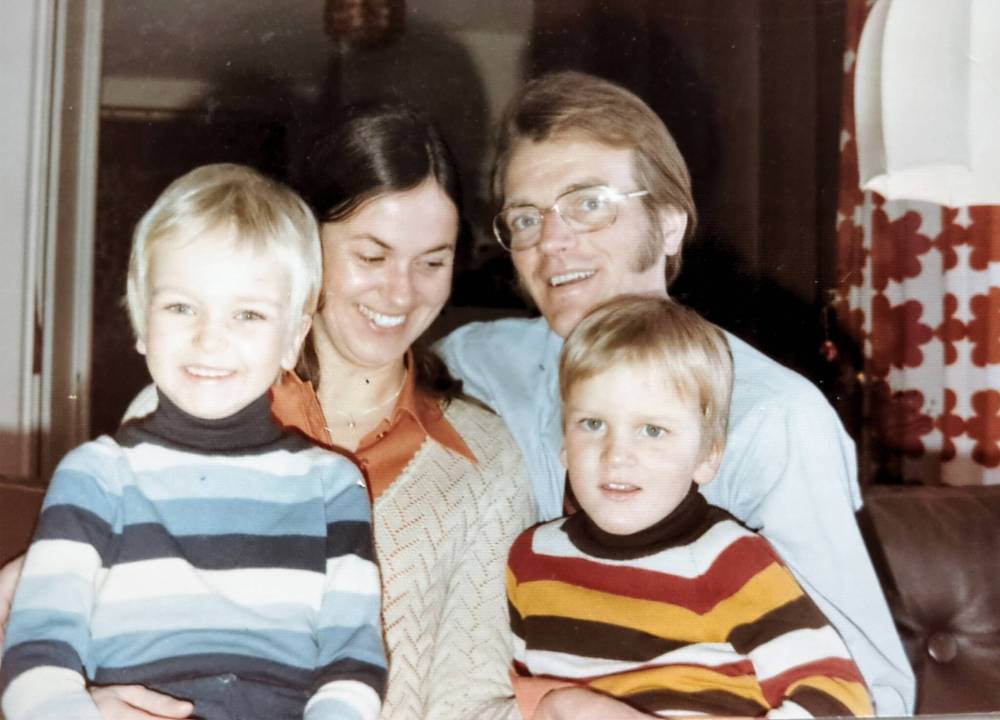
“He didn’t love us by saying, he loved us by doing and by teaching,” Jens says. “And by preparing us for the world. I think he saw that as his duty as a father.”
Supplied
Wrogemann was always eager to teach his children what he’d figured out. Shortcuts, secrets, that one little trick.
“He did communicate his affection for people in his actions. Like, he never told me, ‘I love you,’ but he didn’t have to,” Buchholz says. “When he was getting sick, people were like, make sure that you say the things that you want to him. And I didn’t. I didn’t tell him that I loved him before he died. But I massaged his feet and combed his hair, and got him in a position that was finally comfortable.”
***
Wrogemann’s marriage proposal to Dorit was also, uh, characteristically short and practical.
“Yes, short and practical — and by the way, there never was a wedding proposal,” Dorit says. “I mean, it was to my parents, but it never was to me. He had decided this is what we were going to do and why should he ask me, really?”
Klaus and Dorit knew each other growing up in Germany.
“He was just some little boy who was there with my brother at the birthdays,” she says. “And I remember, in Germany, this was the fashion at the time, the dinner for the birthday child was always wieners and potato salad, and we loved it. He went home every time and said, ‘They had wieners and potato salad again and I hate it.’”
They grew up and stayed in touch. When Wrogemann moved to Winnipeg to pursue a PhD in biochemistry at the U of M, he wrote to Dorit. “‘I landed in the biggest village in the world — and the bread is awful,’” she remembers with a laugh.
Supplied
‘He didn’t love us by saying, he loved us by doing and by teaching,’ says Jens Wrogemann, the eldest of Klaus and Dorit Wrogemann’s children.
Which brings us to the proposal. Dorit’s mother owned a beautiful, hand-stitched Hungarian tablecloth that she had promised to will to the first child to get married.
“And he looked at my mother and said, ‘The tablecloth is ours.’ This was my proposal. He pointed to my parents and said, ‘If you and you don’t mind, I marry her, and the tablecloth is kind of mine.’ That was the proposal.
“I never dated the guy or anything, never.”
To borrow a line from Jane Eyre: reader, she married him.
“Maybe because I wanted the tablecloth,” she says with a laugh.
They moved to Winnipeg in 1967 and were married for 57 years. Dorit still has the tablecloth.
***
“If I had to think of one quality that really stands out about my dad that sums him up to me but that kind of distinguishes him from most people that I know, is just his level of honesty,” Mark says. “Like, not to say that most people aren’t honest, but to him, it was almost like he just didn’t know how not to be that way.”
Supplied
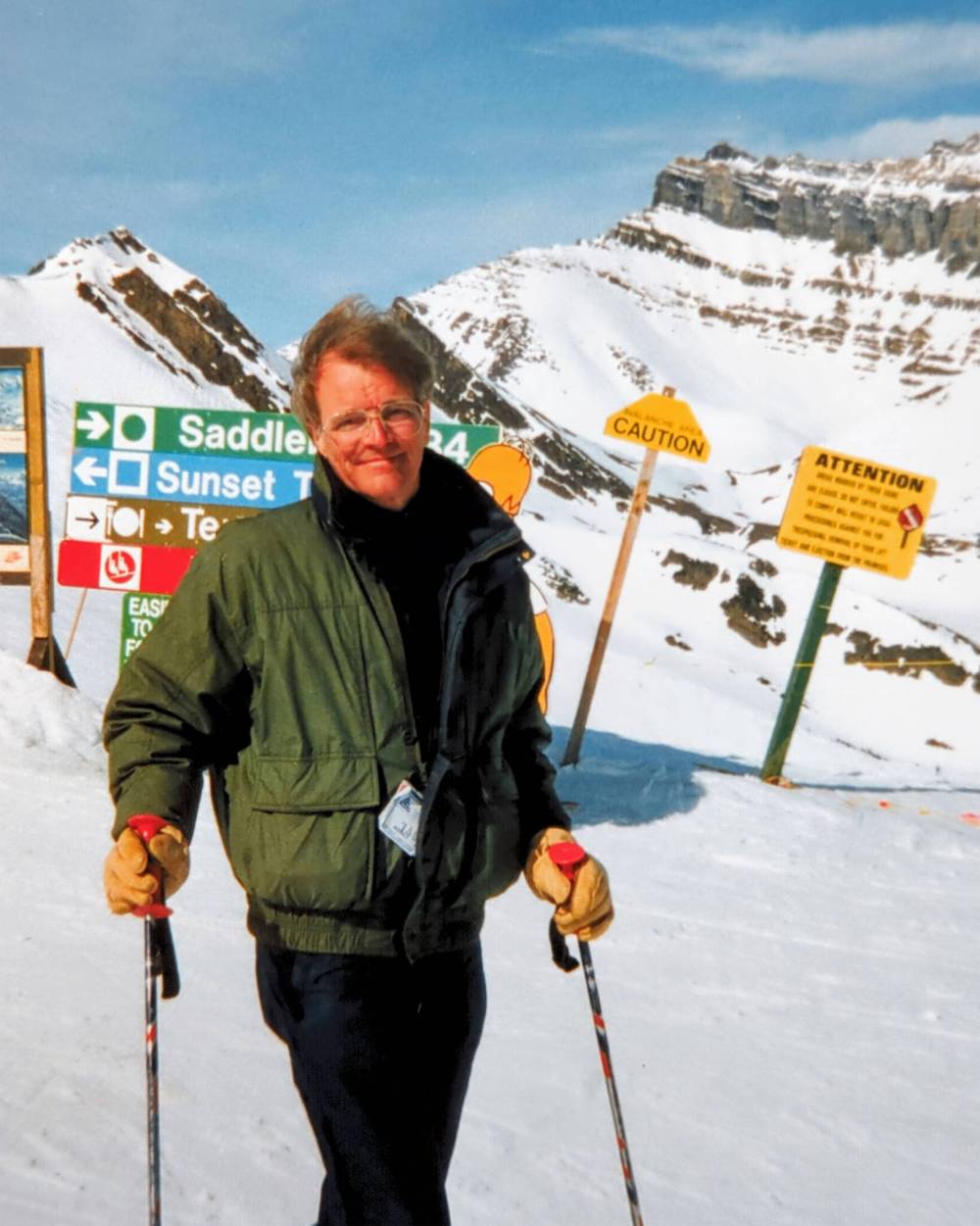
Klaus Wrogemann met his future wife in their childhood, in Germany.
In 1982, Wrogemann’s work made headlines. He had discovered, as it was reported at the time, that people with muscular dystrophy were missing an unidentified protein in their cells. During the Jerry Lewis Telethon fundraiser for muscular dystrophy that year, Jerry said of Wrogemann, “If I could meet him, I would kiss his feet.”
It would turn out, however, that the missing protein was not related to muscular dystrophy but had other implications that led to more research. Wrogemann was adamant that other scientists whose work might be affected be informed of this development.
“He specifically remembered how people sort of commended him for his courage for doing this,” Jens says. “And he thought that was really weird, because to him, that’s just science, isn’t it?”
Integrity was a big part of who he was. He would even pay back the university for photocopy paper used.
“That might seem like a trivial example, but it was down to the finest details of his life. Integrity was so important, and honesty and forthrightness,” Jens says. “We really admired that. We saw that that was just the right way to be as a person.”
That probity showed up in the way he related to other people, too. If someone was in the hospital, he would visit. He would pick up the phone and call people. He didn’t futz around worrying about whether or not it was a ‘bad time.’
“If there was somebody who was in need, he was there,” Jens says. “It was not a big emotional thing. It was practical. It was, ‘I’m present for you, I’m here for you, and you can lean on me.’”
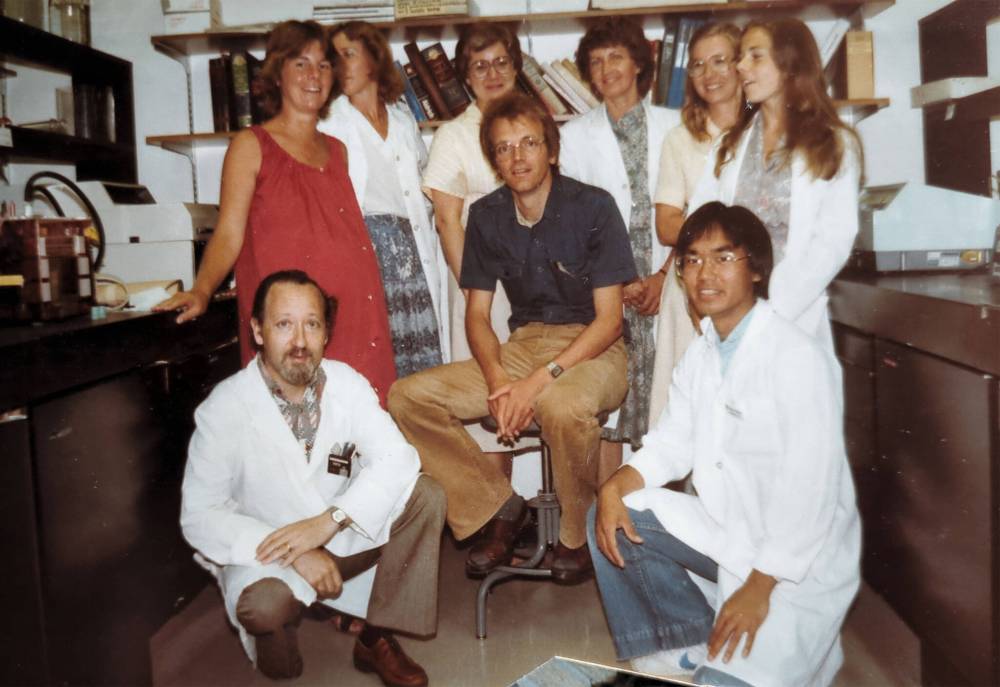
Supplied
‘You would think that a guy with two PhDs and an MD would have a bit of an elitist bent, but definitely not,’ Jens Wrogemann says of his father.
•••
Wrogemann dedicated a lot of his life to his work.
“He would say being able to work is the greatest joy in life,” Mark says.
Dr. Cheryl Rockman-Greenberg, herself a trailblazing geneticist, is a longtime colleague and friend of Wrogemann. Moving to Winnipeg from Montreal, she had started her career on the clinical side as a pediatrician.
“I was trained in an era when research was often done on the side of your desk,” she says.
In the early 1980s, she met Wrogemann and her whole career trajectory changed. She received a two-year fellowship with the Medical Research Council of Canada to study the growing field of DNA and the seeds were planted.
“Klaus, really, was absolutely instrumental in helping me forge and develop a research career — to the point that after the two-year fellowship, I had my own basic science lab doing DNA research,” she says. “And one of the main areas in collaboration with Klaus, that was my passion, was to work on muscular dystrophy.
“If it weren’t for my relationship with Klaus and his mentorship and his influence and his patience with me, I never would have developed a research career.”
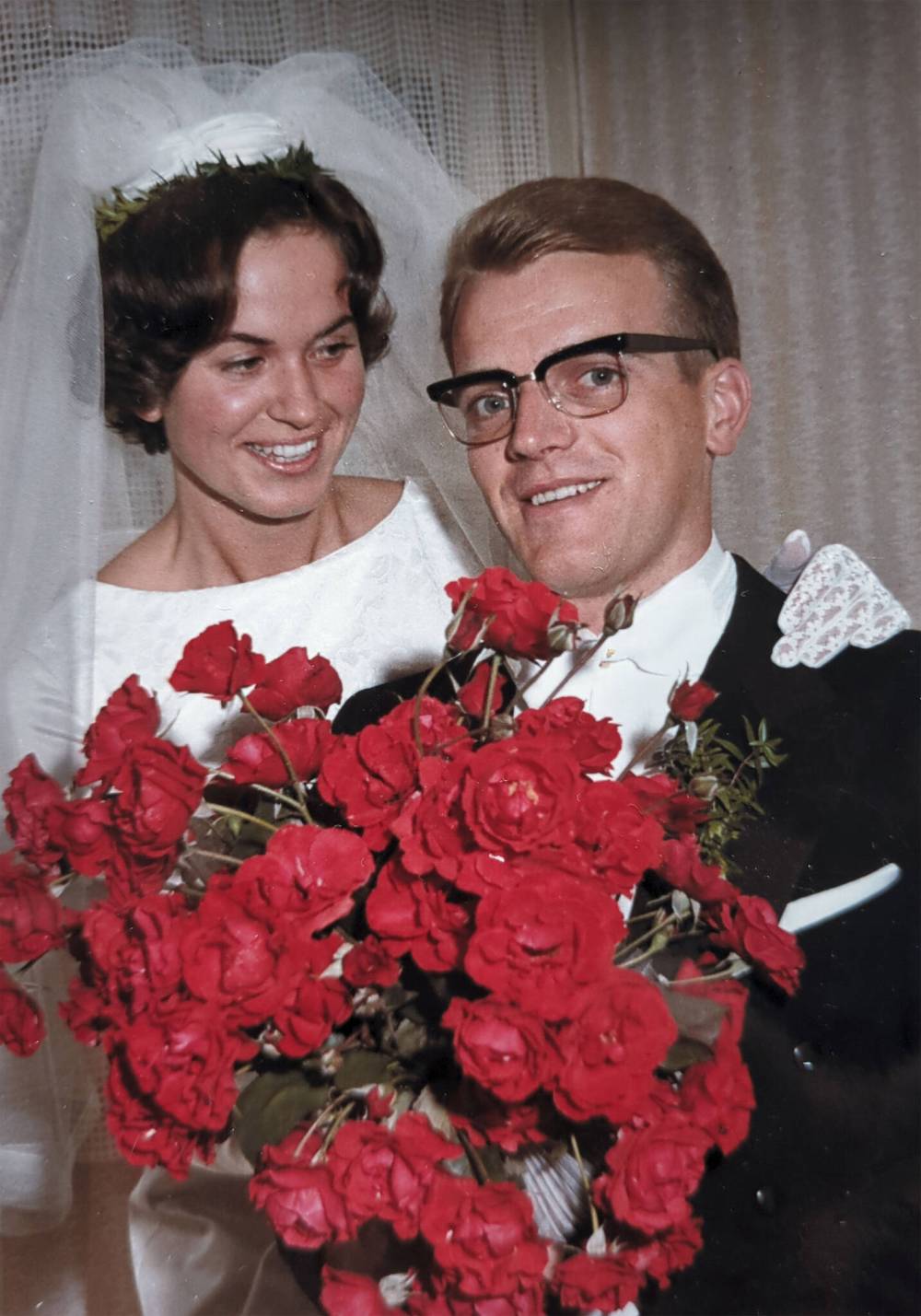
Supplied
Dorit says Klaus Wrogemann’s proposal to Dorit was to the point and hinged on a family heirloom. ’He pointed to my parents and said, ‘If you and you don’t mind, I marry her, and the tablecloth is kind of mine.’
Wrogemann was always learning. He kept a little notebook in his pocket to jot down observations and questions; when the iPhone came out, it was a revelation. And when he learned something new, he was eager to share his findings with others.
He was civic-minded, a citizen in the truest sense. He loved cars but was also an environmentalist who believed in active transportation. He took up tennis at 28 and got good at that, too, teaming up with Dr. Terry Langan and finding success on the national competition circuit.
When Wrogemann was diagnosed with Parkinson’s in 2020, it was incredibly difficult for him and his family. The missing him began before he died.
“I remember thinking, ‘This is not the man that I knew most of my life,’” Jens says. “This is not the guy who would be going to the house at nine o’clock on a Sunday morning and saying, ‘Wake up, wake up. Half the day is over!’”
“I’m definitely going to miss that he was always a source of advice, for anything that would come up,” Mark says.
“He would figure out the most efficient, simple solution, and he was very resourceful,” Buchholz says. “I like to think that I’ve inherited the resourcefulness — but I didn’t inherit the patience that he had to learn it and figure it out.”

But his influence is still keenly felt — through his scientific accomplishments, yes, but also through the qualities of his that live on in those closest to him. Curiosity, integrity, showing up for people.
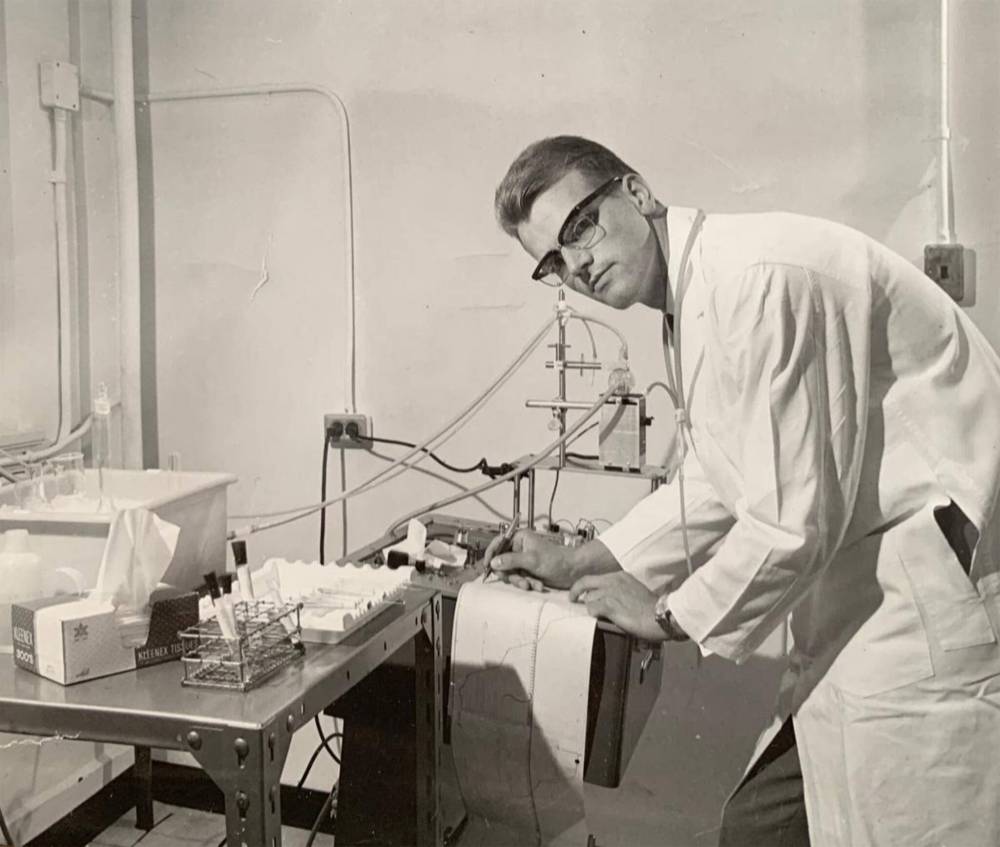
Supplied
Integrity was a big part of who Klaus Wrogemann was. He would even pay back the university for photocopy paper used.
Oh, and preparedness.
“He never, ever went anywhere without a Swiss Army knife,” Dorit says. “It led to weird situations where he would go to an airport, go through security and what do they find? Swiss Army knife.
“So now in my pocket I carry a Swiss Army knife.”
jen.zoratti@winnipegfreepress.com
Jen Zoratti is a columnist and feature writer working in the Arts & Life department, as well as the author of the weekly newsletter NEXT. A National Newspaper Award finalist for arts and entertainment writing, Jen is a graduate of the Creative Communications program at RRC Polytech and was a music writer before joining the Free Press in 2013. Read more about Jen.
Every piece of reporting Jen produces is reviewed by an editing team before it is posted online or published in print – part of the Free Press‘s tradition, since 1872, of producing reliable independent journalism. Read more about Free Press’s history and mandate, and learn how our newsroom operates.
Our newsroom depends on a growing audience of readers to power our journalism. If you are not a paid reader, please consider becoming a subscriber.
Our newsroom depends on its audience of readers to power our journalism. Thank you for your support.
Jen Zoratti is a columnist and feature writer working in the Arts & Life department, as well as the author of the weekly newsletter NEXT. A National Newspaper Award finalist for arts and entertainment writing, Jen is a graduate of the Creative Communications program at RRC Polytech and was a music writer before joining the Free Press in 2013. Read more about Jen.
Every piece of reporting Jen produces is reviewed by an editing team before it is posted online or published in print – part of the Free Press‘s tradition, since 1872, of producing reliable independent journalism. Read more about Free Press’s history and mandate, and learn how our newsroom operates.
Our newsroom depends on a growing audience of readers to power our journalism. If you are not a paid reader, please consider becoming a subscriber.
Our newsroom depends on its audience of readers to power our journalism. Thank you for your support.
Advertisement Advertise With Us
Advertisement Advertise With Us