‘Tinder of construction’ aims to keep B.C. building waste out of landfills
Advertisement
Read this article for free:
or
Already have an account? Log in here »
To continue reading, please subscribe:
Digital Subscription
One year of digital access for only $1.44 a week*
- Enjoy unlimited reading on winnipegfreepress.com
- Read the E-Edition, our digital replica newspaper
- Access News Break, our award-winning app
- Play interactive puzzles
*Billed as $5.77 plus GST every four weeks. After 52 weeks, price increases to the regular rate of $19.95 plus GST every four weeks. Offer available to new and qualified returning subscribers only. Cancel any time.
To continue reading, please subscribe:
Add Free Press access to your Brandon Sun subscription for only an additional
$1 for the first 4 weeks*
- Enjoy unlimited reading on winnipegfreepress.com
- Read the E-Edition, our digital replica newspaper
- Access News Break, our award-winning app
- Play interactive puzzles
*Your next Brandon Sun subscription payment will increase by $1.00 and you will be charged $17.95 plus GST for four weeks. After four weeks, your payment will increase to $24.95 plus GST every four weeks.
Read unlimited articles for free today:
or
Already have an account? Log in here »
Hey there, time traveller!
This article was published 30/12/2024 (662 days ago), so information in it may no longer be current.
COBBLE HILL, B.C. – Gil Yaron barely contains his excitement when asked to describe his non-profit venture to convince construction companies, developers and renovation contractors to recycle tonnes of building material waste on Vancouver Island.
“We’re the Tinder of the construction sector,” he said, chuckling at the reference to the online dating application. “We’re the matchmaker.”
Yaron said it’s not a sexy topic, enticing construction companies to keep waste materials on their projects from being sent to landfills, but he’s looking to build relationships that benefit developers and the environment.
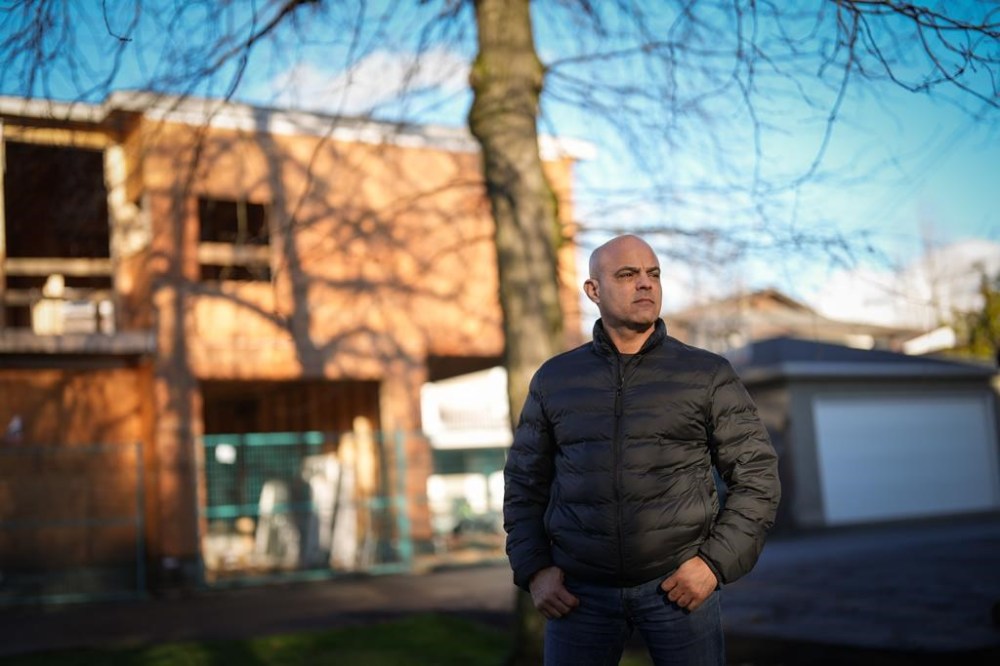
“It’s trying to connect companies directly. It’s trying to create those relationships,” he said.
Recently, more than 150 development industry leaders, including those in contracting, manufacturing, demolition, deconstruction and waste management, gathered in Nanaimo and Victoria to nail down partnerships to keep waste materials in circulation and out of the dump.
The launch in November of the Building Material Exchange, abbreviated to BMEx, aims at getting the word out to the construction and development community that their project leftovers have value, said Yaron, the managing director of circulation innovation at Light House, the Vancouver-based non-profit behind the exchange.
The unique in-Canada program, funded by regional districts in Nanaimo, Cowichan Valley, Victoria and the City of Nanaimo, is free to join, he said.
In early 2025, the project will launch an online BMEx Marketplace, which will become a business-to-business platform for the construction industry to list and exchange excess or salvaged construction materials, said Yaron.
“We want to create a formal program that makes it easy for companies to exchange these materials,” he said. “Right now, materials are increasing in costs and the less efficient you are, the more you are spending on materials, and tipping fees at landfills are also going up, so the higher your waste management costs are going to be on projects.”
The BMEx pitch is twofold, said Yaron.
Recycling construction materials rather than sending them to landfills saves money, while participating in the program can elevate and showcase the business as a supporter of environmental and sustainable practices, he said.
“They can get value from doing a good thing,” Yaron said.
Vancouver Island homebuilder Noah Topp said the data show benefits are both economic and environmental.
Reducing construction waste and emissions are priorities for Nexus Modular Solutions, a Cobble Hill company, located about 50 kilometres north of Victoria, that builds complete homes at an indoor warehouse facility, said Topp, who’s the business development manager at Nexus.
An average 2,000-square-foot home will create 17,460 kilograms of construction waste, but by building indoors, reducing timelines and using local suppliers to limit transportation emissions, waste is cut to 2,080 kilograms on a Nexus project, Topp said.
Total greenhouse gas emissions from a 2,000-square-foot Nexus home amounts to about 0.59 tonne, while for a traditional home build of the same size produces 7.80 tonnes of GHGs, he said.
“I think this is something that can get really big,” said Topp in an interview inside the living room of one of his modular show homes. “The construction industry — and I’m hesitant to use the word egregious — but it’s a pretty big contributor to landfill waste.”
He said local artisans are using leftover wood and metal from Nexus housing builds to produce art and unique functional products, including putting together outdoor neighbourhood libraries from unused end cuts of wood.
“There’s so much potential for that symbiotic relationship between companies,” Topp said. “One company can be both a supplier and a receiver of materials.”
Yaron said up to one-third of landfill waste is connected to the construction industry.
The BMEx project has the backing of Habitat for Humanity, said Jeff Krafta, the global non-profit housing organization’s mid-Island executive director in Nanaimo, about 110 kilometres north of Victoria.
Habitat for Humanity, which operates a largely volunteer-operated store that sells and accepts donations of home products, plans to transform an empty lot on its property to a location where developers and builders can leave their waste products or pick up needed items, he said.
“What we’re proposing right now is, through the Building Material Exchange program using some of our space here as a hub for builders, developers, people in the construction industry,” said Krafta. “There’s been lots of excitement, lots of buy in.”
Habitat for Humanity is still working on details that will allow the non-profit to issue tax receipts to companies for the construction waste, he said.
“What is going to make it unique is it’s the first official partnership and program officially designed for builders to have a direct line of sight to a place to deliver their overages and waste,” Krafta said.
“We’ll take lumber, plywood. We’ll take siding, cladding, sheathing, sheeting, that kind of stuff. Insulation, we’ll take. We’ll take windows, doors. When we have more space, masonry, cement blocks.”
Construction companies are always looking for ways to cut costs, but many owners are also concerned about their environmental footprint, and finding ways to reduce costs and limit pollution will be the selling points of the exchange program, he said.
“Getting rid of wires, fixtures and insulation, even pulling out fibreglass insulation and putting it off to the side, as long as it doesn’t get wet, we can package it up and it will be gone in a day here,” said Krafta.
This report by The Canadian Press was first published Dec. 30, 2024.