Doctors worry that iodine deficiency – a dietary problem from the past – is coming back
Advertisement
Read this article for free:
or
Already have an account? Log in here »
To continue reading, please subscribe:

Digital Subscription
One year of digital access for only $205*
- Enjoy unlimited reading on winnipegfreepress.com
- Read the E-Edition, our digital replica newspaper
- Access News Break, our award-winning app
- Play interactive puzzles
*First annual payment billed as $205.00 + GST for one year. This annual subscription will automatically renew at $233.00 + GST every 52 weeks (10% off the regular annual price of $259.35). Offer available to new and qualified returning subscribers only. Cancel any time.
To continue reading, please subscribe:
Add Free Press access to your Brandon Sun subscription for only an additional
$1 for the first 4 weeks*
- Enjoy unlimited reading on winnipegfreepress.com
- Read the E-Edition, our digital replica newspaper
- Access News Break, our award-winning app
- Play interactive puzzles
*Your next Brandon Sun subscription payment will increase by $1.00 and you will be charged $17.95 plus GST for four weeks. After four weeks, your payment will increase to $24.95 plus GST every four weeks.
Read unlimited articles for free today:
or
Already have an account? Log in here »
Hey there, time traveller!
This article was published 06/01/2025 (608 days ago), so information in it may no longer be current.
NEW YORK (AP) — The 13-year-old boy came to the clinic with a rapidly ballooning neck. Doctors were puzzled.
Testing ruled out their first suspicion. But further tests pinpointed what they — and the boy — had been missing: iodine.
A century ago, iodine deficiency affected kids across large swaths of the country. It essentially disappeared after some food makers started adding it to table salt, bread and some other foods, in one of the great public health success stories of the 20th century.
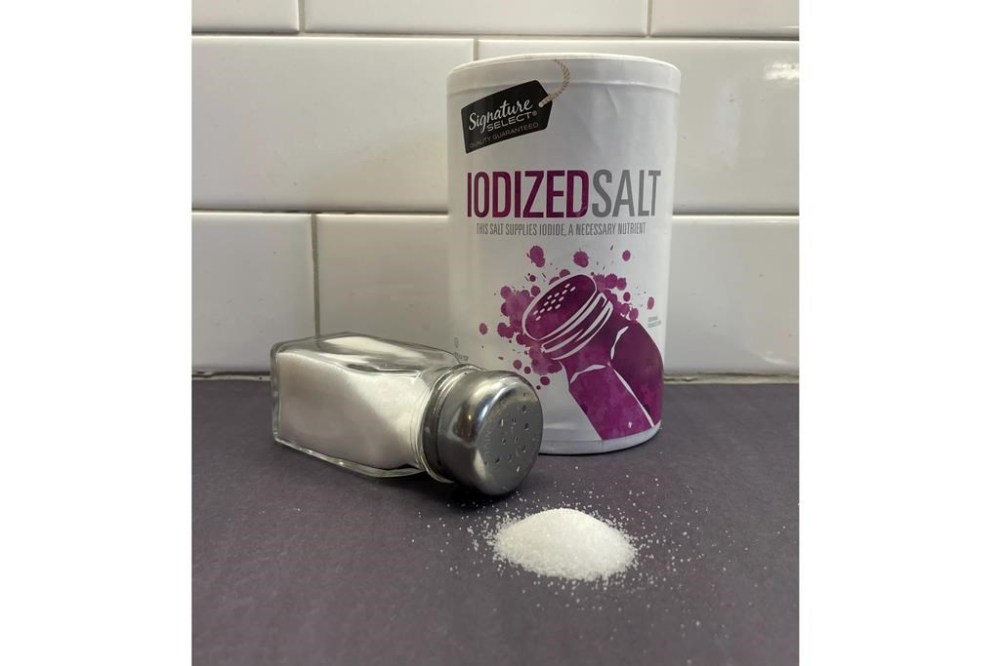
But today, people are getting less iodine because of changes in diet and food manufacturing.
Although most people are still getting enough, researchers have increasingly been reporting low levels of iodine in pregnant women and other people, raising concerns about an impact on their newborns. And there is also a very small, but growing, number of reports of iodine deficiency in kids.
“This needs to be on people’s radar,” said Dr. Monica Serrano-Gonzalez, a Brown University doctor who treated the boy in 2021 in Providence, Rhode Island.
What is iodine?
Iodine is a trace element found in seawater and in some soils — mostly in coastal areas. A French chemist accidentally discovered it in 1811 when an experiment with seaweed ash created a purple puff of vapor. The name iodine comes from a Greek word meaning violet-colored.
Later that century, scientists began to understand that people need certain amounts of iodine to regulate their metabolism and stay healthy, and that it’s crucial in the development of brain function in children.
One sign of insufficient iodine is a swelling of the neck, known as a goiter. The thyroid gland in the neck uses iodine to produce hormones that regulate the heart rate and other body functions. When there’s not enough iodine, the thyroid gland enlarges as it goes into overdrive to make up for the lack of iodine.
At the beginning of the 20th century, goiter was very common in children in certain inland parts of the United States, especially in a “goiter belt” that stretched from Appalachia and the Great Lakes to the northwest United States. Some of the kids were unusually short, deaf, intellectually stunted and had other symptoms of a syndrome once known as “cretinism.”
Adding iodine to salt
Public health experts realized they couldn’t solve the problem by feeding everyone seaweed and seafood, but they learned that iodine can essentially be sprayed on table salt. Iodized salt first became available in 1924. By the 1950s, more than 70% of U.S. households used iodized table salt. Bread and some other foods also were fortified with iodine, and iodine deficiency became rare.
But diets changed. Processed foods now make up a large part of the American diet, and though they contain a lot of salt, it’s not iodized. Leading bread brands no longer add iodine. In the case of the 13-year-old boy, he has mild autism and was a fussy eater, mostly only eating specific brands of bread and peanut butter.
And for people who do salt their food, the fashion now is to use kosher salt, Himalayan rock salt or other noniodized products.
“People have forgotten why there’s iodine in salt,” said Dr. Elizabeth Pearce of Boston Medical Center. She is a leader in the Iodine Global Network, a nongovernmental agency working to eliminate iodine deficiency disorders.
She noted a reported 50% drop in U.S. iodine levels in surveyed Americans between the 1970s and the 1990s.
How much iodine is enough?
Though iodine consumption is falling overall, most Americans are still getting enough through their diet, experts say. But doctors worry that’s not the case for women and children, who are most vulnerable to iodine deficiency.
The American Academy of Pediatrics and other medical societies recommend that all pregnant and breastfeeding women get 150 micrograms of iodine each day. You can get that from one-half to three-quarters of a teaspoon of iodized table salt.
In the last 15 years or so, U.S. researchers have increasingly reported seeing mild iodine deficiency in pregnant women. A Michigan State University study of about 460 pregnant women in the city of Lansing found about a quarter of them were not getting enough.
Many prenatal vitamins don’t contain iodine, noted Jean Kerver, the study’s lead author. That’s why doctors recommend that pregnant or breastfeeding women check labels to ensure they are taking multivitamins or prenatal supplements with iodine.
Some studies have linked even mild iodine deficiency to lower IQs and language delay in children, although there is debate about at exactly what levels problems start, Pearce said.

Experts say there hasn’t been enough research to establish what impact that iodine deficiency has actually been having on the U.S. population in recent years.
Serrano-Gonzalez said she and her colleagues have seen four other cases in children in their clinic in Providence.
“We’re concerned this may be increasing, especially in patients with restricted diets,” she said.
___
The Associated Press Health and Science Department receives support from the Howard Hughes Medical Institute’s Science and Educational Media Group. The AP is solely responsible for all content.