

B.C. doctors comparing H5N1 virus that infected teen with that of Louisiana patient
Advertisement
Read this article for free:
or
Already have an account? Log in here »
To continue reading, please subscribe:
Monthly Digital Subscription
$1 per week for 24 weeks*
- Enjoy unlimited reading on winnipegfreepress.com
- Read the E-Edition, our digital replica newspaper
- Access News Break, our award-winning app
- Play interactive puzzles
*Billed as $4.00 plus GST every four weeks. After 24 weeks, price increases to the regular rate of $19.95 plus GST every four weeks. Offer available to new and qualified returning subscribers only. Cancel any time.
Monthly Digital Subscription
$4.99/week*
- Enjoy unlimited reading on winnipegfreepress.com
- Read the E-Edition, our digital replica newspaper
- Access News Break, our award-winning app
- Play interactive puzzles
*Billed as $19.95 plus GST every four weeks. Cancel any time.
To continue reading, please subscribe:
Add Free Press access to your Brandon Sun subscription for only an additional
$1 for the first 4 weeks*
*Your next subscription payment will increase by $1.00 and you will be charged $16.99 plus GST for four weeks. After four weeks, your payment will increase to $23.99 plus GST every four weeks.
Read unlimited articles for free today:
or
Already have an account? Log in here »
Hey there, time traveller!
This article was published 08/01/2025 (445 days ago), so information in it may no longer be current.
The BC Centre for Disease Control says it is comparing the genetic features of a local teenager’s avian flu case with that of a Louisiana patient who died earlier this week.
Clinical microbiologist Dr. Agatha Jassem, co-program head of the virology lab at the BCCDC Public Health Laboratory, says they want to understand how the viruses in the two cases are related to each other, as well as to viruses circulating in birds.
This will help to assess how easily it adapts and transmits between animals and humans. Both cases are related to viruses detected in wild birds and poultry. While there is no evidence of human-to-human infection in either, it’s something experts are keeping an eye on.
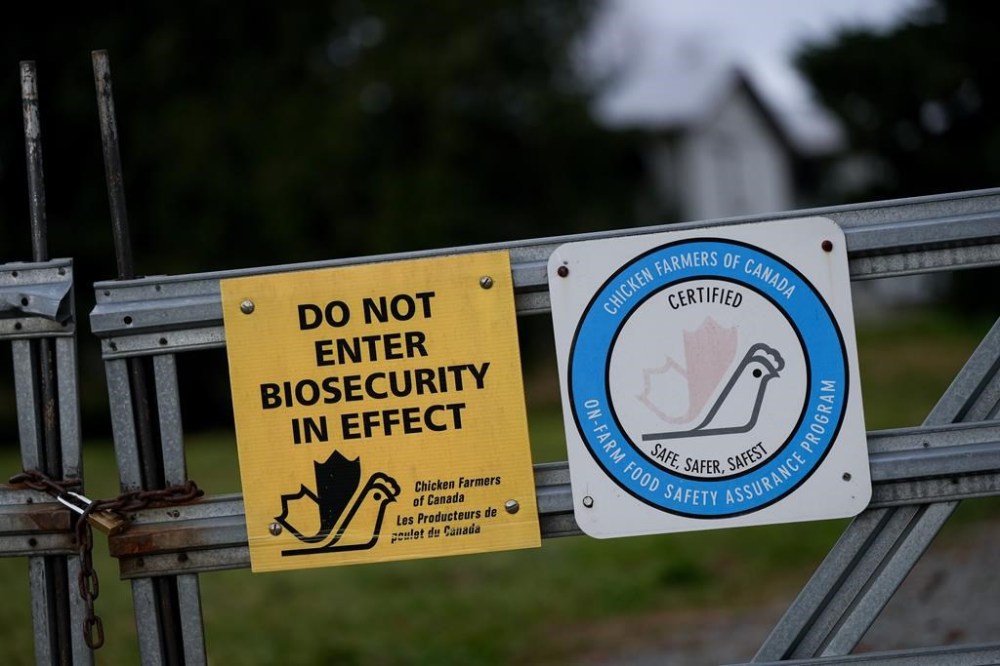
Louisiana health officials said Monday that a patient hospitalized with severe avian flu died, marking the first H5N1 fatality in the United States. The 13-year-old remained hospitalized in Vancouver as of last week, but was no longer in intensive care.
Jassem says the U.S. patient shared one of the three genetic mutations identified in the Canadian case, which infectious disease specialists have said could make it easier for the virus to spread from person-to-person.
The U.S. Centers for Disease Control and Prevention (CDC) said the shared hemagglutinin mutation was not found in poultry samples collected on the Louisiana patient’s property, suggesting the changes emerged in the patient after they were infected.
In the B.C. case, Canadian health officials still don’t know how the teen got infected.
“It is important to understand how much of this mutation is present in the viruses and how this changes over the course of an infection to provide insight into adaptation of this virus in humans,” says Jassem.

The lab is conducting a comparative genomic analysis, testing samples collected on different days with a variety of methods to determine how the mutations affect replication of the virus in human airways.
Michelle Wille, a senior research fellow at the Centre for Pathogen Genomics at the University of Melbourne, says this analysis will help highlight mutations of concern.
“That this mutation has emerged in more than one severe human case suggests that it is an important mutation to track through genomic surveillance.”
This report by The Canadian Press was first published Jan. 8, 2025.
Canadian Press health coverage receives support through a partnership with the Canadian Medical Association. CP is solely responsible for this content.