Biden health officials say they built up US pandemic defenses. Trump promises changes
Advertisement
Read this article for free:
or
Already have an account? Log in here »
To continue reading, please subscribe:

Digital Subscription
One year of digital access for only $205*
- Enjoy unlimited reading on winnipegfreepress.com
- Read the E-Edition, our digital replica newspaper
- Access News Break, our award-winning app
- Play interactive puzzles
*First annual payment billed as $205.00 + GST for one year. This annual subscription will automatically renew at $233.00 + GST every 52 weeks (10% off the regular annual price of $259.35). Offer available to new and qualified returning subscribers only. Cancel any time.
To continue reading, please subscribe:
Add Free Press access to your Brandon Sun subscription for only an additional
$1 for the first 4 weeks*
- Enjoy unlimited reading on winnipegfreepress.com
- Read the E-Edition, our digital replica newspaper
- Access News Break, our award-winning app
- Play interactive puzzles
*Your next Brandon Sun subscription payment will increase by $1.00 and you will be charged $17.95 plus GST for four weeks. After four weeks, your payment will increase to $24.95 plus GST every four weeks.
Read unlimited articles for free today:
or
Already have an account? Log in here »
Hey there, time traveller!
This article was published 14/01/2025 (630 days ago), so information in it may no longer be current.
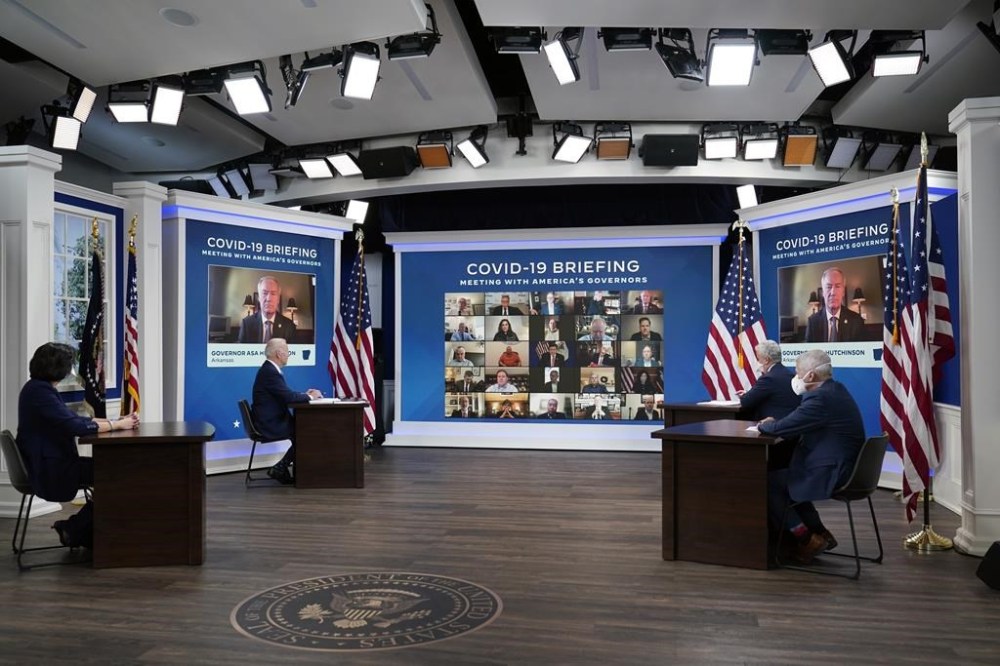
NEW YORK (AP) — The Biden administration on Tuesday released a “roadmap” for maintaining government defenses against infectious diseases, just as President-elect Donald Trump pledges to dismantle some of them.
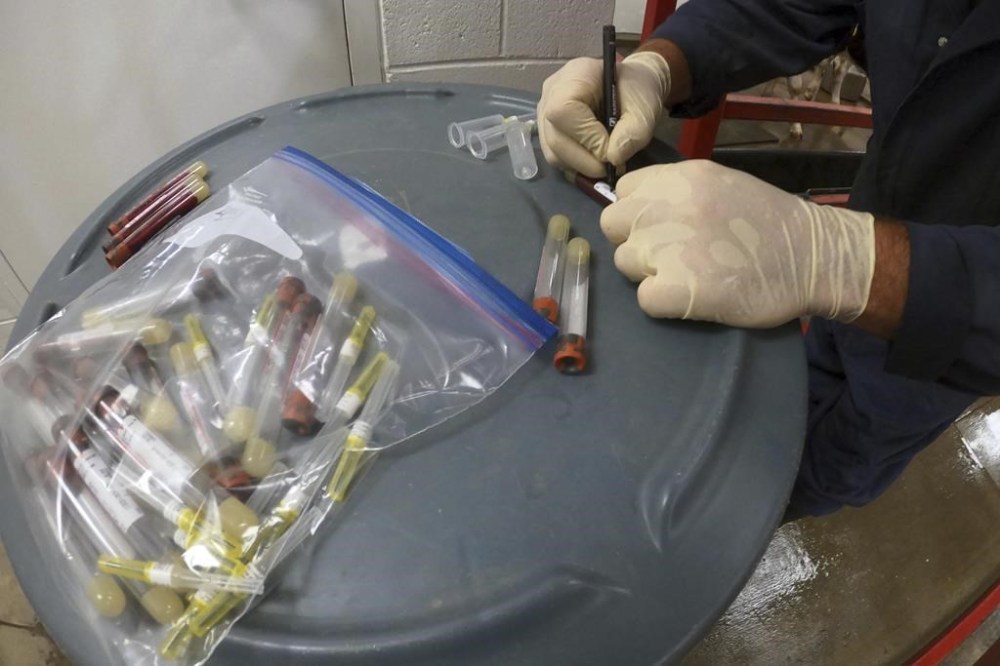
The 16-page report recaps steps taken in the last four years against COVID-19, mpox and other diseases, including vaccination efforts and the use of wastewater and other measures to spot signs of erupting disease outbreaks. It’s a public version of a roughly 300-page pandemic-prevention playbook that Biden officials say they are providing to the incoming administration.
Biden officials touted the steps they took to halt or prevent disease threats, but some public heath researchers offer a more mixed assessment of the administration’s efforts. Several experts, for example, said not nearly enough has been done to make sure an expanding bird flu pandemic in animals doesn’t turn into a global health catastrophe for people.
“Overwhelmingly you’ve heard a lot of frustration by outside experts that we’ve been under-reacting to what we see as really serious threat,” said Jennifer Nuzzo, director of the Pandemic Center at the Brown University School of Public Health.
Public health experts worry the next administration could do less
Trump and his team plan to slash government spending, and Trump has endorsed prominent vaccine detractors for top government health posts. During the campaign last year, Trump told Time magazine that he would disband the White House office focused on pandemic preparedness, calling it “a very expensive solution to something that won’t work.”
Public health researchers also point to Trump’s first administration, when the White House in 2018 dismantled a National Security Council pandemic unit. When COVID-19 hit two years later, the government’s disjointed response prompted some experts to argue that the unit could have helped a faster and more uniform response.
In 2020, during the pandemic, Trump officials moved to pull the U.S. out of the World Health Organization. President Joe Biden reversed the decision, but Trump’s team is expected to do it again. Experts say such a move would, among other things, hurt the ability to gain information about emerging new outbreaks before they comes to U.S. shores.
Officials with the Trump transition team did not respond to emails requesting information about its pandemic planning.
Many public health experts praise Trump for “ Operation Warp Speed, ” which helped spur the rapid development of COVID-19 vaccines. But several also noted that decades of planning and research under previous administrations laid the groundwork for it.
What do Biden officials say they accomplished?
COVID-19 vaccines did not start to trickle out to the public until after Biden defeated Trump in the 2020 election, and it was the Biden administration that stood up what it describes as the largest free vaccination program in U.S. history.
“President Biden came to office amidst the worst public health crisis in more than a century,” said Dr. Paul Friedrichs, director of the White House Office of Pandemic Preparedness and Response Policy, in a statement. “He partnered with stakeholders across the nation and turned it around, ending the pandemic and saving countless lives.”
Friedrichs’s office was established by Congress in 2022. He said the administration has “laid the foundation for faster and more effective responses to save lives now and in the future.”
What has been done to prepare for bird flu and other threats?
The pandemic office, which released the report Tuesday, said it has taken steps to fight bird flu, which has been spreading among animal species in scores of countries in the last few years.
The virus was detected in U.S. dairy herds in March. At least 66 people in the U.S. have been diagnosed with infections, the vast majority of them dairy or poultry workers who had mild infections. But that count includes an elderly Louisiana man who died.
Among other steps, the administration is stockpiling 10 million doses of vaccine that is considered effective against the strain that’s been circulating in U.S. cattle, and spent $176 million to develop mRNA vaccines that could quickly be adapted to mutations in the virus, with late stage trials “beginning shortly,” the document says.
Having measures in place to quickly develop and mass produce new vaccines is crucial, said Michael Osterholm, a University of Minnesota expert on infectious diseases.
“We don’t really have any understanding of what influenza virus will emerge one day to cause the next pandemic,” Osterholm said. “It sure isn’t this (bird flu strain), or it would be causing it (a pandemic) right now.”

The U.S. should maintain collaborations that train disease investigators in other countries to detect emerging infections, public health experts say.
“We have to continue to invest in surveillance in areas where we think these infectious agents are likely to emerge,” said Ian Lipkin, an infectious diseases researcher at New York’s Columbia University.
“I’m hoping that the Trump administration — as they are concerned about people coming across the border who may be infected with this or that or the other thing — will see the wisdom in trying to make sure that we do surveillance in areas where we think there’s a large risk,” he said.
___
The Associated Press Health and Science Department receives support from the Howard Hughes Medical Institute’s Science and Educational Media Group and the Robert Wood Johnson Foundation. The AP is solely responsible for all content.
Related Articles
Province oddly silent on disturbingly low COVID vax rates
Advertisement Advertise With Us
Advertisement Advertise With Us