Meet the Americans who still take COVID-19 precautions seriously
Advertisement
Read this article for free:
or
Already have an account? Log in here »
To continue reading, please subscribe:

Digital Subscription
One year of digital access for only $205*
- Enjoy unlimited reading on winnipegfreepress.com
- Read the E-Edition, our digital replica newspaper
- Access News Break, our award-winning app
- Play interactive puzzles
*First annual payment billed as $205.00 + GST for one year. This annual subscription will automatically renew at $233.00 + GST every 52 weeks (10% off the regular annual price of $259.35). Offer available to new and qualified returning subscribers only. Cancel any time.
To continue reading, please subscribe:
Add Free Press access to your Brandon Sun subscription for only an additional
$1 for the first 4 weeks*
- Enjoy unlimited reading on winnipegfreepress.com
- Read the E-Edition, our digital replica newspaper
- Access News Break, our award-winning app
- Play interactive puzzles
*Your next Brandon Sun subscription payment will increase by $1.00 and you will be charged $17.95 plus GST for four weeks. After four weeks, your payment will increase to $24.95 plus GST every four weeks.
Read unlimited articles for free today:
or
Already have an account? Log in here »
Hey there, time traveller!
This article was published 15/01/2025 (625 days ago), so information in it may no longer be current.
Susan Scarbro stares down a bowling lane at the distant pins.
She hears a sound that breaks her focus. Was that a cough? Will her mask protect her?
COVID-19 remains a very present threat for the 55-year-old. Scarbro has multiple immune disorders, making her vulnerable to infection.
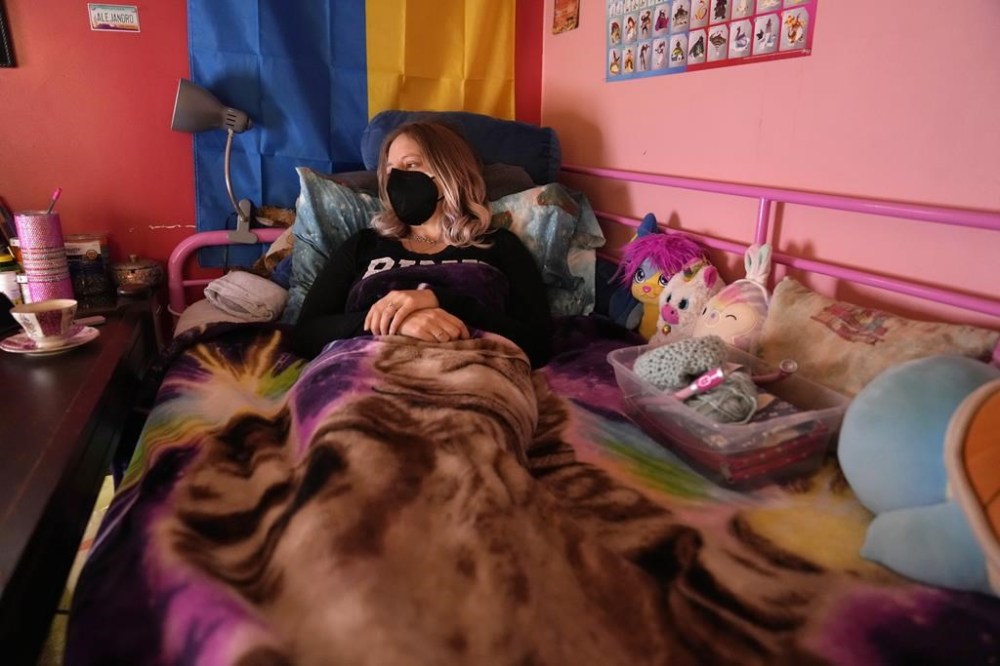
“Any minute anybody could cough, just incidentally,” said Scarbro, who lives in Sunset Beach, North Carolina. “And that cough could be the one thing that could make me sick.”
This month marks the fifth anniversary of the first confirmed case of COVID-19 in the U.S. The virus would go on to kill 1.2 million Americans and disrupt countless lives.
While the pandemic’s emergency phase ended in May 2023, the threat of infection remains a governing force in the lives of people like Scarbro. They protect themselves from the virus with masks and isolate themselves in small family bubbles. Some grasp for unproven strategies — gargling with antiseptic mouthwash, carrying a personal carbon dioxide monitor to check the ventilation of indoor spaces.
In online support groups, they trade research about the danger of repeat infections and cognitive impairment. They miss the empathy they felt during the early days of the pandemic. Some have lost friendships, but they strive to maintain the social ties that are important to mental health.
Scarbro’s bowling league helps her feel connected to her neighbors. But recently, she’s detected more stares and skeptical looks from strangers when she bowls in a mask.
“There was more respect and understanding, but now they’re over it,” she said. “They expect me to be over it, but they don’t understand that even before COVID-19, these were the precautions I needed to take.”
Most Americans have developed some level of protection against severe disease from previous COVID-19 infections, vaccinations or both. But immunocompromised people like Scarbro, who has common variable immune deficiency, must be constantly vigilant. Unlike the flu, COVID has not settled into a seasonal pattern.
“There’s never a time when they can relax a little bit,” said Andrew Pekosz, a virologist at Johns Hopkins University. “That’s a really challenging and exhausting thing to ask someone to do.”
Who are the people still cautious about COVID-19? They include young caregivers of vulnerable relatives, people with chronic health conditions and families rallying around a loved one. In interviews with The Associated Press, they talked about how they manage the trade-offs and the toll of isolation on their mental health.
‘How hard is it to put a mask on?’
Before the pandemic, Bazia Zebrowski, 61, of Newbury, Ohio, dined out, shopped for groceries and took her dog, Shadoh, to the park. When she felt well, she occasionally could get together with friends despite having myalgic encephalomyelitis, a condition formerly known as chronic fatigue syndrome that causes inflammation, immune system problems, fatigue and pain.
Now she keeps close to home, venturing out only for medical appointments. Her husband does the shopping and wears a mask at his workplace.
They have not had COVID-19 and hope their luck holds. Getting sick would be a disaster, she said, potentially triggering a relapse or superimposing long COVID-19 onto her illness.
“I don’t consider myself COVID cautious. I consider myself COVID competent,” Zebrowski said. “Cautious would imply that I have an unreasonable fear of something. I do not have an unreasonable fear of this disease.”
What does Zebrowski miss about pre-pandemic times? “I miss the illusion that people are willing to care for each other,” she said. “How hard is it to put a mask on? It rattles your faith in humankind … (you learn) how little the people in your life understood how sick you were to begin with.”
Trauma is part of the experience of having a chronic illness, said DePaul University psychologist Leonard Jason, who has studied myalgic encephalomyelitis for more than three decades.
“Then you’re traumatized by the societal reaction to the illness,” he said.
Protecting a partner
Some people aren’t sick themselves but are taking precautions to protect a family member. Steve Alejandro, 42, of Wentzville, Missouri, calls himself a COVID shielder.
His wife, Ashley Alejandro, 44, also has myalgic encephalomyelitis. “She’s got maybe four good hours a day,” Alejandro said. “There’s not a thing in the world I wouldn’t do to protect those four hours.”
Alejandro changed careers during the pandemic, leaving behind “my whole support system” so he could sell vintage books online from home. His three children — now 20, 18 and 12 — never went back to in-person school after lockdowns ended and are continuing their learning at home.
“We’ve really come together,” Alejandro said. “This is a choice that can be made and you can win at it.”
In Miami, Kira Levin is the primary caregiver for her 98-year-old grandmother. She said the thought of getting COVID-19 and risking her grandmother’s health is terrifying.
So, at a July wedding, the 29-year-old was the only bridesmaid and attendee in a mask — an N95 layered with a pretty mask to match the bride’s green color scheme.
“I didn’t take off the mask for pictures and nobody asked me to,” Levin said. “And I felt incredibly grateful for that.”
‘COVID Cautious’ dating
Denver-based sisters Jacqueline and Alexa Child stay masked while going to concerts and dining outdoors with friends who don’t share the same level of COVID-19 caution.
“We have done everything we possibly could to maintain our mental health and our social life,” said Jacqueline, who has an immune disease that makes her vulnerable to infections. “There’s nothing worse than being disabled and isolated. As someone who has been disabled and isolated, I don’t want that isolation part.”
Jacqueline, 30, and her sister Alexa, 34, launched a dating app called Dateability in 2022 for people who are disabled or chronically ill, though all are welcomed. Users can add a “COVID Cautious” tag to their profiles to signal they’re interested in meeting others who take precautions. The Child sisters say 10% of their 30,000 users add “COVID Cautious” to their dating profiles.
“It’s a market that we didn’t expect to target but we happily accept,” Jacqueline said.
Alexa said the precautions started as a way to protect Jacqueline, “but they’re no longer about that.” She’s trying to avoid long COVID, a long-term disability.
Tossing aside the threat of long COVID is hard to imagine for Yale University immunologist Akiko Iwasaki. Though people have been studying the virus since its emergence, she said scientists still don’t know how pieces of the virus can stick around in the blood of some people for more than a year after they’ve recovered from the illness.
Iwasaki still wears masks indoors and stays up to date with vaccines.
“I just can’t afford to get sick and become chronically ill,” she said. “I feel that we really are in a position to be able to better understand the disease, to help millions of people.”
A new normal
While Scarbro understands that others are ready to return to “normal,” it’s not that easy for her or her family. It’s true for many others with chronic immune illnesses, said Jorey Berry, CEO of Immune Deficiency Foundation.
“While the rest of the world is able to kind of go back to their regular lives, our community doesn’t have that luxury,” she said.
Scarbro, her husband and children are constantly taking into account other people’s COVID-19 safety practices.
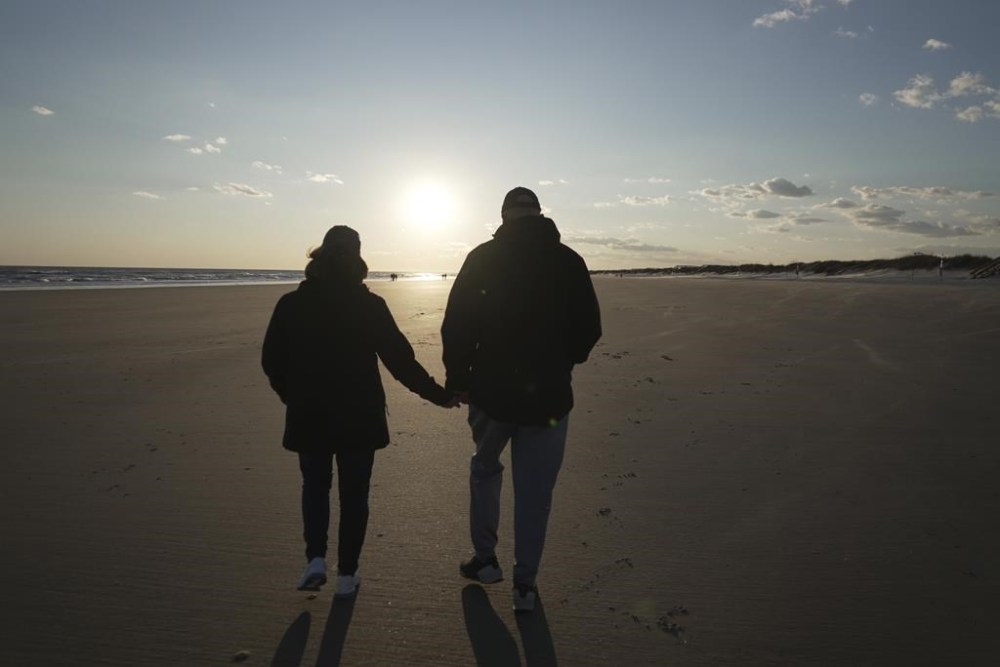
And as the world turns back to pre-COVID life, Scarbro’s family is doing what they can to keep her healthy — but not in complete isolation.
“I feel very scared about the future,” she said. “I know that people are done, and I respect that, but it’s only going to make it harder for me and my family to keep me safe.”
___
AP videojournalist Laura Bargfeld contributed to this report from Sunset Beach, North Carolina.
___
The Associated Press Health and Science Department receives support from the Howard Hughes Medical Institute’s Science and Educational Media Group and the Robert Wood Johnson Foundation. The AP is solely responsible for all content.

Advertisement Advertise With Us
Advertisement Advertise With Us