State lawmakers are pushing for vaccine exemptions even as childhood vaccination rates fall
Advertisement
Read this article for free:
or
Already have an account? Log in here »
To continue reading, please subscribe:

Digital Subscription
One year of digital access for only $205*
- Enjoy unlimited reading on winnipegfreepress.com
- Read the E-Edition, our digital replica newspaper
- Access News Break, our award-winning app
- Play interactive puzzles
*First annual payment billed as $205.00 + GST for one year. This annual subscription will automatically renew at $233.00 + GST every 52 weeks (10% off the regular annual price of $259.35). Offer available to new and qualified returning subscribers only. Cancel any time.
To continue reading, please subscribe:
Add Free Press access to your Brandon Sun subscription for only an additional
$1 for the first 4 weeks*
- Enjoy unlimited reading on winnipegfreepress.com
- Read the E-Edition, our digital replica newspaper
- Access News Break, our award-winning app
- Play interactive puzzles
*Your next Brandon Sun subscription payment will increase by $1.00 and you will be charged $17.95 plus GST for four weeks. After four weeks, your payment will increase to $24.95 plus GST every four weeks.
Read unlimited articles for free today:
or
Already have an account? Log in here »
Hey there, time traveller!
This article was published 27/01/2025 (596 days ago), so information in it may no longer be current.
HARTFORD, Conn. (AP) — Vaccination bills are popping up in more than 15 states as lawmakers aim to potentially resurrect or create new religious exemptions from immunization mandates, establish state-level vaccine injury databases or dictate what providers must tell patients about the shots.
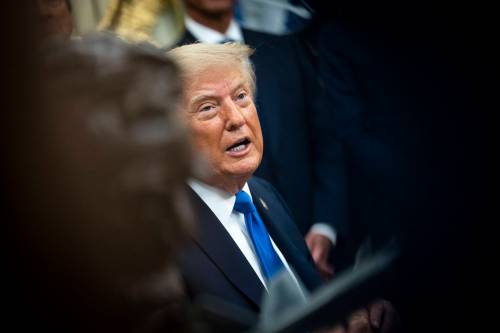
Many see a political opportunity to rewrite policies in their states after President Donald Trump’s return to the White House and anti-vaccine activist Robert F. Kennedy Jr. ‘s nomination as the next secretary of the Department of Health and Human Services. The agency oversees virtually every aspect of vaccination efforts in the U.S., from funding their development to establishing recommendations for medical providers to distributing vaccines and covering them through federal programs.
Childhood vaccination rates against dangerous infections like measles and polio continue to fall nationwide, and the number of parents claiming non-medical exemptions so their kids don’t get required shots is rising.
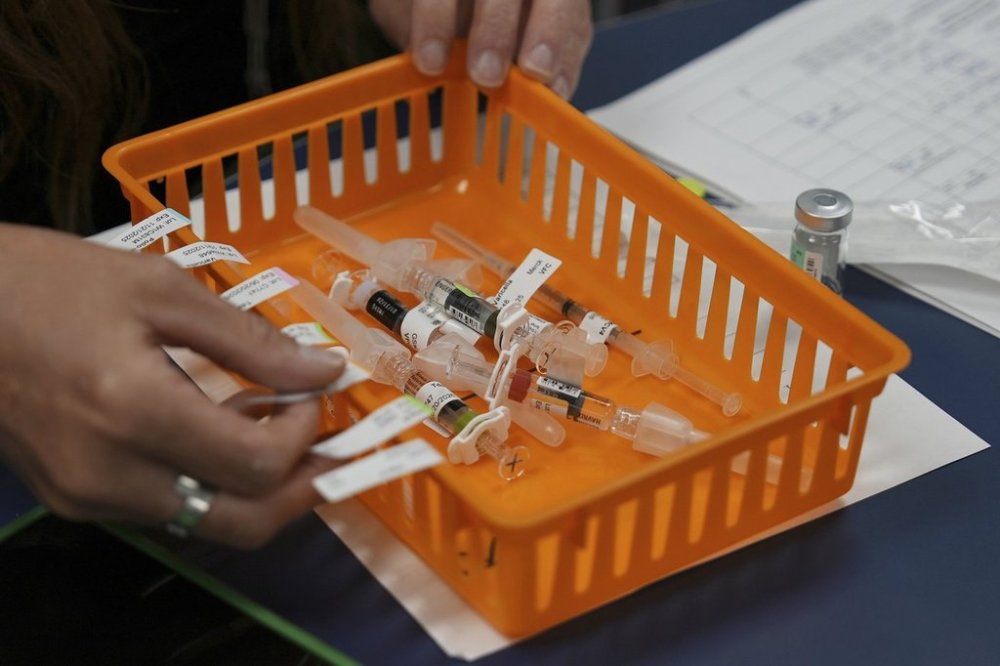
In 2024, whooping cough cases reached a decade-high and 16 measles outbreaks, the largest among them in Chicago and Minnesota, put health officials on edge. Most states are below the 95% vaccination threshold for kindergartners — the level needed to protect communities against measles outbreaks.
About half of Americans are “very” or “extremely” concerned that those declining childhood vaccination rates will lead to more outbreaks, according to a new poll by The Associated Press-NORC Center for Public Affairs Research. Yet only about 4 in 10 Americans oppose reconsidering the government’s recommendations for widely used vaccines, while roughly 3 in 10 are in favor. The rest — about 3 in 10 — are neutral.
Scott Burris, director of Temple University’s Center for Public Health Law Research, has tracked public health legislation for years, and watched backlash against COVID-19 vaccines grow to include more routine vaccines as anti-vaccine activists take hold of powerful political pulpits.
“I think COVID and the politics gave standard vaccine denialists a lot of wind in their sails,” he said.
It’s hard to predict what will pass into law in the states, Burris said, considering the vast majority of proposed bills in any state go nowhere. But the proposed legislation offers a glimpse into lawmakers’ thoughts, and what else might follow.
Religious exemptions lead the pack
Religious exemptions for school vaccine requirements are among the most popular proposals so far. Lawmakers in New York, Virginia, Connecticut and Mississippi have introduced bills that would allow more people to waive routine shots. Indiana lawmakers will weigh religious exemptions for medical students.
Earlier this month, West Virginia Republican Gov. Patrick Morrisey issued an executive order on his first day in office that enabled families to receive religious exemptions from required school vaccinations.
“That’s a huge step,” said Brian Festa, co-founder of the law firm We The Patriots USA, which works on vaccination-related cases throughout the country. “That’s a state that never had a religious exemption.”
Now, only four states allow just a medical exemption from childcare and K-12 immunization requirements: Connecticut, California, New York and Maine.
Festa credited West Virginia’s new religious exemption to Trump’s nomination of Kennedy, as well as a 2023 federal court ruling that required Mississippi to allow residents to cite religious beliefs when seeking exemptions from state-mandated vaccinations for children.
“I think the writing’s on the wall and they did feel the pressure,” Festa said of West Virginia.
In Connecticut, at least four Republican bills will try to revive the state’s religious exemption for schools, colleges and daycares — something a contentious 2021 state law eliminated for students without an existing exemption.
Connecticut health experts said at the time there was a slow but steady increase in the number of religious exemptions and declining vaccination rates in some schools. The state has historically maintained some of the highest childhood vaccination rates in the country, and in the 2023-2024 school year, more than 97% of kindergarteners protected against chickenpox, measles, tetanus, diphtheria, polio and more.
Given that the U.S. Supreme Court last year rejected a challenge to the Connecticut law and the statehouse is controlled by Democrats, GOP state Sen. Eric Berthel said he’s not optimistic legislative leaders will allow debate on his exemption bill, but does believe the broader cultural shift means “maybe there is a bit of an appetite to look at things like this again.”
“I think that we’re not being fair to families who have a true faith-based reason to not vaccinate their child,” he said.
There’s one outlier so far among statehouse trends on exemptions. Hawaii, where legislators are looking to move in the opposite direction with a bill to eliminate all non-medical waivers after struggling for years with high exemption rates.
Vaccine injuries and consent laws
Other vaccine-related bills touch on some of the opposition that’s been growing since the pandemic.
Oklahoma and Alabama have proposals that would require parental consent for any vaccine given to minors. Bills in Wyoming, Oregon and Oklahoma would prohibit “discrimination” against people who aren’t vaccinated against COVID-19 or other diseases.
New York and Oklahoma have bills that would require providers to give people getting shots a full ingredient list, and Florida legislation would ban edible vaccines, though none are approved for use in the U.S. and research is still in early stages.
Vaccine injury is also a popular topic, and bills in Indiana and North Dakota propose creating state versions of the Centers for Disease Control and Prevention’s Vaccine Adverse Event Reporting System — a federal database that drew the attention of vaccine skeptics during the pandemic. Anyone can file a report about a potential issue after a vaccine, though the CDC’s website notes a report doesn’t prove the shot caused a health issue.
North Dakota Republican state Rep. Dick Anderson said he’s not against people getting vaccines — he got one COVID-19 shot himself — but proposed the bill because many people don’t trust the CDC.
“We have to do something to restore trust in the system,” Anderson said.
But experts note state databases are unnecessarily duplicative.
“A lot of these proposals, they’re trying to fix something that’s not broken and really working to counter the goal of preventing the spread of communicable disease,” said Andy Baker-White, senior director of state health policy for the Association of State and Territorial Health Officials.
Policy should be focused on getting rid of barriers to vaccination, not adding to them, said Dr. Susan Kressly, a pediatrician and president of the American Academy of Pediatrics.
Many families miss vaccinations not because of ideology, she said, but because of lack of transportation or not having primary care doctors or clinics nearby, among other things.
But because most Americans are vaccinated, they haven’t seen the effects of dangerous infections like bacterial meningitis that Kressly fielded calls about from fearful parents early in her career.
“Vaccines are really an American success story,” she said.
___

Shastri reported from Milwaukee.
___
This story has been corrected to show that North Dakota lawmaker Dick Anderson is a state representative, not a state senator.
___
The Associated Press Health and Science Department receives support from the Howard Hughes Medical Institute’s Science and Educational Media Group and the Robert Wood Johnson Foundation. The AP is solely responsible for all content.