Devoted nap-takers explain the benefits of sleeping on the job
Advertisement
Read this article for free:
or
Already have an account? Log in here »
To continue reading, please subscribe:

Digital Subscription
One year of digital access for only $205*
- Enjoy unlimited reading on winnipegfreepress.com
- Read the E-Edition, our digital replica newspaper
- Access News Break, our award-winning app
- Play interactive puzzles
*First annual payment billed as $205.00 + GST for one year. This annual subscription will automatically renew at $233.00 + GST every 52 weeks (10% off the regular annual price of $259.35). Offer available to new and qualified returning subscribers only. Cancel any time.
To continue reading, please subscribe:
Add Free Press access to your Brandon Sun subscription for only an additional
$1 for the first 4 weeks*
- Enjoy unlimited reading on winnipegfreepress.com
- Read the E-Edition, our digital replica newspaper
- Access News Break, our award-winning app
- Play interactive puzzles
*Your next Brandon Sun subscription payment will increase by $1.00 and you will be charged $17.95 plus GST for four weeks. After four weeks, your payment will increase to $24.95 plus GST every four weeks.
Read unlimited articles for free today:
or
Already have an account? Log in here »
Hey there, time traveller!
This article was published 06/02/2025 (601 days ago), so information in it may no longer be current.
NEW YORK (AP) — They snooze in parking garages, on side streets before the afternoon school run, in nap pods rented by the hour or stretched out in bed while working from home.
People who make a habit of sleeping on the job comprise a secret society of sorts within the U.S. labor force. Inspired by famous power nappers Winston Churchill and Albert Einstein, today’s committed nap-takers often sneak in short rest breaks because they think the practice will improve their cognitive performance but still carries a stigma.
Multiple studies have extolled the benefits of napping, such as enhanced memory and focus. A mid-afternoon siesta is the norm in parts of Spain and Italy. In China and Japan, nodding off is encouraged since working to the point of exhaustion is seen as a display of dedication, according to a study in the journal Sleep.
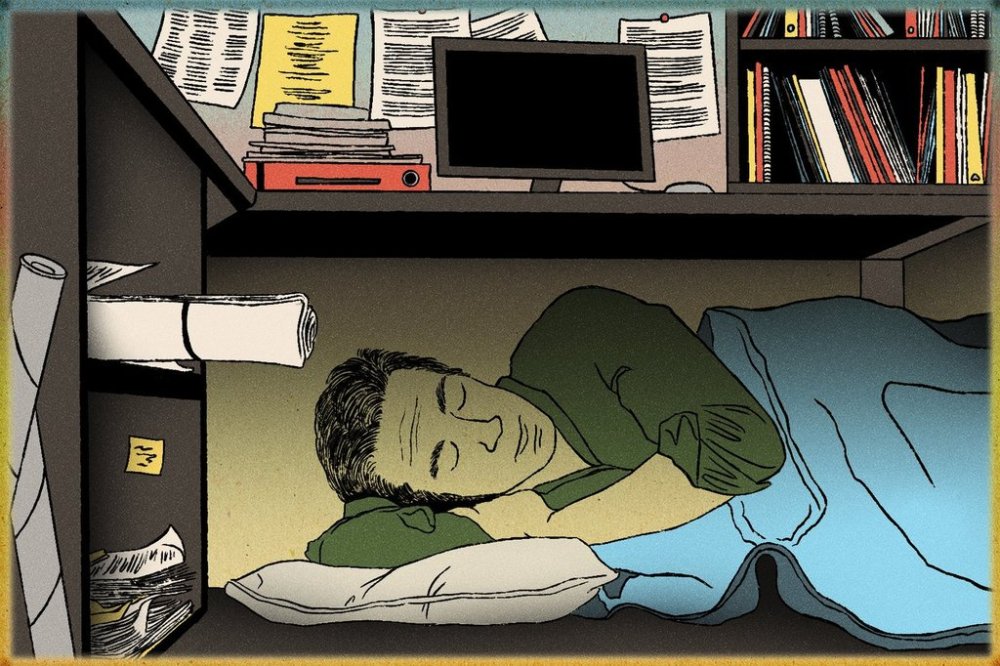
Yet it’s hard to catch a few z’s during regular business hours in the United States, where people who nap can be viewed as lazy. The federal government even bans sleeping in its buildings while at work, except in rare circumstances.
Individuals who are willing and able to challenge the status quo are becoming less hesitant to describe the payoffs of taking a dose of microsleep. Marvin Stockwell, the founder of PR firm Champion the Cause, takes short naps several times a week.
“They rejuvenate me in a way that I’m exponentially more useful and constructive and creative on the other side of a nap than I am when I’m forcing myself to gut through being tired,” Stockwell said.
The art of napping
Sleep is as important to good health as diet and exercise, but too many people don’t get enough of it, according to James Rowley, program director of the Sleep Medicine Fellowship at Rush University Medical Center.
“A lot of it has to do with electronics. It used to be TVs, but now cellphones are probably the biggest culprit. People just take them to bed with them and watch,” Rowley said.”
Napping isn’t common in academia, where there’s constant pressure to publish, but University of Southern California lecturer Julianna Kirschner fits in daytime naps when she can. Kirschner studies social media, which she says is designed to deliver a dopamine rush to the brain. Viewers lose track of time on the platforms, interrupting sleep. Kirschner says she isn’t immune to this problem — hence, her occasional need to nap.
The key to effective napping is to keep the snooze sessions short, Rowley said. Short naps can be restorative and are more likely to leave you more alert, he said.
“Most people don’t realize naps should be in the 15- to 20-minute range,” Rowley said. “Anything longer, and you can have problems with sleep inertia, difficulty waking up, and you’re groggy.”
Individuals who find themselves consistently relying on naps to make up for inadequate sleep should probably also examine their bedtime habits, he said.
A matter of timing
Mid-afternoon is the ideal time for a nap because it coincides with a natural circadian dip, while napping after 6 p.m. may interfere with nocturnal sleep for those who work during daylight hours, said Michael Chee, director of the Centre for Sleep and Cognition at the National University of Singapore.
“Any duration of nap, you will feel recharged. It’s a relief valve. There are clear cognitive benefits,” Chee said.
A review of napping studies suggests that 30 minutes is the optimal nap length in terms of practicality and benefits, said Ruth Leong, a research fellow at the Singapore center.
“When people nap for too long, it may not be a sustainable practice, and also, really long naps that cross the two-hour mark affect nighttime sleep,” Leong said.
Experts recommend setting an alarm for 20 to 30 minutes, which gives nappers a few minutes to fall asleep.
But even a six-minute nap can be restorative and improve learning, said Valentin Dragoi, scientific director of the Center for Neural Systems Restoration, a research and treatment facility run by Houston Methodist hospital and Rice University.
Bucking the trend
While workplace dozing is uncommon in the U.S., some companies and managers encourage it. Will Bryk, founder of AI search startup Exa, swears by 20-minute power naps and ordered two sleeping pods for employees to use in his company’s San Francisco office.
Ice cream maker Ben & Jerry’s has had a nap room in its Vermont headquarters for a couple of decades, and a handful of employees use it, company spokesman Sean Greenwood said. “Employees who feel taken care of are much more likely to use this responsibly,” he said.
Arianna Huffington, the celebrity author who co-founded the news website Huffington Post, became an advocate of a good night’s sleep and occasional naps after she collapsed from exhaustion in 2007. She installed a nap room at her former company, now called HuffPo, and at Thrive Global, a behavior change technology company where she serves as founder and CEO.
“If people have been up all night because of a sick child or a delayed flight, if they have the opportunity to nap, … then they will be much more productive and creative for the rest of the day instead of dragging themselves or trying to boost their energy through multiple coffees or cinnamon buns,” Huffington said in an email.
Kirsten Perez, 33, is a devoted napper. She used to use her lunch break at work to catch a few winks in her car. When she got her own office, she closed the door for a siesta while sitting at her desk.
Nowadays, working from home as a marketing manager at Nvidia, the Atlanta resident usually takes her daily nap in bed. She sets an alarm for 15 minutes, falls asleep within a minute and wakes up 30 seconds before the alarm rings.
“I can tell when my reasoning, my mood are dropping, just kind of feeling the drag of the day,” Perez said. In those situations, she asks herself, “‘Do I have a chunk of time in the next hour or so?’ And then I’ll figure out when I can find 15 minutes and find myself horizontal.”
Creating space for sleep
Naps are accepted and even a necessity in some occupations. The Centers for Disease Control and Prevention encourages naps for nurses working night shifts. But many nurses can’t sleep at the hospitals where they work because they’re too busy and aren’t given access to beds.
Nurses “regularly struggle to have sufficient time to use the bathroom or go outside for fresh air, no less take a nap,” said a spokesperson for the National Nurses United union.

Some companies are trying to fill the void. Inspired by his mother who worked as a nurse, Neil Wong founded Nap York, which offers sleeping pods in Manhattan and Queens that can be rented for about $27 an hour.
His regular customers include super-commuters, UPS drivers, a security guard who works two full-time jobs, and doctors who work at nearby hospitals. Nap York also gives half-off prices to essential workers such as police officers, firefighters and emergency medical service personnel.
“In this society, you really only have two place to sleep: you have your bed at home and you have a hotel room you can probably get for 100 bucks,” Wong said. “There’s really no third space that’s quiet, that provides some privacy, where you can also rest.”
___
Have you overcome an obstacle or made a profound change in your work? Send your questions and story ideas to cbussewitz@ap.org. Follow AP’s Be Well coverage, focusing on wellness, fitness, diet and mental health at https://apnews.com/hub/be-well.