Changes to Inuit child funding program putting families at risk: health care workers
Advertisement
Read this article for free:
or
Already have an account? Log in here »
To continue reading, please subscribe:

Digital Subscription
One year of digital access for only $205*
- Enjoy unlimited reading on winnipegfreepress.com
- Read the E-Edition, our digital replica newspaper
- Access News Break, our award-winning app
- Play interactive puzzles
*First annual payment billed as $205.00 + GST for one year. This annual subscription will automatically renew at $233.00 + GST every 52 weeks (10% off the regular annual price of $259.35). Offer available to new and qualified returning subscribers only. Cancel any time.
To continue reading, please subscribe:
Add Free Press access to your Brandon Sun subscription for only an additional
$1 for the first 4 weeks*
- Enjoy unlimited reading on winnipegfreepress.com
- Read the E-Edition, our digital replica newspaper
- Access News Break, our award-winning app
- Play interactive puzzles
*Your next Brandon Sun subscription payment will increase by $1.00 and you will be charged $17.95 plus GST for four weeks. After four weeks, your payment will increase to $24.95 plus GST every four weeks.
Read unlimited articles for free today:
or
Already have an account? Log in here »
Hey there, time traveller!
This article was published 13/02/2025 (594 days ago), so information in it may no longer be current.
OTTAWA – Health-care workers in Nunavut say changes to a federal funding program for Inuit children are forcing some pregnant women to make a tough choice: have a safe birth or ensure the kids they already have are properly cared for.
The Inuit Child First Initiative (ICFI) was launched in 2019 to ensure Inuit kids have access to health and social services without having to leave their communities.
Funding for the program, which has mirrored Jordan’s principle and helps backstop a wide range of programs and services, is set to sunset on March 31 unless Ottawa can get approvals through Parliament to extend it by a year — or come up with a longer-term solution.
Under Jordan’s Principle, First Nations families are to apply for and receive funding as its needed, with the provinces and federal government later sorting out jurisdictional battles over which is responsible for the bill.
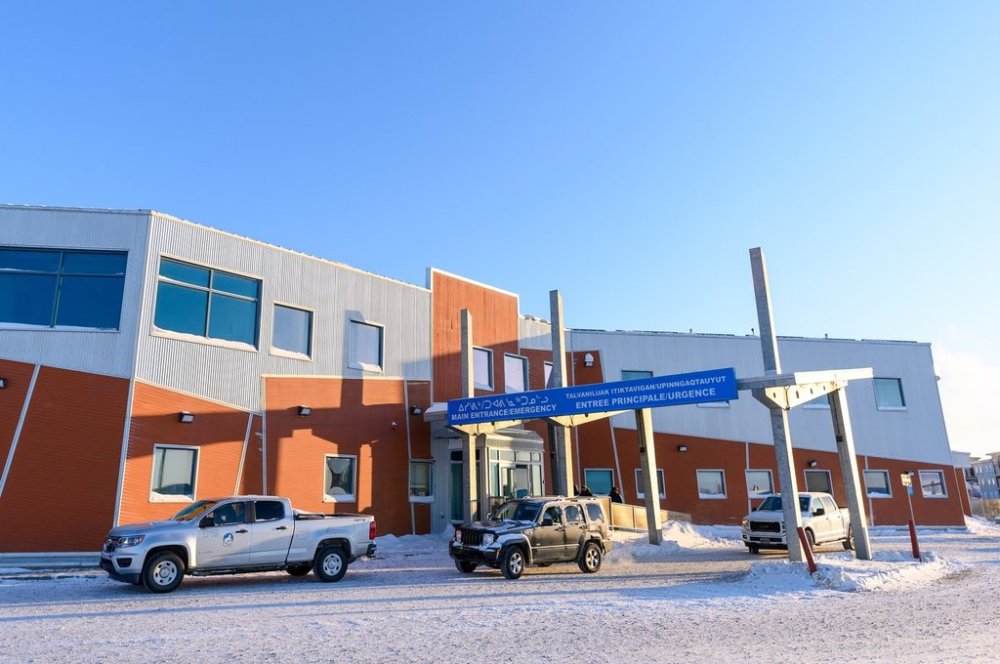
Community health centres in Nunavut lack proper birthing services, so pregnant women there typically fly to hospitals in Iqaluit, Winnipeg or Yellowknife to deliver. The territorial government covers the cost of flying an expectant mother and one escort — typically a partner — to an outside hospital to give birth.
The federal ICFI, meanwhile, has paid for children to travel with their parents in cases where they’ve had to leave their communities for medical treatment — including childbirth services — where adequate child care at home isn’t possible.
One organization helping Inuit women file ICFI applications says since the beginning of November it has seen a drop in the number of applications being approved and an increase in the number of applications being referred for national review.
“Previously, when we were getting denials or escalations, we would get a rationale attached from (Indigenous Services Canada) of what the reasoning was. Recently, we are not seeing that,” said Erica Loiselle, a senior service coordinator with the Arctic Children and Youth Foundation.
The organization said from July to October, it helped process 46 ICFI applications in the Qikiqtaaluk from patients — including pregnant women — who wanted their kids to fly out with them. Only two were escalated to national review, two were denied and 21 were approved.
But in November and December, only four of the 27 applications it helped process were approved, while 10 were sent for national review and two were denied.
Following inquiries from The Canadian Press, Indigenous Services Canada sent a bulletin to ICFI service providers on Monday, confirming it has changed the way it’s processing applications.
The wide-ranging bulletin said non-medical supports like travel costs, non-medical respite care and child care, would no longer be covered unless accompanied by a letter of support from a medical professional.
“The professional must be able to provide a child-specific recommendation based on their professional designation and their knowledge of the Inuk child’s specific needs,” the bulletin reads.
It also said the department is “extending decision making powers to regional staff to speed up the processing of requests,” shifting away from what Loiselle’s group has experienced over the last few months.
And while Loiselle said ISC has already been “cracking down” on the support letters, she said it isn’t always possible to get one from someone in health care. In past, social workers would sometimes vouch for the lack of adequate care in the community.
The Canadian Press spoke with three health-care workers in Nunavut about the impact the change in procedure has had on their patients. They asked to not be named because they are government employees and not authorized to speak publicly about patients’ cases.
They all said they’re worried about women flying out to give birth without having adequate arrangements to look after their kids back home — or women opting to stay put, putting their pregnancies at risk.
“We can’t definitively ever tell a mom that they won’t be approved, but we know reading between the lines, based on the trends that we’re seeing, that they won’t,” one health-care worker said.
“And so it has led to situations where mothers have almost delivered in community. And that’s a really scary precedent because the health centres are not equipped for safe birth.”
While no births have yet happened in communities because of ICFI funding not coming through, health-care workers say it’s only a matter of time.
“It’s gotten close to happening. Because when we’re in a situation where we’re trying to get an approval and we’re negotiating with the mom, we sometimes are able to really push in an exceptional circumstance,” the first worker said.
“But that exceptional advocacy is not a policy that will prevent births in a community. It will happen.”
The health-care workers also said they also worry about women who decide to travel, even though they haven’t been able to make proper child care arrangements.
One staffer said patients may worry about “whether there is someone that they trust to care for their children, or … about putting their children in a different household where it’s already overcrowded, (or) there’s already food insecurity and there’s possibly already violence occurring in that house.”
One health staffer said one pregnant mother couldn’t find anyone else to watch her children other than her partner, who was facing domestic abuse charges.
“Her current plan is to drop charges against her partner so that he won’t be in jail and he’ll be able to watch her children when she travels,” said the staffer.
In another case, which wasn’t pregnancy-related but required a mother to leave their community for medical reasons, a child was left in the care of another family member.
“The kid was actually kind of being passed around between a bunch of family members, who sadly didn’t identify early enough that the child had a severe respiratory infection,” the second worker described.
The child, they said, ended up admitted to the pediatric intensive care unit at the Children’s Hospital of Eastern Ontario in Ottawa.
“It’s not (pregnancy-related) directly, but it’s it’s an example of when you leave children unattended,” the staffer said.
It’s also putting the women’s pregnancies at risk, the health-care workers say.
“We’ve seen a lot of challenges with people wanting to go home early. For example, requesting what we call like elective inductions of labour because they don’t want to be separated from their children anymore,” said a third health-care worker.
“We do sometimes see family services involvement that probably would not otherwise happen. People complain that whoever is caring for their kids are not feeding them properly, and then family services has to go in and provide food, that type of thing.”
“The government of Nunavut is responsible for providing health care services to all Nunavummiut, including out of territory care,” Indigenous Services Minister Patty Hajdu said in an interview with The Canadian Press.

“Jordan’s principle was never meant to replace the responsibility of provinces and territories in their own specific jurisdiction.”
While the territorial government covers the cost of pregnant women and their escorts to travel to give birth, there are no programs set up for covering the cost of additional children to travel in cases where there is inadequate child care.
“I would just say that, essentially mothers should continue to apply, that obviously we’re going to be looking at each case, individually. Nobody wants a family to struggle because of the, hopefully, joyful occurrence of giving birth,” Hajdu said, adding the government is working with Inuit partners for a long-term plan for ICFI.
“But we also want to make sure that provinces and territories are continuing to provide their government-funded supports for Inuit children within their territory.
This report by The Canadian Press was first published Feb. 13, 2025.
Related Articles
School boards prepare for cuts to Jordan’s Principle funding
Advertisement Advertise With Us
Advertisement Advertise With Us