New-wave patriotism complicated National symbols can be problematic, and the Canadian flag has been through a lot in its 60 years
Read this article for free:
or
Already have an account? Log in here »
To continue reading, please subscribe:

Digital Subscription
One year of digital access for only $205*
- Enjoy unlimited reading on winnipegfreepress.com
- Read the E-Edition, our digital replica newspaper
- Access News Break, our award-winning app
- Play interactive puzzles
*First annual payment billed as $205.00 + GST for one year. This annual subscription will automatically renew at $233.00 + GST every 52 weeks (10% off the regular annual price of $259.35). Offer available to new and qualified returning subscribers only. Cancel any time.
To continue reading, please subscribe:
Add Free Press access to your Brandon Sun subscription for only an additional
$1 for the first 4 weeks*
- Enjoy unlimited reading on winnipegfreepress.com
- Read the E-Edition, our digital replica newspaper
- Access News Break, our award-winning app
- Play interactive puzzles
*Your next Brandon Sun subscription payment will increase by $1.00 and you will be charged $17.95 plus GST for four weeks. After four weeks, your payment will increase to $24.95 plus GST every four weeks.
Read unlimited articles for free today:
or
Already have an account? Log in here »
Hey there, time traveller!
This article was published 14/02/2025 (593 days ago), so information in it may no longer be current.
So, folks, where are we at on the Canadian flag? Is it cool to unfurl the ol’ girl again or what?
Forgive the confusion (and the whiplash), but you’ll recall that just three years ago, the Canadian flag became closely associated with the convoy protest and its incessant, unending honking, honking, honking, oh god, the honking — a kind of “patriotism” (if that’s what it can even be called) that looked and felt like an American import.
A flag for you
Check the Free Press newspaper Saturday for a poster-sized Canadian flag.
Now, with U.S. President Donald Trump talking about making Canada the 51st state — which, best of luck, eh — and his more recent insistence on referring to the prime minister as “Governor Trudeau,” the maple leaf is, blessedly, no longer being MAGA-fied.
Saturday is Flag Day, and the Canadian flag is celebrating its 60th anniversary. All living prime ministers have encouraged Canadians to “show the flag” in a united display of national pride in an attempt to wrest it back from those who were co-opting it in order to divide.
But, as ever, national symbols are complicated, and ours has been through a lot in its 60 years.
The Canadian flag was controversial even before it existed. In 1964, Prime Minister Lester B. Pearson unveiled his favourite option for a new Canadian flag to replace the Red Ensign at a legion hall right here in Winnipeg.
“I believe that today a flag designed around the maple leaf will symbolize and be a true reflection of the new Canada,” he said, and was immediately booed and hissed at by legionnaires.
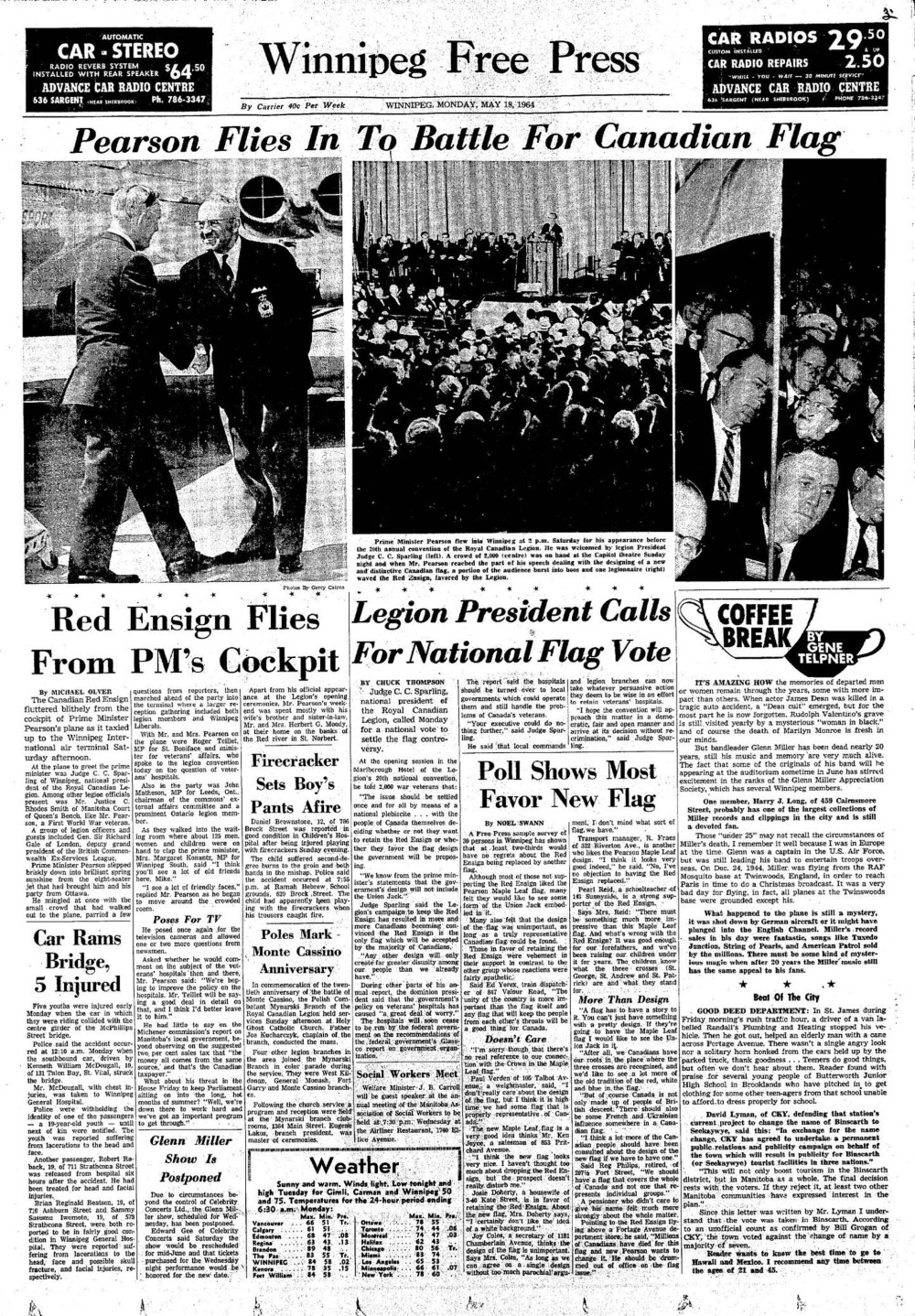
The Pearson Pennant (derogatory), as it was then called, featured three maple leaves (immediately no) flanked by blue bars, which I guess were supposed to represent the Atlantic and Pacific oceans, but some Anglos saw them as “representing Quebec.”
Opposition leader John Diefenbaker insisted that any Canadian flag had to feature the Union Jack to honour Canada’s “founding races” (yikes), while then-MP Pierre Elliott Trudeau said Quebecers didn’t give a “tinker’s damn” about a new flag.
I’m gonna guess Indigenous people were not consulted at all.
And when the red-and-white maple leaf as we know it today flapped over Parliament Hill for the first time on Feb. 15, 1965, with nary a Union Jack in sight, Dief wept, which is honestly relatable, as that is how I, too, deal with not getting my way.
The flag turned 20 a month before I was born, so this has always been my flag. I came up in the 1990s, when people were making a point of wearing Canadian flags on their backpacks and getting the maple leaf tattooed to their bodies.
I don’t know how much this had to do with communicating national pride or friendliness as it did with communicating “we are not like those other guys.”
I remember, vividly, seeing an XXL Canadian flag blanketing the sweaty masses at Woodstock ’99 on TV during the Tragically Hip’s performance and found its presence oddly reassuring at an event that became infamous for its violence. An island of peace.

But then, you have your eyes opened. You start learning about Canada’s history as a colonial force, about residential schools and about Japanese Canadian internment camps.
Our own history of violence.
And the more your eyes are opened, the more your relationship with national symbols becomes more complicated.
You can no longer ignore that for many people, the maple leaf is a painful symbol — of stolen land and stolen children and broken treaties — as much as you might want to shoot fireworks off the dock unbothered on July 1.
It is not unpatriotic to recognize the truth of the true north strong and free.
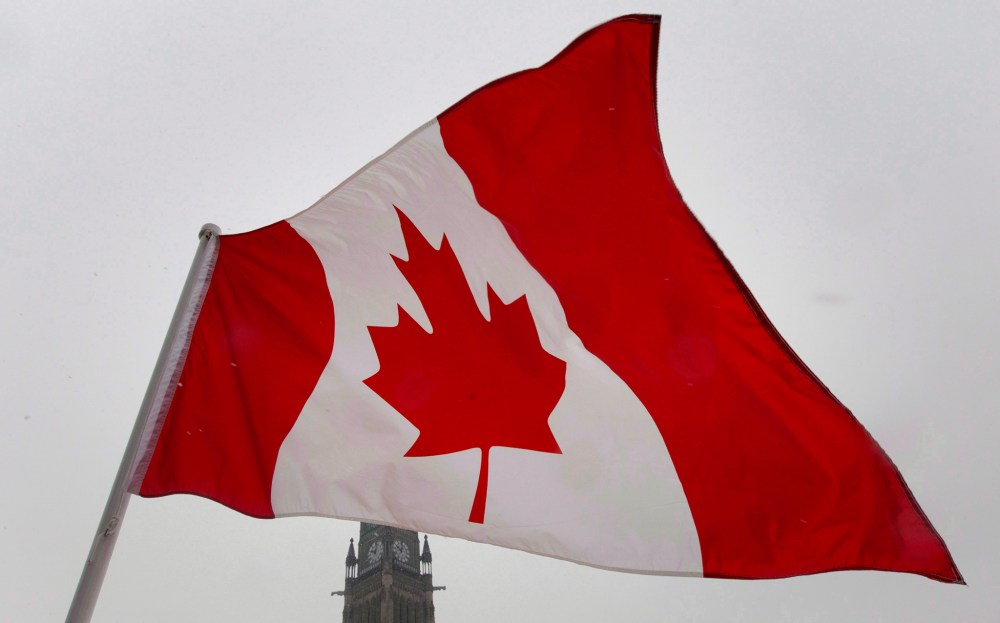
Like all symbols, the Canadian flag is a visual shorthand meant to communicate our national identity and the values we hold as Canadians.
And a value I hope we hold — along with those of freedom, respect and politeness — is the belief that we can always do better. That we can always be better. Not simply that we are better.
The maple leaf is also a symbol of hope. Of wide-open spaces and nature. For newcomers, of a better life.
There’s so much to be proud of here — I mean, have you ever heard the hauntingly beautiful call of a loon?
I don’t know if Canada is the best country in the world, but I do know it’s the only one I want to live in.
jen.zoratti@winnipegfreepress.com

Jen Zoratti is a columnist and feature writer working in the Arts & Life department, as well as the author of the weekly newsletter NEXT. A National Newspaper Award finalist for arts and entertainment writing, Jen is a graduate of the Creative Communications program at RRC Polytech and was a music writer before joining the Free Press in 2013. Read more about Jen.
Every piece of reporting Jen produces is reviewed by an editing team before it is posted online or published in print – part of the Free Press‘s tradition, since 1872, of producing reliable independent journalism. Read more about Free Press’s history and mandate, and learn how our newsroom operates.
Our newsroom depends on a growing audience of readers to power our journalism. If you are not a paid reader, please consider becoming a subscriber.
Our newsroom depends on its audience of readers to power our journalism. Thank you for your support.
Related Articles
Sixty years as a Canadian beacon: The quiet strength of a small maple leaf







History
Updated on Friday, February 14, 2025 4:56 PM CST: Deck changed