Red dye No. 3 has been banned, but what about other artificial food dyes?
Advertisement
Read this article for free:
or
Already have an account? Log in here »
To continue reading, please subscribe:
Digital Subscription
One year of digital access for only $1.44 a week*
- Enjoy unlimited reading on winnipegfreepress.com
- Read the E-Edition, our digital replica newspaper
- Access News Break, our award-winning app
- Play interactive puzzles
*Billed as $5.77 plus GST every four weeks. After 52 weeks, price increases to the regular rate of $19.95 plus GST every four weeks. Offer available to new and qualified returning subscribers only. Cancel any time.
To continue reading, please subscribe:
Add Free Press access to your Brandon Sun subscription for only an additional
$1 for the first 4 weeks*
- Enjoy unlimited reading on winnipegfreepress.com
- Read the E-Edition, our digital replica newspaper
- Access News Break, our award-winning app
- Play interactive puzzles
*Your next Brandon Sun subscription payment will increase by $1.00 and you will be charged $17.95 plus GST for four weeks. After four weeks, your payment will increase to $24.95 plus GST every four weeks.
Read unlimited articles for free today:
or
Already have an account? Log in here »
Hey there, time traveller!
This article was published 15/02/2025 (609 days ago), so information in it may no longer be current.
The U.S. Food and Drug Administration banned the dye known as Red 3 from the nation’s food supply in January, setting deadlines for stripping the brightly hued additive from candies and cough syrup, baked goods and frozen treats.
The agency said it was taking the action because studies found that the dye, also known as erythrosine, caused cancer in lab rats. A federal statute requires FDA to ban any additive found to cause cancer in animals, though officials stressed that the way Red 3 leads to cancer in rats doesn’t happen in people.
But the dye is only one of several synthetic colors widely found in common foods and other products.
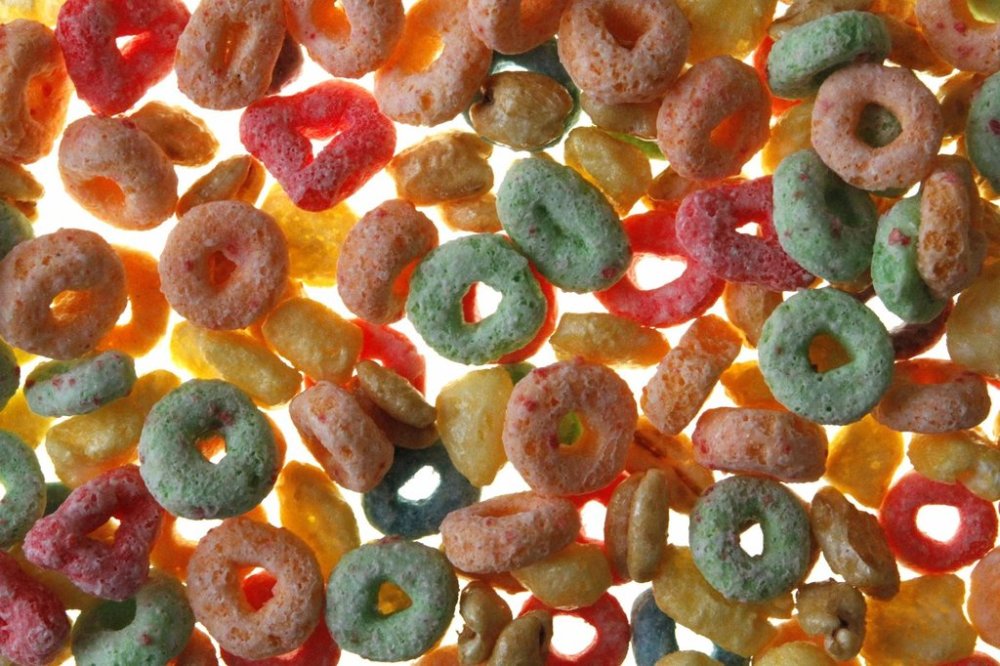
As their use is questioned by experts and consumers, here’s what you need to know:
What are artificial colors?
Synthetic dyes are petroleum-based chemicals that don’t occur in nature. They’re widely used in foods to “enhance the visual appeal” of products, according to Sensient Food Colors, a St. Louis-based supplier of food colors and flavorings.
Nine dyes, including Red 3, have been allowed in U.S. food. The other common color additives in food are Blue 1, Blue 2, Green 3, Red 40, Yellow 5 and Yellow 6. Two permitted colors are used more rarely: Citrus Red 2 and Orange B.
The FDA certifies synthetic color additives and regulates their use.
With the FDA’s recent order on Red 3, manufacturers have until January 2027 to remove the dye from their products. Makers of ingested drugs like cough syrups have until January 2028.
Who is concerned about these dyes and why?
Consumer advocates, including the Center for Science in the Public Interest, had long lobbied to ban Red 3 from food because of the rat-cancer link. The dye was prohibited for decades in cosmetics, but not in food or ingested medications.
Other research has tied artificial colors to behavioral problems in some children, including hyperactivity and impulsivity, particularly for those at risk for attention deficit hyperactivity disorder, or ADHD.
“Artificial colors are not the main cause of ADHD, but they may contribute significantly to some cases,” said Dr. L. Eugene Arnold, an emeritus psychiatry professor at Ohio State University who studied dyes and their effect on behavior and now advises CHADD, a support group for people with ADHD.
The FDA says it has reviewed and evaluated the effects of color additives on children’s behavior. It says its scientists believe that most children suffer no adverse effects when consuming them, though it acknowledges some children may be sensitive to them.
About two-thirds of Americans favor restricting or reformulating processed foods to remove ingredients like added sugar or dyes, according to a recent AP-NORC poll.
Will other colors be banned?
Momentum is building for the removal of synthetic dyes in foods.
Last year, California became the first state to ban six artificial food dyes from food served in public schools. More than a dozen state legislatures may take up bills this year that would ban synthetic dyes in foods, either for school lunches or in any setting. In October, protesters demanded that WK Kellogg Co. remove artificial dyes from cereals such as Apple Jacks and Froot Loops.
Robert F. Kennedy Jr., recently confirmed as the U.S. secretary of health and human services, campaigned on a promise to “Make America Healthy Again,” including a focus on artificial dyes and other chemicals in food. His support has been buoyed by “MAHA moms,” women on social media calling for an end to artificial ingredients and ultraprocessing in the U.S. food supply, among other concerns.
“I was called a conspiracy theorist because I said that red dye caused cancer,” Kennedy said during his confirmation hearing. “Now, FDA has acknowledged that and banned it.”
What about natural colors?
It is possible to add color to foods with natural ingredients. Some manufacturers have already reformulated products to remove Red 3. In its place they use beet juice; carmine, a dye made from insects; or pigments from foods such as purple sweet potato, radish and red cabbage.
But it’s tricky, said Meghan Skidmore, a Sensient spokesperson. Natural dyes may be less stable than synthetic dyes and may be affected by factors including heat and acid levels.
“It’s not impossible to replace, but there’s not a single solution,” she said.
How can you avoid synthetic dyes?

Because the dyes are so widely used, it can be difficult to find foods that don’t contain color additives.
The best to way to avoid the dyes is to read ingredient labels, said Arnold.
“If the list is so long that you don’t want bother reading it and it probably has things in it you can’t pronounce, don’t buy it,” he said.
___
The Associated Press Health and Science Department receives support from the Howard Hughes Medical Institute’s Science and Educational Media Group and the Robert Wood Johnson Foundation. The AP is solely responsible for all content.