Are egg producers inflating prices during the bird flu outbreak to boost profits?
Advertisement
Read this article for free:
or
Already have an account? Log in here »
To continue reading, please subscribe:

Digital Subscription
One year of digital access for only $205*
- Enjoy unlimited reading on winnipegfreepress.com
- Read the E-Edition, our digital replica newspaper
- Access News Break, our award-winning app
- Play interactive puzzles
*First annual payment billed as $205.00 + GST for one year. This annual subscription will automatically renew at $233.00 + GST every 52 weeks (10% off the regular annual price of $259.35). Offer available to new and qualified returning subscribers only. Cancel any time.
To continue reading, please subscribe:
Add Free Press access to your Brandon Sun subscription for only an additional
$1 for the first 4 weeks*
- Enjoy unlimited reading on winnipegfreepress.com
- Read the E-Edition, our digital replica newspaper
- Access News Break, our award-winning app
- Play interactive puzzles
*Your next Brandon Sun subscription payment will increase by $1.00 and you will be charged $17.95 plus GST for four weeks. After four weeks, your payment will increase to $24.95 plus GST every four weeks.
Read unlimited articles for free today:
or
Already have an account? Log in here »
Hey there, time traveller!
This article was published 28/02/2025 (582 days ago), so information in it may no longer be current.
OMAHA, Neb. (AP) — Egg producers blame the bird flu outbreak for driving prices to record highs, but critics believe giant companies are taking advantage of their market dominance to profit handsomely at the expense of budget-conscious egg buyers.
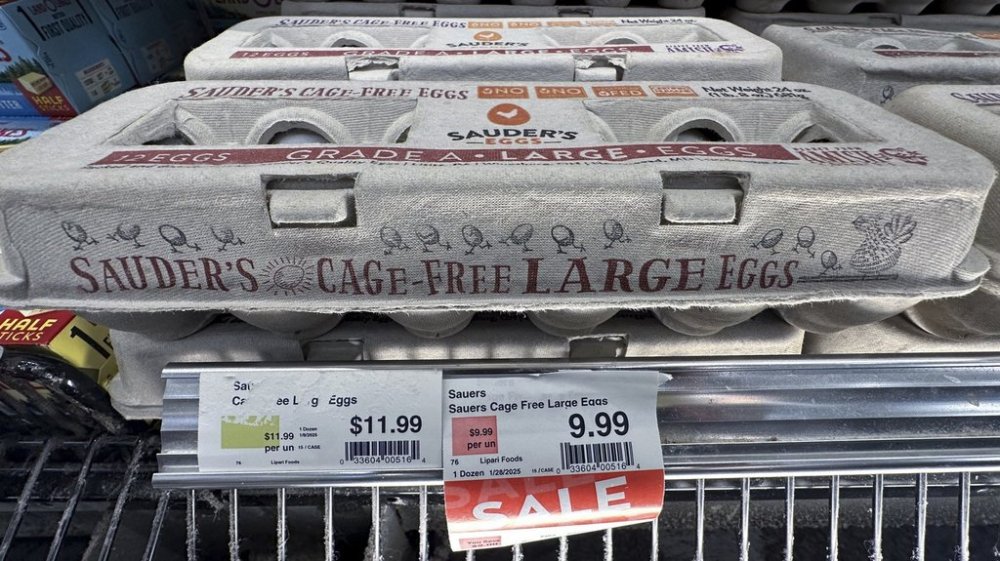
Advocacy groups, Democratic lawmakers and a Federal Trade Commission member are calling for a government investigation after egg prices spiked to a record average of $4.95 per dozen this month. The Trump administration did unveil a plan this week to combat bird flu, but how much that might ease egg prices — a key driver of inflation — remains to be seen.
“Donald Trump promised to lower food prices on ‘Day One’, but with egg prices skyrocketing out of control, he fired the workers charged with containing bird flu. Working families need relief now,” Sen. Elizabeth Warren said in a statement.
What’s behind the record egg prices?
The industry, and most experts, squarely blame bird flu. More than 166 million birds have been slaughtered to contain the virus. Some 30 million egg layers have been wiped out just since January, significantly disrupting egg supplies. The Department of Agriculture’s longstanding policy has been to kill entire flocks anytime the virus is found on a farm.
As a result, the number of egg layers has dropped nationwide by about 12% from before the outbreak to 292 million birds, according to a Feb. 1 USDA estimate, but another 11 million egg layers have been killed since then, so it’s likely worse. When prices spiked to $4.82 two years ago and prompted initial calls for price gouging probes, the flock was above 300 million.
“This has nothing to do with anything other than bird flu. And I think to suggest anything else is a misreading of the facts and the reality,” American Egg Board President Emily Metz said.
“Our farmers are in the fight of their lives, period, full stop. And they’re doing everything they can to keep these birds safe,” Metz said. “This is a supply challenge. Due to bird flu. Nothing else.”
Farm Action suspects monopolistic behavior. The group that lobbies on behalf of smaller farmers, consumers and rural communities notes that egg production is only down about 4% from last year and some 7.57 billion table eggs were produced last month, yet some consumers are still finding egg shelves empty at their local grocery stores.
“Dominant egg corporations are blaming avian flu for the price hikes that we’re seeing. But while the egg supply has fallen only slightly, these companies profits have soared,” said Angela Huffman, Farm Action’s president. The Justice Department acknowledged receiving the group’s letter calling for an investigation but declined to comment on it.
The fact that a jury ruled in 2023 that major egg producers used various means to limit the domestic supply of eggs to increase the price of products during the 2000s only adds to the doubts about their motives now.
What do the numbers show?
Retail egg prices had generally remained below $2 per dozen for years before this outbreak began. Prices have more than doubled since then, boosting profits for egg producers even as they deal with soaring costs.
Most of the dominant producers are privately held companies and don’t release their results. But the biggest, Cal-Maine Foods, which supplies about 20% of the nation’s eggs, is public, and its profits increased dramatically. Cal-Maine reported a $219 million profit in the most recent quarter when its eggs sold for an average of $2.74 per dozen, up from just $1.2 million in the quarter just before this outbreak began in early 2022 when its eggs were selling for $1.37 per dozen.
Sherman Miller, Cal-Maine’s president and CEO, said in reporting the numbers that higher market prices “have continued to rise this fiscal year as supply levels of shell eggs have been restricted due to recent outbreaks of highly pathogenic avian influenza.”
But he said Cal-Maine also sold significantly more eggs — some 330 million dozens, up from 288 million the year before — in the quarter because demand is so strong and Cal-Maine has made a number of acquisitions. Cal-Maine also suffered few outbreaks on its farms, outside of a couple facilities in Kansas and Texas. The Mississippi-based company didn’t respond to calls from The Associated Press.
What about production costs?
Economists and analysts say the record egg prices aren’t a sure sign of something nefarious, and short-term profits might only last until farms get hit. Once a flock is slaughtered, it can take as long as a year to clean a farm and raise new birds to egg-laying age. The USDA pays farmers for every bird killed, but it doesn’t cover all the costs for farmers as they go without income.
“The consumer, I think, will probably feel like they’re getting the rough end of the stick. But I guarantee you, the farmers that are having to depopulate the barns, they’re having a rougher time,” CoBank analyst Brian Earnest said.
Inflation in the costs of feed and fuel and labor have contributed to rising egg prices, and farmers have been investing in biosecurity measures to help keep the virus away. So production costs also appear to be at an all-time high, according to the U.S. Bureau of Labor Statistics’ producer price index.
“This isn’t a case where they’re taking the price up to gouge the market. It is the price is going up through auction at wholesale. And they’re benefiting from higher prices because supplies are tight,” University of Arkansas agricultural economist Jada Thompson said.