

Trump nominee to lead National Institutes of Health questioned on funding cuts, vaccines
Advertisement
Read this article for free:
or
Already have an account? Log in here »
To continue reading, please subscribe:
Monthly Digital Subscription
$1 per week for 24 weeks*
- Enjoy unlimited reading on winnipegfreepress.com
- Read the E-Edition, our digital replica newspaper
- Access News Break, our award-winning app
- Play interactive puzzles
*Billed as $4.00 plus GST every four weeks. After 24 weeks, price increases to the regular rate of $19.95 plus GST every four weeks. Offer available to new and qualified returning subscribers only. Cancel any time.
Monthly Digital Subscription
$4.99/week*
- Enjoy unlimited reading on winnipegfreepress.com
- Read the E-Edition, our digital replica newspaper
- Access News Break, our award-winning app
- Play interactive puzzles
*Billed as $19.95 plus GST every four weeks. Cancel any time.
To continue reading, please subscribe:
Add Free Press access to your Brandon Sun subscription for only an additional
$1 for the first 4 weeks*
*Your next subscription payment will increase by $1.00 and you will be charged $16.99 plus GST for four weeks. After four weeks, your payment will increase to $23.99 plus GST every four weeks.
Read unlimited articles for free today:
or
Already have an account? Log in here »
Hey there, time traveller!
This article was published 05/03/2025 (389 days ago), so information in it may no longer be current.
WASHINGTON (AP) — A health economist who once famously clashed with officials at the National Institutes of Health and now is the nominee to lead the agency faced questions from senators from both parties Wednesday about drastic funding cuts and research priorities.
Dr. Jay Bhattacharya, a Stanford University professor, was an outspoken critic of the government’s COVID-19 shutdowns and vaccine policies. Now he’s poised to become director of the NIH, long called the government’s crown jewel, as it faces mass firings and drastic funding cutbacks.
“I love the NIH but post-pandemic, America’s biomedical sciences are at a crossroads,” Bhattacharya told senators.
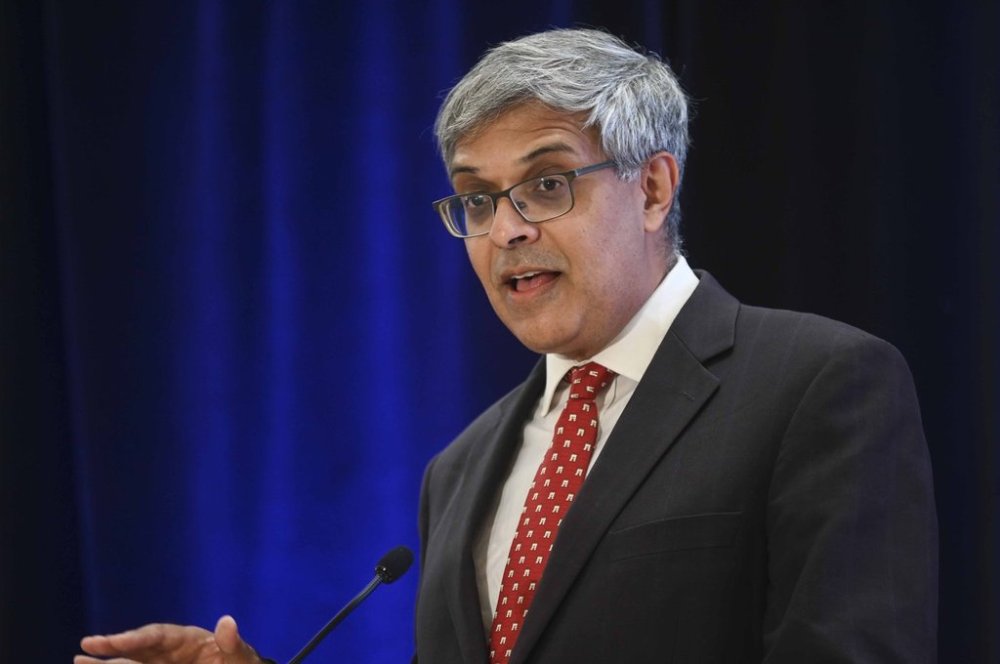
He laid out priorities including a bigger focus on chronic diseases, including diabetes and obesity. But he also said the agency needs to be more open to scientific dissent, saying influential NIH leaders early in the pandemic shut down his own criticisms about responses to COVID-19.
While Republicans warmly welcomed Bhattacharya, Sen. Bill Cassidy of Louisiana, who chairs the Senate health committee, pressed him about vaccine skepticism that is fueling a large measles outbreak that already killed a child in Texas.
Cassidy strenuously urged Bhattacharya not to waste NIH dollars reexamining whether there’s a link between standard childhood vaccines and autism. There’s no link — something that’s already been proven in multiple studies involving thousands of children, the senator stressed.
Bhattacharya called the measles death a tragedy and said he “fully supported” children being vaccinated but added that additional research might convince skeptical parents.
“People still think Elvis is alive,” a frustrated Cassidy responded. He told Bhattacharya any attempt to revisit the debunked issue would deprive funds to study autism’s real cause.
Some Senators, including Sen. Susan Collins, a Republican from Maine, and Tammy Baldwin, a Democrat from Wisconsin, expressed deep frustration that turmoil at the nation’s largest funder of medical research — mass firings and funding cuts and freezes — threatens the development of cures and new treatments for cancer, Alzheimer’s disease and host of other disorders. They pushed Bhattacharya about how he’d reverse those losses, including one set of funding cuts — currently paused by a federal judge — that they said is forbidden by a congressional spending law.
Bhattacharya said he’d had no part in those cuts and if confirmed as NIH’s director, he’d look carefully at the concerns to make sure researchers “have the resources they need.” He also said some of the Trump administration’s cuts are a signal of distrust of science.
Until recently, the $48 billion NIH had strong bipartisan support. NIH scientists conduct cutting-edge research at its 27 institutes specializing in diseases including cancer, chronic illnesses such as heart, lung and kidney disease, aging and Alzheimer’s. Most of the agency’s budget is dispersed to universities, hospitals and other research groups through highly competitive grants to conduct everything from basic research to clinical trials.
NIH-funded research has played a part in the development of most treatments approved in the U.S. in recent years.
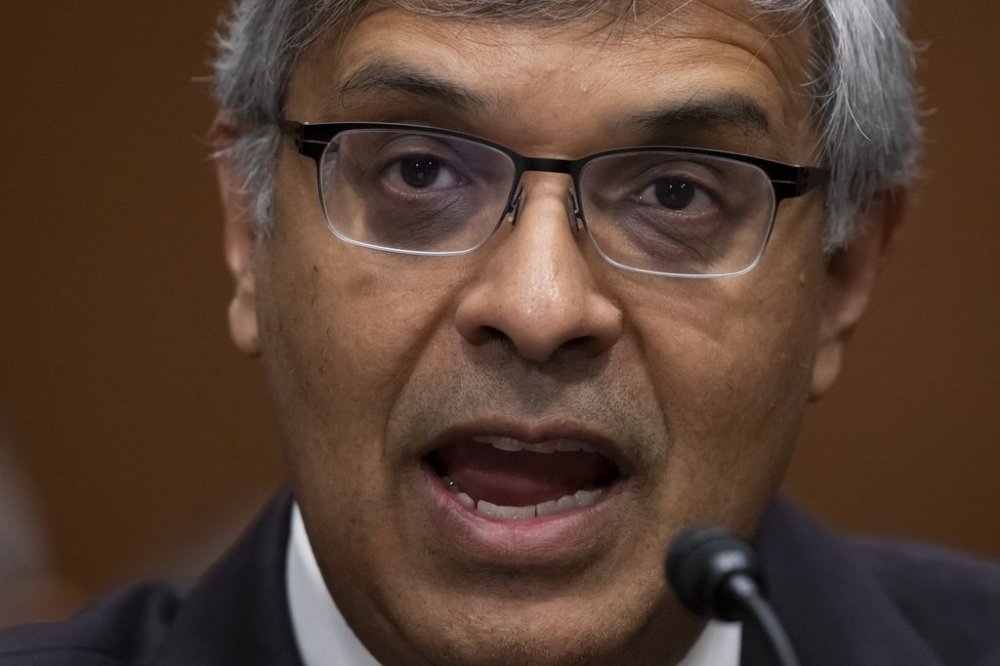
Bhattacharya gained public attention as one of three authors of the Great Barrington Declaration, an October 2020 open letter maintaining that pandemic shutdowns were causing irreparable harm and argued that people at low risk of COVID-19 should live normally while building up immunity through infection.
At the time — before vaccinations had begun – that view was embraced by some in the first Trump administration but was widely denounced by infectious disease experts. Then- NIH director Dr. Francis Collins called it dangerous and “not mainstream science.”
Bhattacharya became a plaintiff in a Supreme Court case, Murthy v. Missouri, arguing he was “unfairly censored” on social media as part of government efforts to combat misinformation. While the case gained national attention, it was ultimately unsuccessful in a 6-3 ruling.
Bhattacharya, who will face a vote of the full Senate at a later date, holds a medical degree but is not a practicing physician. His own research on the economics of health care has been funded by the NIH.
___
The Associated Press Health and Science Department receives support from the Howard Hughes Medical Institute’s Science and Educational Media Group and the Robert Wood Johnson Foundation. The AP is solely responsible for all content.