Uptake of COVID-19 booster shots has plummeted. Here’s why scientists are concerned
Advertisement
Read this article for free:
or
Already have an account? Log in here »
To continue reading, please subscribe:

Digital Subscription
One year of digital access for only $205*
- Enjoy unlimited reading on winnipegfreepress.com
- Read the E-Edition, our digital replica newspaper
- Access News Break, our award-winning app
- Play interactive puzzles
*First annual payment billed as $205.00 + GST for one year. This annual subscription will automatically renew at $233.00 + GST every 52 weeks (10% off the regular annual price of $259.35). Offer available to new and qualified returning subscribers only. Cancel any time.
To continue reading, please subscribe:
Add Free Press access to your Brandon Sun subscription for only an additional
$1 for the first 4 weeks*
- Enjoy unlimited reading on winnipegfreepress.com
- Read the E-Edition, our digital replica newspaper
- Access News Break, our award-winning app
- Play interactive puzzles
*Your next Brandon Sun subscription payment will increase by $1.00 and you will be charged $17.95 plus GST for four weeks. After four weeks, your payment will increase to $24.95 plus GST every four weeks.
Read unlimited articles for free today:
or
Already have an account? Log in here »
Hey there, time traveller!
This article was published 08/03/2025 (583 days ago), so information in it may no longer be current.
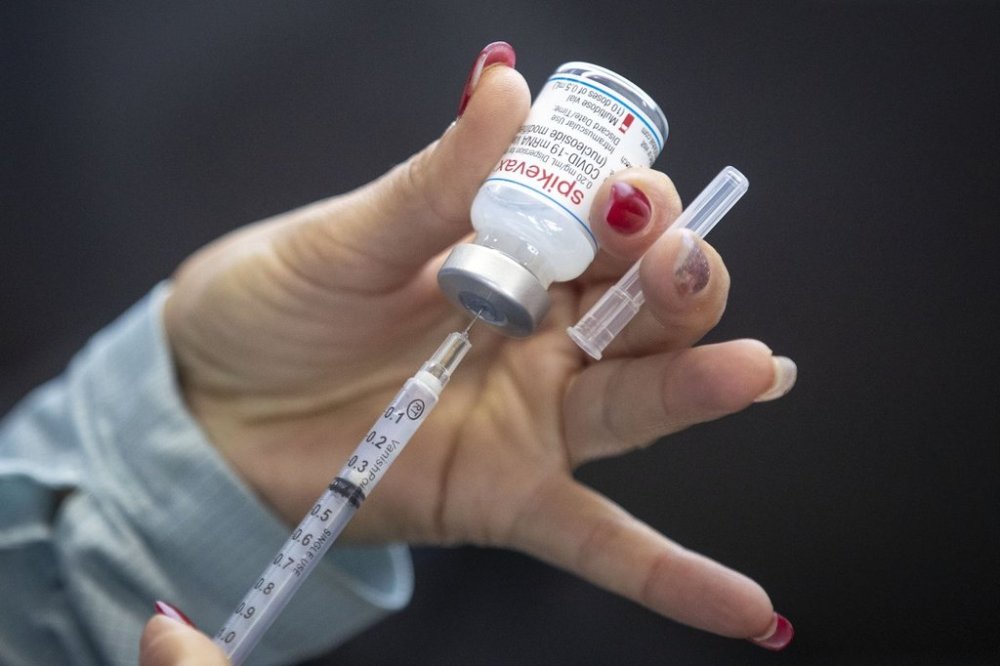
TORONTO – Infectious disease experts are urging seniors to get the latest COVID-19 booster shot as uptake plunges five years after the coronavirus pandemic struck.
“We see that the protection is needed most for those who are at highest risk of COVID-19 severe disease,” said Matthew Tunis, executive secretary for the National Advisory Committee on Immunization (NACI).
For most others, it’s not as urgent.
Tunis, a microbiology and immunology specialist, noted that thanks to high rates of early vaccinations, hybrid immunity is so prevalent in Canada that much of the population is well-protected against serious illness.
NACI issued COVID-19 guidance in January to that effect, and it’s meant to stand through summer 2026, barring the emergence of any variants that cause severe illness in the broader population.
Unlike influenza, COVID-19 has not settled into a seasonal pattern and is present year-round, Tunis said.
For that reason, along with the fact that immunity starts to wane about six months after getting a COVID-19 shot, NACI strongly recommends two doses per year of the most up-to-date vaccine for the most vulnerable. That includes seniors who are 80 years and older, residents of long-term care homes, and adults and children six months and older who are moderately to severely immunocompromised due to an underlying condition or medical treatment that suppresses the immune system.
NACI also strongly recommends one shot per year for people between 65 and 79 years old, pregnant people, health-care workers, racialized groups and those with underlying medical conditions that could make them sicker if they get a COVID infection.
As for everyone else, individuals can decide whether they need a booster, ideally in consultation with a health-care provider, Tunis said.
Even though they may still get the virus, this group should have enough immunity from earlier vaccinations, infections or both to protect them from serious illness, infectious disease researchers say.
According to the Public Health Agency of Canada, more than 80 per cent of Canadians have had their primary two-dose series of COVID-19 vaccine. Uptake among seniors was very high, with more than 95 per cent of people 60 and over getting at least one dose.
As the virus that causes COVID-19 mutated into variants that could evade the immune system — most notably Delta and Omicron — manufacturers have updated the vaccine for booster shots.
But public enthusiasm for boosters has waned in recent years. The Public Health Agency’s most recent data from June 2024 shows only 18 per cent of the overall population got an updated shot for the Omicron XBB.1.5 subvariant.
Seniors have continued to get booster shots at much higher rates than the rest of the population but their uptake is also on the decline. Only about 62 per cent of people 80 and older got the XBB.1.5 shot — leaving an unacceptably high number of older seniors underprotected, experts say.
“Vaccine uptake among the vulnerable populations is the biggest issue,” said Angela Rasmussen, a virologist at the University of Saskatchewan’s Vaccine and Infectious Disease Organization (VIDO).
“They’re (designated) vulnerable for a reason. The evidence shows that they can get really sick and potentially die if they get COVID if they’re not up-to-date on their boosters,” she said.
PHAC did not have uptake data for the most up-to-date booster, targeted to the Omicron KP.2 subvariant, available since last fall. Experts fear the uptake among seniors is just as low.
“As people get older … their immune system sometimes needs a little bit more of a kick, like to get going. So those boosters can be really, really important,” Rasmussen said.
Up to this point, the federal government has paid for COVID-19 boosters. This year, that responsibility shifts to the provinces and territories.
Although they will still work with the federal government to get the best price through bulk procurement, each province and territory will decide how much of the latest booster to order and who will be eligible for the shots.
The Canadian Press reached out to all provinces and territories to ask what their COVID-19 vaccination rollout would be in the coming year. Many said they were reviewing NACI’s guidelines and did not yet have their fall plan — including whether or not they would fund the shot for people outside of the priority groups.
The exception was the Northwest Territories, which said in an emailed statement it would not turn anyone away.
“Targeted campaigns are not meant to exclude individuals but to help clients, families and communities quickly identify who is at most risk and make informed decisions,” a spokesperson said.
Experts say it’s important for the public to understand what the COVID-19 vaccine does — and what it doesn’t.
In the past, people commonly believed vaccines were only effective if they prevent infection, like the measles vaccine, which ensures the virus can’t replicate in the body. If enough people are vaccinated, that results in the most robust form of herd immunity, said Rasmussen.
But it’s very difficult to make a vaccine that does that for viruses that mutate, including COVID-19 and influenza, she said. That’s why the measure of success for the COVID-19 vaccine is its high effectiveness at preventing people from becoming seriously ill, being hospitalized or dying.
“Having a vaccine that is really good at preventing you from even getting infected is wonderful,” said Matthew Miller, director of the Michael G. DeGroote Institute for Infectious Disease Research at McMaster University in Hamilton.
“But I would argue that it’s even more important that a vaccine prevents severe manifestations because, you know, we can all kind of deal with common cold-like symptoms,” he said.

Tunis, of NACI, said the advisory committee continues to monitor COVID-19 to determine if it needs to change its guidance.
“We’ve seen strain updates roughly every year,” he said.
“It’s entirely possible that the virus changes again and the hybrid immunity that’s been established needs to actually be propped up with vaccination for younger populations.”
This report by The Canadian Press was first published March 8, 2025.
Canadian Press health coverage receives support through a partnership with the Canadian Medical Association. CP is solely responsible for this content.
Advertisement Advertise With Us
Advertisement Advertise With Us