

Transfer of baby eel quota to First Nations was unfair, says federal judge
Advertisement
Read this article for free:
or
Already have an account? Log in here »
To continue reading, please subscribe:
Monthly Digital Subscription
$1 per week for 24 weeks*
- Enjoy unlimited reading on winnipegfreepress.com
- Read the E-Edition, our digital replica newspaper
- Access News Break, our award-winning app
- Play interactive puzzles
*Billed as $4.00 plus GST every four weeks. After 24 weeks, price increases to the regular rate of $19.95 plus GST every four weeks. Offer available to new and qualified returning subscribers only. Cancel any time.
Monthly Digital Subscription
$4.99/week*
- Enjoy unlimited reading on winnipegfreepress.com
- Read the E-Edition, our digital replica newspaper
- Access News Break, our award-winning app
- Play interactive puzzles
*Billed as $19.95 plus GST every four weeks. Cancel any time.
To continue reading, please subscribe:
Add Free Press access to your Brandon Sun subscription for only an additional
$1 for the first 4 weeks*
*Your next subscription payment will increase by $1.00 and you will be charged $16.99 plus GST for four weeks. After four weeks, your payment will increase to $23.99 plus GST every four weeks.
Read unlimited articles for free today:
or
Already have an account? Log in here »
Hey there, time traveller!
This article was published 02/04/2025 (360 days ago), so information in it may no longer be current.
HALIFAX – A Federal Court judge has ruled that the Fisheries Department failed to properly consult commercial baby eel fishers when it transferred about 14 per cent of their quota to First Nations.
The March 28 ruling from Justice Paul Favel says the quota transfer for the 2023 season away from Shelburne Elver Ltd. and South Shore Trading Co. Ltd. was “procedurally unfair.” The companies had sought a judicial review of the department’s quota decision.
The lucrative fishery in Maritime rivers has been the source of tension as prices in recent years have ranged between $3,000 and $5,000 per kilogram for the tiny eels — called elvers — which are shipped to Asia.
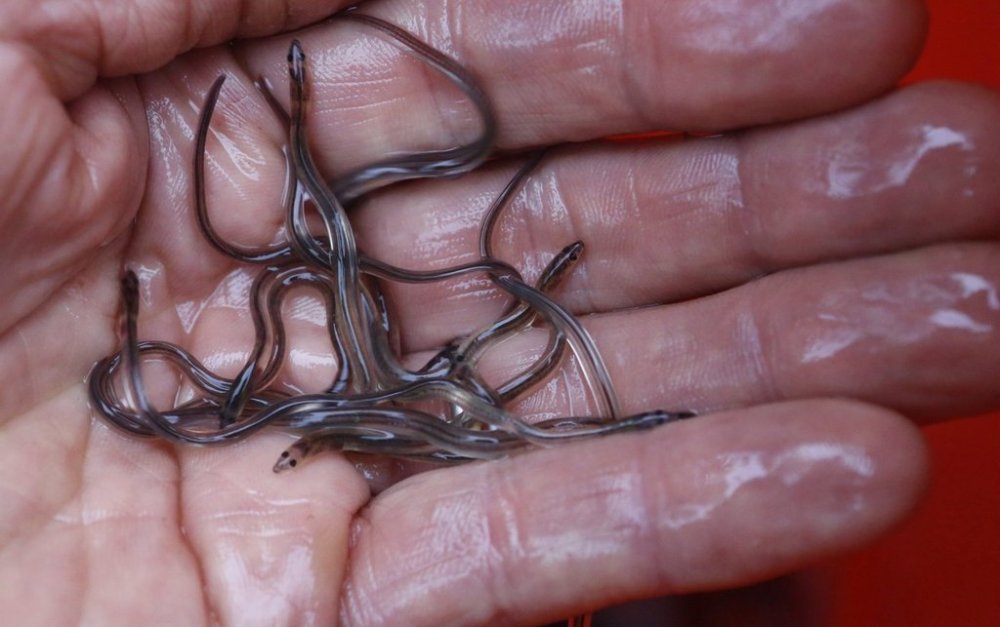
Favel said the federal Fisheries Department didn’t engage enough with the two commercial licence holders before it cut their quotas for the 2023 elver season without any compensation.
“The lack of engagement in advance of the 2023 season was procedurally unfair. The lack of engagement did not meet the level of a bona fide (good faith) attempt to engage,” wrote Favel.
He also concluded the department didn’t live up to assurances given to the commercial fishers in 2022 that they would be consulted well before the 2023 season about the quota reductions.
The judge also noted that submissions from licence holders opposing the quota cuts did “not appear to be properly summarized in the federal Fisheries Department memoranda, nor effectively communicated to the minister.”
Brian Giroux, the president of Shelburne Elver Ltd., said in an interview Wednesday that the co-operative with 38 employees is considering a legal action to seek damages due to the minister’s decision to reduce his group’s catch.
“I’m glad that a judge finally agreed that our treatment was shabby. They didn’t give us enough time; they didn’t give us enough information. It’s a vindication that the department has been systematically beating us up over the years,” said Giroux.
“You kind of depend on the judiciary from time to time to put some limits on this otherwise dysfunctional system.”
After the 2023 quota transfer, the 2024 fishing season was cancelled because of violence on the rivers. In 2025, the government increased the Indigenous share to 50 per cent of the 9,960-kilogram total allowable catch.
Shelburne’s quota did not fall as much in 2025 as some of the other eight commercial licence holders, as Ottawa said it wanted to provide co-operatives with a larger share of the catch.

However, Giroux said his group’s catch limit of 1,035 kilograms is still 14 per cent lower than the 1,200 kilograms of elvers it was allocated before 2022.
Mitchell Feigenbaum, president of South Shore Trading Co. Ltd., said in an emailed statement that his company also intends to seek damages for the Fisheries Department’s reductions of its elver quota.
“We are pleased to find support for our positions in Justice Pavel’s decision,” wrote Feigenbaum.
Feigenbaum says his company’s quota has been sliced from 1,200 kilograms to 509 kilograms, and he is employing 15 people rather than 30 due to the cuts.
This report by The Canadian Press was first published April 2, 2025.