Whales migrations changed as seas warmed. But can they keep pace with climate change?
Advertisement
Read this article for free:
or
Already have an account? Log in here »
To continue reading, please subscribe:

Digital Subscription
One year of digital access for only $205*
- Enjoy unlimited reading on winnipegfreepress.com
- Read the E-Edition, our digital replica newspaper
- Access News Break, our award-winning app
- Play interactive puzzles
*First annual payment billed as $205.00 + GST for one year. This annual subscription will automatically renew at $233.00 + GST every 52 weeks (10% off the regular annual price of $259.35). Offer available to new and qualified returning subscribers only. Cancel any time.
To continue reading, please subscribe:
Add Free Press access to your Brandon Sun subscription for only an additional
$1 for the first 4 weeks*
- Enjoy unlimited reading on winnipegfreepress.com
- Read the E-Edition, our digital replica newspaper
- Access News Break, our award-winning app
- Play interactive puzzles
*Your next Brandon Sun subscription payment will increase by $1.00 and you will be charged $17.95 plus GST for four weeks. After four weeks, your payment will increase to $24.95 plus GST every four weeks.
Read unlimited articles for free today:
or
Already have an account? Log in here »
Hey there, time traveller!
This article was published 03/04/2025 (487 days ago), so information in it may no longer be current.
The Canadian lead author of a new study on the migration of humpback whales is sounding the alarm on how climate change could spell trouble for the species.
The report published in the journal Scientific Reports says tracking of 42 whales tagged off the Central and South American coasts showed the animals use long-term memory and sense environmental changes such as sea temperature to determine when to begin their 10,000-kilometre migration to Antarctic feeding grounds every year.
McGill University biologist and associate professor Virginie Millien says ocean warming has caused the whales to adjust their migration in order to catch the peak of the seasonal “bloom” of krill off the Antarctic coast.
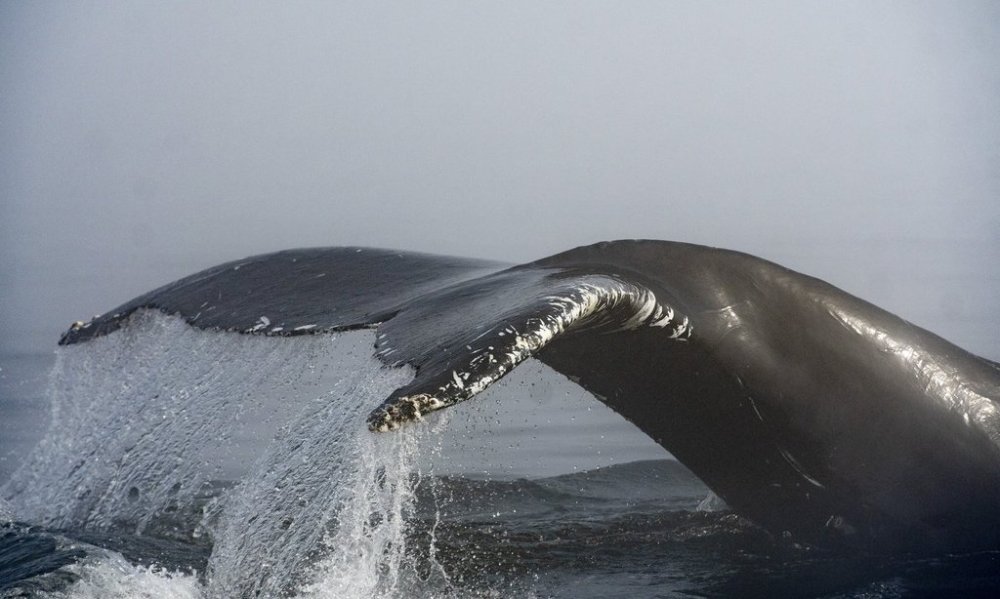
Millien says researchers worry that while the whales appear to be adjusting their timing as the sea gets warmer, the pace of climate change may become too fast for the species to “keep up.”
She says warming waters may initially hamper the whales’ ability to determine when to start migrating, then lead to more dramatic shifts such as altering migration patterns and diet — possibly affecting long-term prospects for the whales and other species.
Millien said she and fellow researchers believed there should be better protection of whale migration corridors, and dangers to whales could rise as shifting migration paths intersect shipping lanes in coastal waters.
“There’s a real risk here of entanglement with fishing equipment but also just being struck by a boat,” Millien says. “We’ve had examples even here in the St. Lawrence in Montreal a couple of years ago.”
In May 2024, a critically endangered North Atlantic right whale was spotted entangled in fishing nets in the Gulf of St. Lawrence near New Brunswick’s Acadian Peninsula.
Then, a month later, another entangled right whale was spotted off the New Brunswick coast, and crews worked for weeks before the animal was disentangled in the St. Lawrence estuary near Rimouski, Que.
An environmental group at the time criticized the Canadian and U.S. governments for lacking regulations that would prevent such entanglements in North American coastal waters.
The study covered conditions from 2009 to 2016. While the researchers didn’t find the whales experienced distress from changing ocean temperatures then, Millien says the team wants to see how the animals have been doing since the acceleration of warming.
She says the change in migration patterns is evidence that the milder pace of climate change before 2016 had already had a measurable impact on the species.
“What we are saying really was, ‘Yes it’s great, they are adapting, they can do it. But we don’t know for how long,'” Millien says.
“We know animals over the whole history of Animalia, they’re able to adapt to their environment and evolve. But the issue with the current climate change is the pace at which it’s happening.”
This report by The Canadian Press was first published April 2, 2025.