Sellers of secondhand clothes prepare for tariffs to give their businesses a boost
Advertisement
Read this article for free:
or
Already have an account? Log in here »
To continue reading, please subscribe:
Digital Subscription
One year of digital access for only $1.44 a week*
- Enjoy unlimited reading on winnipegfreepress.com
- Read the E-Edition, our digital replica newspaper
- Access News Break, our award-winning app
- Play interactive puzzles
*Billed as $5.77 plus GST every four weeks. After 52 weeks, price increases to the regular rate of $19.95 plus GST every four weeks. Offer available to new and qualified returning subscribers only. Cancel any time.
To continue reading, please subscribe:
Add Free Press access to your Brandon Sun subscription for only an additional
$1 for the first 4 weeks*
- Enjoy unlimited reading on winnipegfreepress.com
- Read the E-Edition, our digital replica newspaper
- Access News Break, our award-winning app
- Play interactive puzzles
*Your next Brandon Sun subscription payment will increase by $1.00 and you will be charged $17.95 plus GST for four weeks. After four weeks, your payment will increase to $24.95 plus GST every four weeks.
Read unlimited articles for free today:
or
Already have an account? Log in here »
Hey there, time traveller!
This article was published 20/04/2025 (548 days ago), so information in it may no longer be current.
NEW YORK (AP) — Stores selling secondhand clothes, shoes and accessories are poised to benefit from President Donald Trump’strade war even as businesses the world over race to avert potential damage, according to industry experts.
American styles carry international influence, but nearly all of the clothing sold domestically is made elsewhere. The Yale University Budget Lab last week estimated short-term consumer price increases of 65% for clothes and 87% for leather goods, noting U.S. tariffs “disproportionately affect” those goods.
Such price hikes may drive cost-conscious shoppers to online resale sites, consignment boutiques and thrift stores in search of bargains or a way to turn their wardrobes into cash. Used items cost less than their new equivalents and only would be subject to tariffs if they come from outside the country.
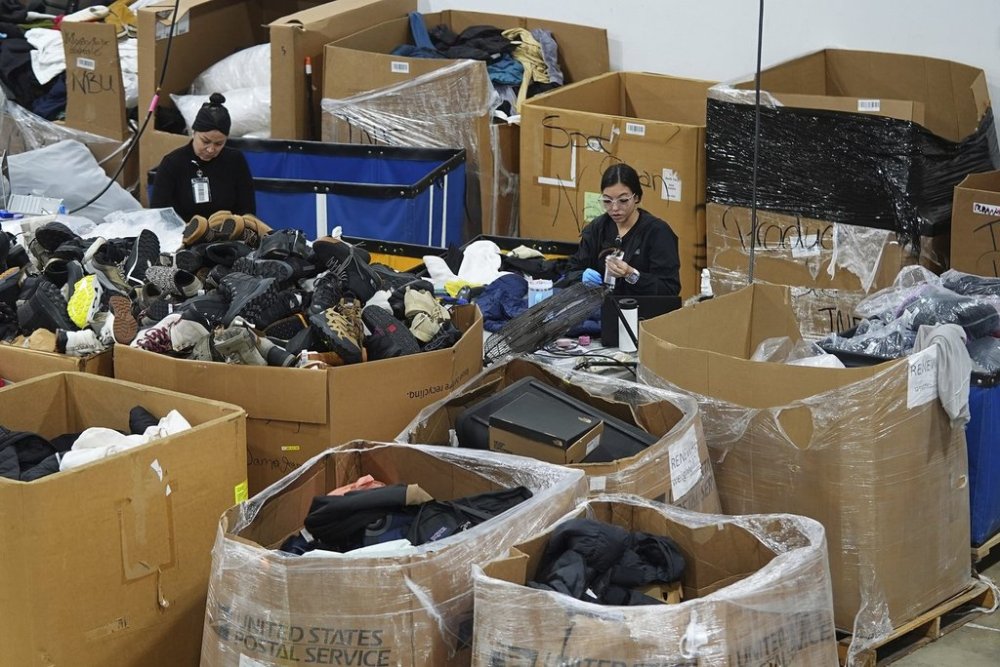
“I think resale is going to grow in a market that is declining,” said Kristen Classi-Zummo, an apparel industry analyst at market research firm Circana. “What I think is going to continue to win in this chaotic environment are channels that bring value.”
The outlook for pre-owned fashion nevertheless comes with unknowns, including whether the president’s tariffs will stay long enough to pinch consumers and change their behavior. It’s also unclear whether secondhand purveyors will increase their own prices, either to mirror the overall market or in response to shopper demand.
A new audience courtesy of sticker shock
Jan Genovese, a retired fashion executive, sells her unwanted designer clothes through customer-to-customer marketplaces like Mercari. If tariffs cause retail prices to rise, she would consider high-end secondhand sites.
“Until I see it and really have that sticker shock, I can’t say exclusively that I’ll be pushed into another direction,” Genovese said. “I think that the tariff part of it is that you definitely rethink things. And maybe I will start looking at alternative venues.”
The secondhand clothing market already was flourishing before the specter of tariffs bedeviled the U.S. fashion industry. Management consulting firm McKinsey and Co. predicted after the COVID-19 pandemic that global revenue from pre-owned fashion would grow 11 times faster than retail apparel sales by this year as shoppers looked to save money or spend it in a more environmentally conscious way.
While millennials and members of Generation Z were known as the primary buyers of used clothing, data from market research firm Sensor Tower shows the audience may be expanding.
The number of mobile app downloads for nine resale marketplaces the firm tracks — eBay, OfferUp, Poshmark, Mercari, Craigslist, Depop, ThredUp, TheRealReal and Vinted — increased by 3% between January and the end of March, the first quarterly gain in three years, Sensor Tower said.
The firm estimates downloads of the apps for eBay, Depop, ThredUp and The RealReal also surged compared to a year earlier for the week of March 31, which was when Trump unveiled since-paused punitive tariffs on dozens of countries.
Circana’s Classi-Zummo said that while customers used to seek out collectible or unusual vintage pieces to supplement their wardrobes, she has noticed more shoppers turning to secondhand sites to replace regular fashion items.
“It’s still a cheaper option” than buying new, even though retailers offer discounts, she said.
A tariff-free gold mine lurking in closets and warehouses
Poshmark, a digital platform where users buy and sell pre-owned clothing, has yet to see sales pick up under the tariff schedule Trump unveiled but is prepared to capitalize on the moment, CEO Manish Chandra said.
Companies operating e-commerce marketplaces upgrade their technology to make it easier to find items. A visual search tool and other improvements to the Poshmark experience will “pay long dividends in terms of disruption that happens in the market” from the tariffs, Chandra said.
Archive, a San Francisco-based technology company that builds and manages online and in-store resale programs for brands including Dr. Martens, The North Face and Lululemon, has noticed clothing labels expressing more urgency to team up, CEO Emily Gittins said.
“Tapping into all of the inventory that is already sitting in the U.S., either in people’s closets or in warehouses not being used,” offers a revenue source while brands limit or suspend orders from foreign manufacturers, she said.
“There’s a huge amount of uncertainty,” Gittins said. “Everyone believes that this is going to be hugely damaging to consumer goods brands that sell in the U.S. So resale is basically where everyone’s head is going.”
Stock analysts have predicted off-price retailers like TJ Maxx and Burlington Stores will weather tariffs more easily than regular apparel chains and department stores because they carry leftover merchandise in the U.S.
Priced out of the previously owned market
Still, resale vendors aren’t immune from tariff-induced upheavals, said Rachel Kibbe, founder and CEO of Circular Services Group, a firm that advises brands and retailers on reducing the fashion industry’s environmental impact.
U.S. sellers that import secondhand inventory from European Union countries would have to pay a 20% duty if Trump moves forward with instituting “reciprocal” tariffs on most trading partners and eliminates an import tax exception for parcels worth less than $800, Kibbe said.
A circular fashion coalition she leads is seeking a tariff exemption for used and recycled goods that will be offered for resale, Kibbe said. Trump already ended the duty-free provision for low-value parcels from China, a move that may benefit sellers of secondhand clothing by making low-priced Chinese fashions pricier, she said.
James Reinhart, co-founder and CEO of the online consignment marketplace ThredUp, said the removal of the “de minimis” provision and the 145% tariff Trump put on products made in China would benefit businesses like his. He doubts creating resale channels would make a big difference for individual brands.
“Brands will explore this and they may do more, but I don’t see them massively changing their operations,” Reinhart said. “I think they’re going to be figuring out how to survive. And I don’t think resale helps you survive.”
Rebag, an online marketplace and retail chain that sells used designer handbags priced from $500 to tens of thousands of dollars, expects tariffs to help drive new customers and plans to open more physical stores, CEO Charles Gorra said.
Gorra said the company would analyze prices for new luxury goods and adjust what Rebag charges accordingly. The two historically rose in tandem, but Rebag could not match Chanel’s 10% price increase last year because of lower resale demand, Gorra said.
“That has nothing to do with the tariffs,” he said. “Consumers are feeling priced out.”
Norah Brotman, 22, a senior at the University of Minnesota, buys most of her own clothes on eBay. She also thrifts fashions from the 1990s and early 2000s at Goodwill stores and resells them on Depop.
If tariffs upend the economics of fast fashion and discourage mindless consumption, Brotman would count that as a plus.
“I would love if this would steer people in a different direction,” she said.