

N.W.T. closely monitoring measles vaccine supply as top docs in North face down virus
Advertisement
Read this article for free:
or
Already have an account? Log in here »
To continue reading, please subscribe:
Monthly Digital Subscription
$1 per week for 24 weeks*
- Enjoy unlimited reading on winnipegfreepress.com
- Read the E-Edition, our digital replica newspaper
- Access News Break, our award-winning app
- Play interactive puzzles
*Billed as $4.00 plus GST every four weeks. After 24 weeks, price increases to the regular rate of $19.95 plus GST every four weeks. Offer available to new and qualified returning subscribers only. Cancel any time.
Monthly Digital Subscription
$4.99/week*
- Enjoy unlimited reading on winnipegfreepress.com
- Read the E-Edition, our digital replica newspaper
- Access News Break, our award-winning app
- Play interactive puzzles
*Billed as $19.95 plus GST every four weeks. Cancel any time.
To continue reading, please subscribe:
Add Free Press access to your Brandon Sun subscription for only an additional
$1 for the first 4 weeks*
*Your next subscription payment will increase by $1.00 and you will be charged $16.99 plus GST for four weeks. After four weeks, your payment will increase to $23.99 plus GST every four weeks.
Read unlimited articles for free today:
or
Already have an account? Log in here »
Hey there, time traveller!
This article was published 13/05/2025 (317 days ago), so information in it may no longer be current.
Health officials in Northwest Territories are closely monitoring measles vaccine supply, while those in Nunavut work to boost immunization in low-uptake areas amid concern the virus could spread in Canada’s North.
Dr. Kami Kandola, chief public health officer of the Northwest Territories, says most of her region’s vaccine supply was used in response to a recent multi-day exposure in Yellowknife tied to the region’s first infection, showing just how much one case can “wreak havoc” on a remote area with limited resources.
She says more shots should arrive later this week, but in the meantime, she’s asking people to check their medical records to ensure they aren’t being vaccinated unnecessarily.
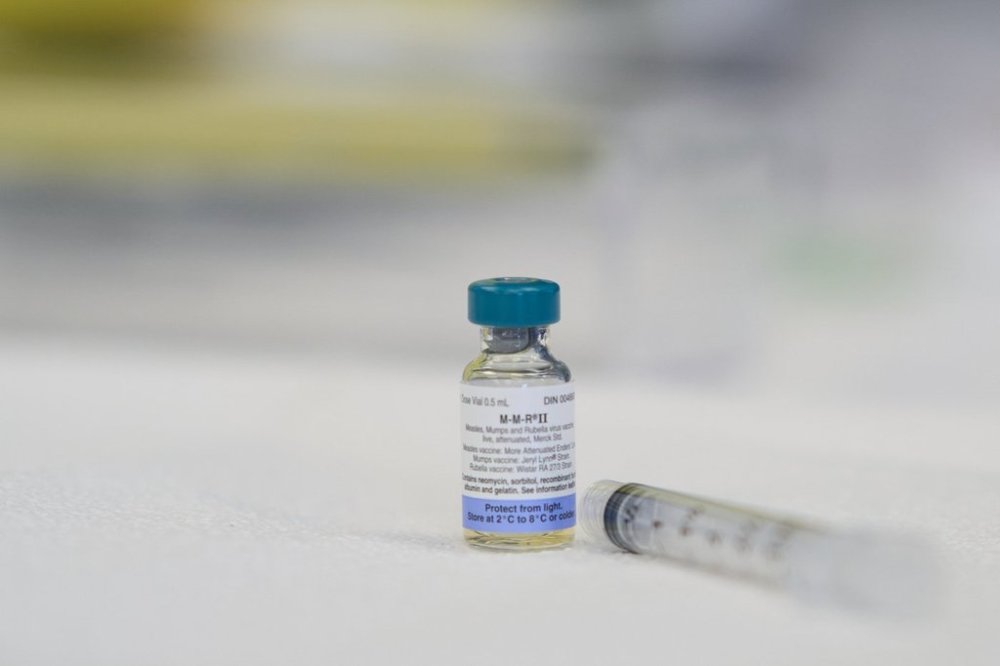
N.W.T.’s health department says there is enough supply for those who were exposed, and to maintain routine vaccinations.
Last week the department warned of potential spread related to an unvaccinated person in Yellowknife who got measles while travelling within the country.
Canada’s North is one of the few parts of the country that hasn’t experienced a measles outbreak this year. Ontario has seen 1,400 infections since October, and Alberta has reported more than 360.
Kandola notes the case in Yellowknife was linked to a domestic flight, a frequent means of transportation in the North.
“If someone catches the fire on the plane and they come to a jurisdiction and there’s dry wood there, you can easily see how quickly it spreads. That’s how measles can be. It’s highly infectious, and if you don’t have enough people vaccinated, then you can have a rapid dissemination among risk groups,” says Kandola.
Vaccination rates among two-year-olds in Northwest Territories dropped to 83 per cent as of May 1, down from 90 per cent in 2019. But coverage is as low as about 70 per cent and as high as 88 per cent in some areas, says Kandola. The target for herd immunity is 95 per cent.
Kandola said lower vaccination rates tend to be in regions with the highest health staff shortages and vaccine hesitancy. Most communities aside from cities like Yellowknife and Fort Smith don’t have their own doctors or even nurses, who must fly in.
“That’s the reality of living in the North,” she says.
In Nunavut, there are some places in Nunavut where the vaccination rate is as low as 50 per cent, says Dr. Ekua Agyemang, the territory’s chief public health officer. It would be a “serious situation” if measles entered one of those communities, especially if many of the unvaccinated are children.
“There are communities where there’s a high level of mistrust of the government health-care system, which makes it difficult for people to take up vaccination,” she says, referring to the enduring trauma of colonization.
However, there’s a wide range of measles vaccine coverage in Nunavut, says Agyemang noting it can be as high as 95 per cent in some areas.
To combat vaccine hesitancy, she has asked religious leaders to spread the message. Nunavut also holds draws for Ski-Doos and bicycles that people can enter if they get vaccinated.
She says the province’s supply of measles shots is adequate, and so does Yukon’s Chief Medical Officer of Health Dr. Sudit Ranade.

“The challenge becomes if there’s a draw on the same system from multiple places at the same time, right?” says Ranade.
“We get it from the same supply chain as everyone else does. And so if there’s a draw on that from lots of places at the same time, it could make it harder for us to meet the demand later.”
In the Yukon, Ranade says he’s been running through the action plan to trace contacts and boost immunizations if an outbreak occurs.
“If we were to get lots and lots of cases and they needed lots and lots of care, it would exacerbate some situations that we might already have in terms of our health-care resources,” he says.
That includes a set number of hospital beds for pediatric patients, says Ranade. But he’s aiming to be as prepared as possible in the hopes of controlling the spread before it ever reaches that point.
“We don’t necessarily expect that all of those beds are going to be filled with cases of measles at any given time. And if that happens, then that might actually crowd out our ability to care for other pediatric cases that need it,” says Ranade.
“If you get a sudden volume of people who are sick with something, then your fixed health-care system constraints are going to get overloaded very quickly.”
This report by The Canadian Press was first published May 13, 2025.
Canadian Press health coverage receives support through a partnership with the Canadian Medical Association. CP is solely responsible for this content.