FDA panel is split on updates to COVID shots as questions loom for fall vaccinations
Advertisement
Read this article for free:
or
Already have an account? Log in here »
To continue reading, please subscribe:

Digital Subscription
One year of digital access for only $205*
- Enjoy unlimited reading on winnipegfreepress.com
- Read the E-Edition, our digital replica newspaper
- Access News Break, our award-winning app
- Play interactive puzzles
*First annual payment billed as $205.00 + GST for one year. This annual subscription will automatically renew at $233.00 + GST every 52 weeks (10% off the regular annual price of $259.35). Offer available to new and qualified returning subscribers only. Cancel any time.
To continue reading, please subscribe:
Add Free Press access to your Brandon Sun subscription for only an additional
$1 for the first 4 weeks*
- Enjoy unlimited reading on winnipegfreepress.com
- Read the E-Edition, our digital replica newspaper
- Access News Break, our award-winning app
- Play interactive puzzles
*Your next Brandon Sun subscription payment will increase by $1.00 and you will be charged $17.95 plus GST for four weeks. After four weeks, your payment will increase to $24.95 plus GST every four weeks.
Read unlimited articles for free today:
or
Already have an account? Log in here »
Hey there, time traveller!
This article was published 22/05/2025 (496 days ago), so information in it may no longer be current.
WASHINGTON (AP) — Government advisers were split Thursday on whether drugmakers need to update their COVID-19 vaccines for next season, a decision overshadowed by confusion over a new Trump administration policy that may limit which Americans can get the shots.
The Food and Drug Administration’s outside experts have met annually since the launch of the first COVID-19 vaccines to discuss tweaking their recipes to stay ahead of the virus. The challenge is trying to gauge how the virus might evolve before fall vaccinations begin.
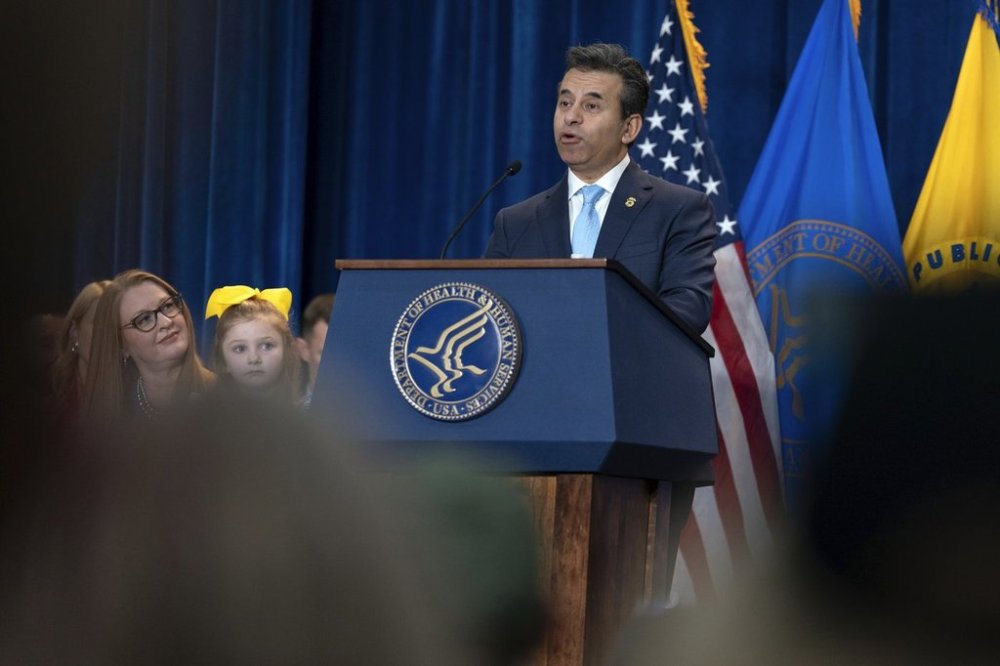
“We all want to make the perfect choice and that’s probably not possible,” FDA’s Jerry Weir told the panel of outside experts.
Some of the panelists voiced support for a switch to a newer coronavirus subtype named LP.8.1. It’s currently the dominant version and part of the same family that circulated last year — known as the JN.1 branch of the virus family tree.
“We cannot predict the future, but it seems like LP.8 would be more likely to provide us better coverage,” said Dr. Eric Rubin, a Harvard infectious disease expert and editor of the New England Journal of Medicine.
Other panelists noted that subtype is such a close relative that last year’s shots seem to offer cross-protection, at least for now but with no guarantee there wouldn’t be a different version circulating by the time a vaccination campaign ramps up in the late summer or early fall. Several advisers noted that people who want to get ahead of a summer surge like the U.S. typically experiences could seek out the current vaccines.
Hanging over the meeting was an FDA announcement earlier this week that upended the prior U.S. policy of recommending annual COVID-19 boosters for all Americans ages 6 months and older. Instead, the FDA said routine vaccine approvals will be limited to seniors and younger people with underlying medical risks, pending new research for healthy adults and children.
While that change has big implications for a fall vaccination campaign, FDA leaders repeatedly sidestepped questions from advisers about whether recommending an updated formula would trigger restrictions outlined in the new policy.
“I don’t have an answer today,” said Weir. “I think a lot of this is still under discussion.”
FDA staffers also wouldn’t confirm whether the advisers would be given a chance to meet about the new standards later.
FDA vaccine chief Dr. Vinay Prasad said in opening the meeting that the agency wants “to give people a little more time to digest” the new policy and is open to feedback from its experts — although apparently not in Thursday’s public forum.
Last fall’s recipe was tailored to the so-called JN.1 family of omicron descendants. The advisory panel voted unanimously that the family still is the right overall target, but left the FDA to decide which specific subtype to choose.
Novavax brewed shots targeting the parent JN.1 variant and said Thursday it was a good choice for this fall as well. Pfizer and Moderna vaccines last year targeted a subtype called KP.2 and company representatives told the FDA meeting that it showed cross-protection, but that they favored an update.
The debate reflected an international difference of opinion on the closely related virus strains. The World Health Organization recently issued guidance that last year’s version remained OK but that vaccine-makers could also choose an update, while the European Medicines Agency preferred that newer LP.8.1 subtype.
While demand for vaccinations has dropped, the Centers for Disease Control and Prevention estimates 30,000 to 50,000 adults have died from COVID-19 since October. The virus continues to cause “enormous burden” on the health care system, CDC’s Dr. Fiona Havers told panelists. Older adults count for most hospitalizations and deaths but COVID-19 also is “a major cause of pediatric hospitalization,” especially in children under 2 — many of whom had no underlying medical problems before their infections.

The strain decision normally isn’t the final word on recommendations about who should be vaccinated.
The CDC’s own advisory panel meets in June to make recommendations about the fall shots. Among its options are keeping universal access or recommending vaccination for high-risk groups but still giving lower-risk people the choice in getting a shot.
CDC staffers presented real-world data Thursday showing that getting a booster last fall offered added protection even in people who had been infected and previously vaccinated. Company studies reached the same conclusion — including one by Moderna that compared medical records of about 900,000 people.
___
The Associated Press Health and Science Department receives support from the Howard Hughes Medical Institute’s Science and Educational Media Group and the Robert Wood Johnson Foundation. The AP is solely responsible for all content.