Wild chickens take over Miami while some embrace roosters as a cultural symbol

Advertisement

Advertise with us

MIAMI (AP) — Flamingos, pelicans, herons and parrots are just a few of the wild birds that call Miami home, but it’s the roosters, hens and baby chicks that have come to rule the roost in recent years.

Read this article for free:


or

Already have an account? Log in here »

To continue reading, please subscribe:

Subscribe and receive a limited-edition Free Press branded hat or tote.

Digital Subscription

One year of digital access for only $205*

  • Enjoy unlimited reading on winnipegfreepress.com
  • Read the E-Edition, our digital replica newspaper
  • Access News Break, our award-winning app
  • Play interactive puzzles

*First annual payment billed as $205.00 + GST for one year. This annual subscription will automatically renew at $233.00 + GST every 52 weeks (10% off the regular annual price of $259.35). Offer available to new and qualified returning subscribers only. Cancel any time.

To continue reading, please subscribe:

Add Free Press access to your Brandon Sun subscription for only an additional

$1 for the first 4 weeks*

  • Enjoy unlimited reading on winnipegfreepress.com
  • Read the E-Edition, our digital replica newspaper
  • Access News Break, our award-winning app
  • Play interactive puzzles
Start now

*Your next Brandon Sun subscription payment will increase by $1.00 and you will be charged $17.95 plus GST for four weeks. After four weeks, your payment will increase to $24.95 plus GST every four weeks.

Hey there, time traveller!
This article was published 25/05/2025 (494 days ago), so information in it may no longer be current.

MIAMI (AP) — Flamingos, pelicans, herons and parrots are just a few of the wild birds that call Miami home, but it’s the roosters, hens and baby chicks that have come to rule the roost in recent years.

Not only found in residential neighborhoods like Little Havana, Little Haiti and Wynwood, the fowl families are also making their home among the high-rises and government buildings downtown. And while some people find the crowing to be a nuisance, many have adopted the rooster as an unofficial mascot for the city.

A piece of home
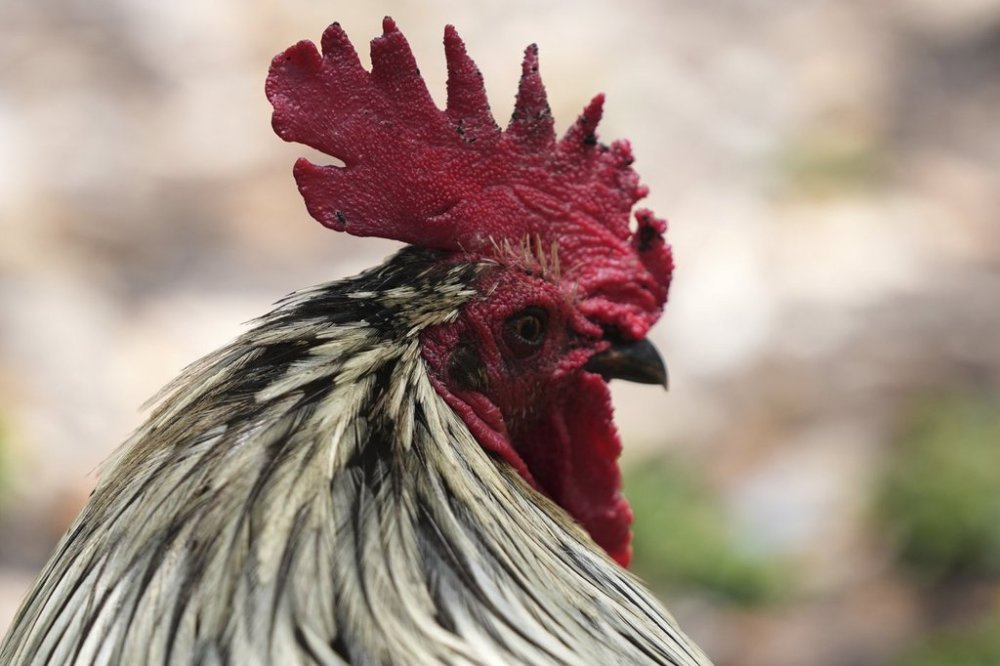
A rooster walks in a park outside of the Stephen P. Clark Government Center in downtown Miami, Wednesday, May 7, 2025, in Miami. (AP Photo/Lynne Sladky)

Paul George, the resident historian at HistoryMiami Museum, said the chickens are closely connected to the people who have moved to Miami over the decades. For a long time, the domesticated birds were mostly kept in backyards, but George began to notice their feral cousins wandering in public areas about 20 years ago.

He said the chickens have a cultural connection to people who grew up in rural areas of Cuba and other parts of Latin America: “They’ve always had these hens and roosters around.”

A symbol for the city

Wild chickens can be found in many Florida communities, from Key West to Tampa to St. Augustine, along with other large cities throughout the U.S., like New Orleans, Houston and Los Angeles.

But Miami’s Little Havana truly adopted the birds as a symbol in 2002 when 6-foot (2-meter) fiberglass rooster statues began appearing outside shops and restaurants along Calle Ocho, which is Spanish for 8th Street, as part of a campaign to celebrate the area’s culture.

More than two decades later, dozens of the colorfully painted statues, designed by the late artist Pedro Damián, continue to attract tourists seeking fun photo opportunities.

Owner Jakelin Llaguna of Little Havana Visitors Center, a souvenir shop along Calle Ocho, said the community is largely fond of the avian inhabitants, which forage around local businesses and parks.

“The neighbors have welcomed them,” Llaguna said. “So they don’t mind if they’re in their backyard or in their front lawn. Nobody messes with them, they’re our mascot.”

Llaguna said the roosters’ crowing at sunrise symbolizes renewal.

“The Cubans came to Little Havana when the revolution came into Cuba,” Llaguna said. “They settled in this neighborhood, so they had a new beginning in Little Havana.”

Llaguna’s store is filled with rooster merchandise, including shirts, hats, glasses and magnets.

“Everybody wants a rooster,” Llaguna said. “They want to take home a memento. They want have a memory of a fun time. And the rooster has turned into that.”

An uncertain future

As the feral roosters spread, they might soon face competition from the invasive peacocks that have taken over neighboring communities like Coconut Grove and Coral Gables.

“The peacocks have very bad tempers,” George said. “They’re pretty ill-mannered, and they tend to be a lot bigger than the chickens, and they make a lot of noise.”

But George is more concerned that development and gentrification in older neighborhoods could eventually lead to the disappearance of their feathered residents. When 50-year-old houses are replaced with brand new condos, George isn’t sure whether people spending over $1 million for a home are going to tolerate the loud birds.

“Even with hurricane windows, I just don’t think a lot of these people are gonna put up with it as the neighborhood becomes richer.” George said. “And I think they’re gonna really lean on the city’s code enforcement for it.”

The legal status of the roosters and chickens is somewhat murky. Both the city of Miami and Miami-Dade County have ordinances that either strictly regulate or completely ban live poultry in residential areas. Meanwhile, the birds freely roam downtown among offices, public parks and courthouses.

Asked about the birds, both city and county officials described their presence as a code compliance issue and referred The Associated Press to their live animal ordinances.

Little Havana resident Donato Ramos Martínez enjoys having the roosters and chickens around and even feeds them near the Bay of Pigs Monument, off Calle Ocho.

“The rooster is the perfect animal for someone to wake up, because they begin to crow at about 4 a.m., from 4 to 5 a.m.,” Ramos Martínez said in Spanish. “And it is an attractive animal that tourists, both young and old, are excited about, and they take their picture, you know what I mean?”

“And so I don’t understand,” he added, “why there are some — excuse my language — some idiots who don’t want roosters or chickens or chicks on the street.”


Report Error Submit a Tip

More Stories

Port of Churchill signs agreement with Dutch port

Aaron Epp 2 minute read Preview

Port of Churchill signs agreement with Dutch port

Aaron Epp 2 minute read Tuesday, Sep. 29, 2026

Arctic Gateway Group, operator of the Port of Churchill, has signed an agreement with the Port of Rotterdam in the Netherlands to attract business and strengthen supply chains linking Western Canada and Europe.

The agreement enables the two ports to work together to develop new trade in critical minerals and energy products, connect Canadian producers with European buyers, and identify opportunities to improve the supply chain from Western Canadian resource projects through Churchill and into European markets.

The Port of Rotterdam is Europe’s largest port and home to more than 3,000 businesses across its industrial complex, serving as a major gateway for critical raw materials and energy.

Meanwhile, the Port of Churchill has been identified as a transformative national strategy for Canada and is emerging as a northern trade corridor connecting Western Canada’s resources to global markets.

Read
Tuesday, Sep. 29, 2026

Face up to fact you blew it with ex-wife

Maureen Scurfield 4 minute read 2:01 AM CDT

DEAR MISS LONELYHEARTS: My ex-wife just moved back to town and looks like a changed woman. She spent years married to me, and our kids just graduated in a city where we once lived together. That was without help from me, other than minor financial stuff.

She has found a great new job back in Winnipeg and she’ll do very well. I admire her more than any other woman I ever met, but she’s not interested in me at all.

I once had a solid, responsible job and then got into drinking, and I cheated on her. That’s why she left town. Now I’ve been sober and sorry for many years.

I asked her last weekend if I could take her out to dinner and she said no and changed the subject.

Woman took ‘meaningful’ responsibility after disposing of body: lawyer

Dean Pritchard 5 minute read Preview

Woman took ‘meaningful’ responsibility after disposing of body: lawyer

Dean Pritchard 5 minute read Yesterday at 6:00 AM CDT

A woman who was threatened with death if she didn’t help dispose the body of a Mexican man murdered in the basement of a North End home should serve no more jail time, a judge has been told.

Devlin Langlois, 25, has pleaded guilty to accessory after the fact to murder in the March 2025 killing of 28-year-old Diego Moscoza.

“By pleading guilty, Ms. Langlois has already taken meaningful accountability for her actions,” defence lawyer Joshua Rogala told King’s Bench Justice Candace Grammond at a sentencing hearing Monday.

He urged the judge to sentence Langlois to the equivalent of 14 months already served, plus two years supervised probation.

Read
Yesterday at 6:00 AM CDT

Ferraro gets call-up to the Jets

Mike McIntyre 6 minute read Preview

Ferraro gets call-up to the Jets

Mike McIntyre 6 minute read Updated: Yesterday at 6:56 PM CDT

Landon Ferraro vividly recalls the moment his NHL career came to an extremely painful end — Oct. 20, 2017, in downtown Winnipeg.

“My last play was a breakaway on Connor Hellebuyck,” Ferraro told the Free Press this week.

“I tried to poke the puck past the first D. It was me and (Dustin) Byfuglien chasing it down. I thought he was going to throw me across the ice, so I tried to cut in on him, and he moved. I overextended, and I literally ripped my abductor off the bone and gave myself a hernia.”

Ferraro — at the time playing forward for the visiting Minnesota Wild — said he managed to get off a weak shot that hit the Jets goaltender square in the chest. But his 77th appearance in the big leagues would be his last following previous stops with Detroit (which drafted him 32nd overall in 2009) and Boston.

Read
Updated: Yesterday at 6:56 PM CDT

Man accused of killing five family members fires second legal team, but murder trial won’t be delayed, judge warns

Dean Pritchard 3 minute read Preview

Man accused of killing five family members fires second legal team, but murder trial won’t be delayed, judge warns

Dean Pritchard 3 minute read 2:52 PM CDT

A Manitoba man accused of killing five family members is once again looking for new lawyers to represent him at trial.

But Ryan Manoakeesick will stand trial, with or without a lawyer in April 2027, a judge warned him Thursday.

“I want to be clear, Mr. Manoakeesick, that the trial dates that have been set are going to remain,” King’s Bench Justice Candace Grammond told him. “Those trial dates are effectively written in stone.

“You may think that is a long time in the future, but in a trial of this kind you need to make sure you have appropriate representation and you will be ready to attend to the matter on that date.”

Read
2:52 PM CDT

Wild chickens take over Miami while some embrace roosters as a cultural symbol

David Fischer, The Associated Press 5 minute read Preview

Wild chickens take over Miami while some embrace roosters as a cultural symbol

David Fischer, The Associated Press 5 minute read Sunday, May. 25, 2025

MIAMI (AP) — Flamingos, pelicans, herons and parrots are just a few of the wild birds that call Miami home, but it’s the roosters, hens and baby chicks that have come to rule the roost in recent years.

Not only found in residential neighborhoods like Little Havana, Little Haiti and Wynwood, the fowl families are also making their home among the high-rises and government buildings downtown. And while some people find the crowing to be a nuisance, many have adopted the rooster as an unofficial mascot for the city.

A piece of home

Paul George, the resident historian at HistoryMiami Museum, said the chickens are closely connected to the people who have moved to Miami over the decades. For a long time, the domesticated birds were mostly kept in backyards, but George began to notice their feral cousins wandering in public areas about 20 years ago.

Read
Sunday, May. 25, 2025