Invasive fish captured in N.S. is first of such species found in Atlantic Canada

Advertisement

Advertise with us

NEW GERMANY - Fisheries and Oceans Canada says an invasive type of fish called a pond loach has been found in Nova Scotia, marking the first such finding in Atlantic Canada. 

Read this article for free:


By clicking the button above, an account will be created and you will begin to receive some of our recommended newsletters. You may opt out of any newsletter by visiting your Email and Communication Preferences page or by clicking "unsubscribe" at the bottom of any email.

or

Already have an account? Log in here »

To continue reading, please subscribe:

Digital Subscription

One year of digital access for only $1.44 a week*

  • Enjoy unlimited reading on winnipegfreepress.com
  • Read the E-Edition, our digital replica newspaper
  • Access News Break, our award-winning app
  • Play interactive puzzles

*Billed as $5.77 plus GST every four weeks. After 52 weeks, price increases to the regular rate of $19.95 plus GST every four weeks. Offer available to new and qualified returning subscribers only. Cancel any time.

To continue reading, please subscribe:

Add Free Press access to your Brandon Sun subscription for only an additional

$1 for the first 4 weeks*

  • Enjoy unlimited reading on winnipegfreepress.com
  • Read the E-Edition, our digital replica newspaper
  • Access News Break, our award-winning app
  • Play interactive puzzles
Start now

*Your next Brandon Sun subscription payment will increase by $1.00 and you will be charged $17.95 plus GST for four weeks. After four weeks, your payment will increase to $24.95 plus GST every four weeks.

Hey there, time traveller!
This article was published 26/05/2025 (512 days ago), so information in it may no longer be current.

NEW GERMANY – Fisheries and Oceans Canada says an invasive type of fish called a pond loach has been found in Nova Scotia, marking the first such finding in Atlantic Canada. 

A single, egg-bearing, female Oriental Weatherfish, or pond loach, was found in Morgans Falls, near New Germany, N.S.,  the federal department said in an emailed statement Monday. 

Fisheries and Oceans Canada said the fish species is native to eastern Asia, and that the one captured on April 29 was likely introduced to Nova Scotia after being released from an aquarium.
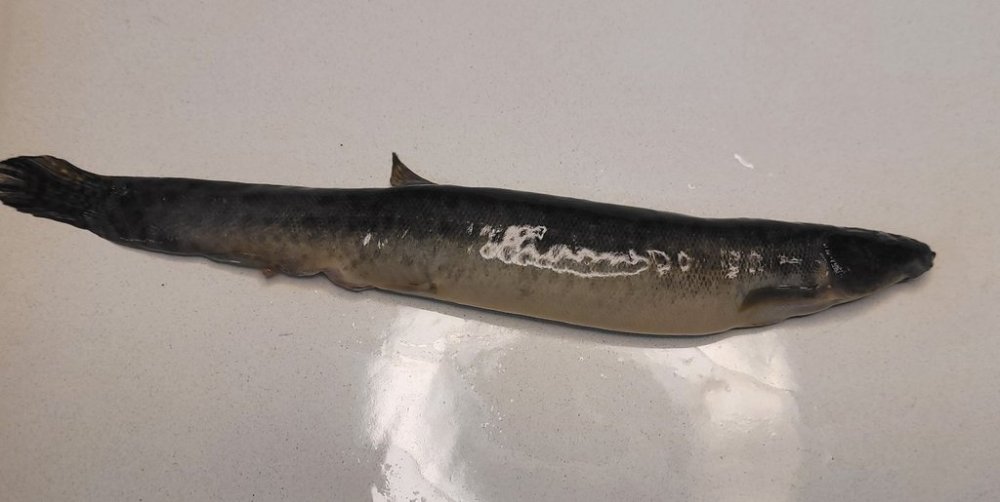
Fisheries and Oceans Canada says an invasive type of fish called a pond loach, seen in this handout image, has been found in Nova Scotia, marking the first such finding in Atlantic Canada. THE CANADIAN PRESS/HO-Fisheries and Oceans Canada

Invasive species, such as the pond loach, are a problem because of the disruption they can cause to habitats and ecosystems.

Pond loach can reproduce quickly, and once the fish is established in a new habitat, it may compete with native species for food, or prey on them directly.

Releasing any aquatic species into a body of water where it is not native, unless authorized by federal, provincial or territorial law, is illegal under the federal Aquatic Invasive Species Regulations. 

“To help prevent the introduction and spread of aquatic invasive species, do not let loose any aquatic species into a new body of water, down the drain, or into the sewers,” reads the statement from Department of Fisheries and Oceans (DFO). 

The pond loach is brown or dark green with dark scattered speckles and a light-coloured underside. It has a long, cylindrical, eel-like body, that can measure between 10 and 25 centimetres in length. The fish also has between six and eight barbels, or whiskers, around its mouth. 

The fish prefer slow-moving, muddy or silty habitats, but the can survive in a range of environmental conditions. 

The pond loach has also been reported in southern British Columbia, the federal department said, but is not known to occur anywhere else in Canada. 

The DFO said it has not received any other reports of this species in Nova Scotia, and there are no loach species that are native to the province. 

If anyone suspects they have seen a pond loach, the DFO is asking them to report it, with pictures, if possible, to its aquatic invasive species division. 

This report by The Canadian Press was first published May 26, 2025. 

— By Lyndsay Armstrong in Halifax. 

Report Error Submit a Tip

More Stories

Spinning yarns into comedy, chaos and hope

Denise Duguay 5 minute read Preview

Spinning yarns into comedy, chaos and hope

Denise Duguay 5 minute read 2:00 AM CDT

“I watch ALL the new TV,” I recently bragged at a family Thanksgiving, a fiction that I was rightly called out on.

But I do watch a lot and, more than that, I read about as close to all the upcoming TV as I can. It’s not (usually) for bragging rights but because stories are either distractions or inspiration and both are now more valuable than ever. Here are a handful of worthy-looking new series and docs.

● Phony Series premières today (Oct. 20) on Disney+/Hulu

High schooler Sonny (Sam Nivola, The White Lotus) has every reason to be faltering in his perception of reality.

Read
2:00 AM CDT

Be careful with old flame’s power games

Maureen Scurfield 4 minute read 2:00 AM CDT

DEAR MISS LONELYHEARTS: I just ran into the short-haired girl I was crazy in love with back in high school. She wore all black clothes, kind of looked like a guy, but used dark lipstick and dyed her hair different weird colours. She always looked like a scary, powerful woman and she loved to tease me, because I was shy back then.

She was standing there in the sun, and I liked her new look — blue-black hair, dressed in a black suit, hot-looking and powerful as ever! But after we started talking, she suggested we go catch up over a drink and lunch.

After eating and drinking a lot on my tab, she was a bit tipsy and confessed she already has a boyfriend she quite likes, because he doesn’t bow down to her.

To get even, I told her I had a girlfriend, “but that could change.” Then I paid the tab. She finally liked something about me!

Katz ‘violated public trust,’ Sheegl lacked ‘moral compass,’ police HQ inquiry commissioner concludes

Joyanne Pursaga 8 minute read Preview

Katz ‘violated public trust,’ Sheegl lacked ‘moral compass,’ police HQ inquiry commissioner concludes

Joyanne Pursaga 8 minute read Updated: Yesterday at 7:29 PM CDT

The final report from the public inquiry into the scandal-plagued Winnipeg Police Service headquarters construction project concludes that former mayor Sam Katz and former city CAO Phil Sheegl broke public trust and engaged in unethical conduct.

And the report, released Monday by inquiry commissioner Garth Smorang, says the cost of the project — transforming a downtown Canada Post office tower and warehouse into the police HQ — soared, in part, because main contractor Caspian Projects overcharged the city by more than $40 million in expenses.

The project’s initial $135-million initial price tag rose to about $209 million in the end. The city purchased the complex in 2009; construction was completed in 2016.

Smorang’s report concludes Katz “violated the public trust” and council code of conduct, and Sheegl suffered from a “complete lack of a moral compass.”

Read
Updated: Yesterday at 7:29 PM CDT

Puzzles Palace

1 minute read Friday, Oct. 16, 2026

To solve our puzzles, please subscribe with this special offer: |

Province looks to keep nearly $1M from traffic stop

Erik Pindera 4 minute read Preview

Province looks to keep nearly $1M from traffic stop

Erik Pindera 4 minute read Yesterday at 2:01 AM CDT

The RCMP constable could see that Alireza Haghgoo was nervous. The 22-year-old, seated as a passenger in a rental Nissan SUV the Mountie pulled over for speeding outside Brandon in late July, was breathing heavily and tapping his foot constantly.

Read
Yesterday at 2:01 AM CDT

Feds hold back on stable health funding

Editorial 4 minute read Preview

Feds hold back on stable health funding

Editorial 4 minute read 2:00 AM CDT

The federal government wants provinces to improve health care, expand treatment services and find better ways to deliver care. But it’s refusing to provide provincial governments with the one thing they need most to plan for the future: stable, predictable funding.

Read
2:00 AM CDT