Want to grow your own rice? A step-by-step guide for adventurous gardeners

Advertisement

Advertise with us

Many of us think of rice as a plant that grows in flooded fields, and that’s because the kind of rice we’re most familiar with — the long-grain, wetland variety called lowland rice — can be considered semi-aquatic, although it’s technically a grass.

Read this article for free:


or

Already have an account? Log in here »

To continue reading, please subscribe:

Subscribe and receive a limited-edition Free Press branded hat or tote.

Digital Subscription

One year of digital access for only $205*

  • Enjoy unlimited reading on winnipegfreepress.com
  • Read the E-Edition, our digital replica newspaper
  • Access News Break, our award-winning app
  • Play interactive puzzles

*First annual payment billed as $205.00 + GST for one year. This annual subscription will automatically renew at $233.00 + GST every 52 weeks (10% off the regular annual price of $259.35). Offer available to new and qualified returning subscribers only. Cancel any time.

To continue reading, please subscribe:

Add Free Press access to your Brandon Sun subscription for only an additional

$1 for the first 4 weeks*

  • Enjoy unlimited reading on winnipegfreepress.com
  • Read the E-Edition, our digital replica newspaper
  • Access News Break, our award-winning app
  • Play interactive puzzles
Start now

*Your next Brandon Sun subscription payment will increase by $1.00 and you will be charged $17.95 plus GST for four weeks. After four weeks, your payment will increase to $24.95 plus GST every four weeks.

Hey there, time traveller!
This article was published 10/06/2025 (480 days ago), so information in it may no longer be current.

Many of us think of rice as a plant that grows in flooded fields, and that’s because the kind of rice we’re most familiar with — the long-grain, wetland variety called lowland rice — can be considered semi-aquatic, although it’s technically a grass.

Lowland rice would be challenging to grow in a home garden, but another, less common variety can be cultivated more easily in typical backyard conditions.

Duborskian rice, a Russian short-grained dryland, or “upland” rice, is a highly ornamental plant that can even be grown in containers, where its 2-foot-tall green and gold panicles will lend height and beauty to the center or rear of mixed planters.
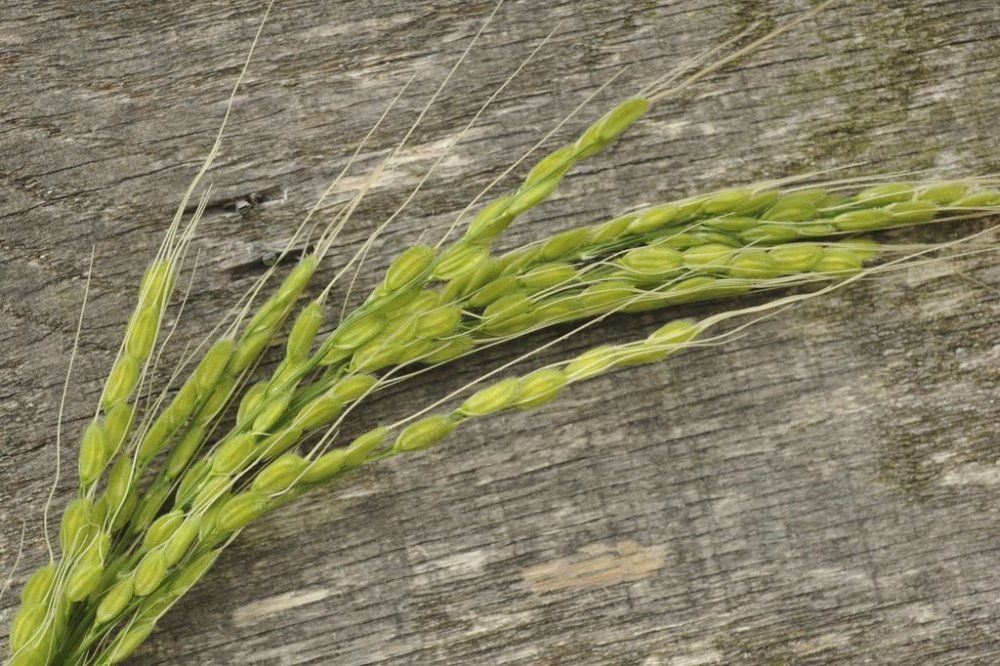
This undated image provided by Baker Creek Heirloom Seed Co./rareseeds.com shows the rice-bearing panicles of a Duborskian rice plant. (Baker Creek Heirloom Seed Co./rare seeds.com via AP)

But if grown as a crop, cultivating rice from your plants can be a fun activity for adventurous gardeners.

Start by making space

When determining how many plants to grow, consider that it takes approximately 10 plants to produce 1 pound of rice. Since each plant occupies only 1 foot of garden space, a 10-by-10-foot plot will hold 100 plants, which will yield roughly 6 to 10 pounds of rice in a season.

In the absence of purchased starter plants, seeds are best sown directly into the garden in May or June in frost-free zones. Elsewhere, they should be started indoors four weeks before the danger of frost has passed. Expect seeds to germinate in five to seven days.

A 24-hour water soak before sowing will hasten germination. Indoor starts are best aided by a heat mat.

Four-week-old seedlings should be transplanted outdoors at the same time it’s considered safe to plant tomatoes, peppers and eggplants in your region.

Taking care of your rice plants

Select a sunny spot and enrich the soil with a generous amount of compost before planting.

Since the rice requires a high level of nutrients, fertilize every two weeks with a balanced, all-purpose fertilizer.

Space plants 1 foot apart to ensure adequate circulation between them, as they will need to be pollinated by wind. You might also surround plants with netting to protect them from birds. Keep the surrounding soil free of weeds throughout the growing season.

Separating the rice from the chaff, and other steps

Your rice will be ready to harvest in about 105 days. You’ll know it’s ready when the seed heads appear dry but haven’t yet dropped their seeds. At that point, cut plants down to ground level and hang the stalks up for a few days to dry further.

But that’s not the end of it. Rice will have to be removed from its stalks, and each grain’s tough outer shell, called a hull, will need to be removed. On commercial farms, they have equipment to do this, but since you’re growing rice at home, you will have to do it manually.

Tie the cut ends of the dried stalks together, then place a screen (an old window screen will do) over a wheelbarrow. Rub the seed heads against the screen until the grains fall off into the wheelbarrow. If this sounds too complicated, you can achieve the same results by beating the tied bunch of stalks onto a clean sheet that you’ve laid on the ground.

Once the grains have been separated from their stalks, scoop them up and remove the hulls in batches using a mortar and pestle (put the kids to work!) If you don’t have a mortar and pestle, you can hit them with a rubber mallet, but it’s a delicate balance to remove the hulls without crushing the rice.

The next step is to separate the proverbial rice from the chaff (the hulls). The easiest way to accomplish this is to use a fan to blow the light-as-air hulls away. You can’t eat the hulls, but they can be added to compost piles or used as mulch.

If you’d like to save rice for replanting next year, put some aside before removing the hulls; they’ll need to be intact for the seeds to germinate.

To enjoy the fruits of your labor, cook the grains as you would any rice and enjoy it in sweet or savory recipes. It’ll be good, but not likely as good as the story you’ll be able to tell about that time you grew your own rice.

___

Jessica Damiano writes weekly gardening columns for the AP and publishes the award-winning Weekly Dirt Newsletter. You can sign up here for weekly gardening tips and advice.

___

For more AP gardening stories, go to https://apnews.com/hub/gardening.

Report Error Submit a Tip

More Stories

Health minister warns $1.2 billion in annual federal funding set to expire in March

Scott Billeck 4 minute read Preview

Health minister warns $1.2 billion in annual federal funding set to expire in March

Scott Billeck 4 minute read Thursday, Oct. 1, 2026

Manitoba’s health minister is warning of possible cuts to health care with $1.2 billion in annual funding from Ottawa set to expire next year.

“We’re very concerned that what would be the largest cut to health care in a generation is right in front of us,” Health Minister Uzoma Asagwara said Thursday at the Manitoba legislature. “It means that services that Manitobans depend on will be in jeopardy and be at risk.

“Any reductions, any cuts from Canada, will have direct impacts on the health outcomes of Manitobans.”

Asagwara, who serves as the provincial and territorial health minister lead, chaired a virtual meeting Tuesday with provincial and territorial health ministers to discuss federal funding for health care, mental health care and substance use services, which is scheduled to expire March 31, 2027.

Read
Thursday, Oct. 1, 2026

Free Press staff 2 minute read 2:01 AM CDT

Advance voting for civic and school board elections begins next week.

Voters can cast early ballots for the Oct. 28 election in certain locations from Monday through Oct. 23.

Eligible voters can use their address to search for a convenient location.

Early votes can be cast at the council building at city hall (510 Main St.) every day, except weekends and Thanksgiving, from Monday to Oct. 23.

Letters, Oct. 3

7 minute read 2:01 AM CDT

A morning in the life …

My very first lesson does not start when I walk into that lecture hall, oh no — it starts long before. It begins when I walk to my car, check the estimated arrival time to the University of Manitoba and hope that Winnipeg traffic agrees with it.

A drive that appears completely manageable changes almost immediately when I’m greeted by a tsunami of orange pylons and a line of cars that appears to go on forever. Traffic moves by the inch, lanes magically disappear and the detour I took yesterday now has a detour of its own. These factors make me do a calculation that I have become all too familiar with. How late can I arrive and still find parking, run to my class across campus and get to class with enough time left to make it worth it?

I have grown used to people saying, “Why not just leave earlier?” I do. But when I’m already leaving for my 8:30 a.m. class at 7 a.m., there’s only so much I can do. This drive that some would think is relaxing is one that feels like an assignment that I didn’t know I had to complete and is due at 8:30 a.m.

Khan should’ve taken high road: Goertzen

Carol Sanders 5 minute read Preview

Khan should’ve taken high road: Goertzen

Carol Sanders 5 minute read Yesterday at 6:39 PM CDT

The veteran Progressive Conservative who championed Obby Khan’s leadership bid says the former Blue Bomber dropped the ball by dissing his Tory teammates before he stepped down.

“I wouldn’t recommend it, and I didn’t recommend it,” Kelvin Goertzen (Steinbach) said in an interview Friday.

Khan resigned as PC leader and quit the caucus Monday saying some members were secretly plotting his ouster, even after he won a confidence vote on Sept. 25.

On Tuesday, Khan lashed out in a CJOB interview, naming the alleged plotters, saying constituents deserved to know which of their elected representatives “lacked moral integrity.” Khan told the Free Press he was “deeply emotionally hurt,” and felt stabbed in the back.

Read
Yesterday at 6:39 PM CDT

Brandonmeat packer thriving on its own

Abiola Odutola 3 minute read Preview

Brandonmeat packer thriving on its own

Abiola Odutola 3 minute read 2:01 AM CDT

BRANDON — Canada Packers has strengthened its business and laid the foundation for future growth during its first year as an independent company, its president says.

The Brandon-based pork producer, separated from Maple Leaf Foods in October 2025, established its own leadership, strategy, systems, culture and identity while continuing operations across its hog production farms and regional hog barns in southern and eastern Manitoba.

The company’s first year was focused on building a successful standalone business while continuing to serve customers, communities and shareholders, president Dennis Organ said.

“Market conditions over the past year have been more challenging than we anticipated when we became a separate entity,” he said in an email. “Despite that, we continued to execute against our priorities, including increasing processing volumes, maintaining disciplined operations and strengthening the business.”

Read
2:01 AM CDT

A day on the campaign trail: Winnipeg's mayor, seeking a second term, does double duty

Malak Abas 12 minute read Preview

A day on the campaign trail: Winnipeg's mayor, seeking a second term, does double duty

Malak Abas 12 minute read Updated: Yesterday at 5:56 PM CDT

In the weeks leading up to the civic election, Scott Gillingham has been performing a juggling act: he’s running to be Winnipeg’s 45th mayor, while still serving as its 44th.

“If someone asks me about the campaign, I’m going to answer them. But I think for most people, I’m the mayor of Winnipeg, even if I’m showing up as a candidate,” Gillingham, 58, says. “I try to do all I can to maintain that distinction.”

The Free Press joined Gillingham on a recent rainy September Saturday on the campaign trail, where he served in both roles during an event-laden day. City council’s final meeting before the Oct. 28 election was days earlier.

In Winnipeg, it’s rare for an incumbent to be defeated. But Gillingham knows his win in 2022 wasn’t exactly a landslide — he won with 27.5 per cent of the vote — and he’s been thinking about his second term ever since.

Read
Updated: Yesterday at 5:56 PM CDT